AC Rental Prices and What Determines Booking Costs
In this article
- AC Rental Prices in Kuwait
- Desert Cooler Rental Price
- Cost of Vertical Air Conditioners
- Mobile Central AC Rental Prices
- Cost of Cooling an Event Tent
- AC Rental Price by Cooling Capacity
- Cooling Cost Based on Venue Size
- Daily AC Rental Prices
- AC Delivery and Installation Cost
- Event AC Rental Offers in Kuwait
- Conclusion
- Frequently Asked Questions
AC rental prices for events vary because booking costs do not depend only on the number of units. They are also determined by the type and cooling capacity of the air conditioners, venue size, insulation level, number of guests, nature of use, rental duration, and delivery and installation services. A small tent may require only a limited number of units, while a large event may need a more powerful cooling system with carefully planned air distribution to prevent hot areas from developing inside the venue. From practical experience preparing event venues, one of the most common mistakes is selecting air conditioners according to floor area alone without considering ceiling height, guest numbers, or frequent opening of entrances. Accurate pricing therefore begins by evaluating the venue and expected heat load before selecting the appropriate cooling capacity and comparing the final booking cost.
AC Rental Prices in Kuwait
AC rental prices in Kuwait are determined by a combination of technical and operational factors that change according to the event venue and the way the space will be used. Cooling an outdoor tent cannot be compared directly with cooling an enclosed hall simply because both spaces have similar floor areas. Insulation, ceiling height, number of entrances, exposure to direct sunlight, and the number of people inside all affect the required cooling capacity. The actual price should therefore begin with understanding the cooling requirement before determining the number of air conditioners.
From practical experience preparing events, simply increasing the number of units is not always the best solution. If the air conditioners are positioned incorrectly, part of the venue may remain warm despite having substantial total cooling capacity. In contrast, fewer appropriately selected units can sometimes deliver better performance when airflow locations are planned according to seating arrangements and circulation routes. The position of each unit is therefore part of the value of the service rather than a minor detail separate from pricing.
The cost is also influenced by rental duration. Some events require air conditioning for only a limited number of hours, while other locations may need cooling for a full day or longer. Customers should also determine whether the quoted price includes delivery, installation, operation, testing, and collection after the event because differences in service scope can make one offer appear cheaper initially before additional costs are added.
When comparing AC rental prices, review:
• The type of venue and its exposure to external heat because tents and exposed spaces require different calculations from well-insulated halls
• The area actually occupied by guests instead of calculating a large venue section that does not require the same level of cooling
• The capacity and type of each unit and whether it suits the event rather than focusing only on the number of air conditioners
• The number of guests expected to be present simultaneously because people contribute additional heat inside the venue
• Rental duration and the operating hours required before guests arrive and throughout the event
• Services included in the price such as transportation installation operation testing and collection so quotations can be compared fairly
Desert Cooler Rental Price

The desert cooler rental price is affected by the size of the unit, airflow capacity, required quantity, and the characteristics of the venue where it will be used. This type of cooler relies on airflow and water evaporation, so its suitability depends on ventilation and environmental conditions rather than simply having a lower rental price than other cooling options. A desert cooler may be useful in well-ventilated spaces, but it is not automatically suitable for every enclosed tent or hall.
From practical experience, venue conditions should be evaluated before booking. If the location is open or semi-open and allows adequate air movement, desert coolers can be positioned around occupied zones so cooler air reaches guests more directly. However, placing units far from seating areas or using them in conditions that do not support suitable air circulation can reduce their effectiveness even when additional units are installed.
Water capacity and the requirements for continued operation should also form part of the planning. An event lasting several hours requires confirmation that the equipment can operate throughout the required period without unnecessary interruptions. The best price should therefore not be judged by the rental rate of a single unit alone but by whether the complete cooling arrangement can serve the venue throughout the event.
When evaluating desert cooler rental prices, consider:
• The actual seating area and the amount of airflow required around guests to provide a better cooling effect
• The ventilation level at the venue and whether it is suitable for the operating characteristics of a desert cooler
• The capacity and airflow of the equipment rather than choosing according to external dimensions or appearance
• Water and operating requirements throughout the event and whether they are included within the agreed service
• The required number of units according to seating distribution rather than the overall venue dimensions alone
• Delivery installation operation and collection costs within the final booking price
Cost of Vertical Air Conditioners
The cost of vertical air conditioners varies according to cooling capacity, unit type, required quantity, installation conditions, and the area that needs to be cooled. These units are frequently used in halls, tents, and temporary majlis settings because they can provide direct airflow and can be positioned relatively close to guest seating. Their effectiveness, however, depends on selecting appropriate capacities and locations rather than placing the largest possible number of units in the venue.
From practical event preparation experience, a vertical air conditioner performs more effectively when positioned where its airflow can spread without being blocked by curtains, furniture, or large decorative elements. Air should also not be directed excessively toward a small group of guests while other sections receive insufficient cooling. Equipment placement therefore requires an understanding of how air will travel through the venue.
The required capacity also changes according to ceiling height, insulation, and guest numbers. A low-ceilinged hall with effective enclosure may require a different cooling capacity from a tall tent with frequently opened entrances. The cost calculation should therefore reflect actual operating conditions rather than floor area alone.
When calculating the cost of vertical air conditioners, review:
• The capacity of each unit and whether it matches the volume of air that needs to be cooled
• Equipment locations relative to seating areas and obstacles that could interfere with airflow
• The number of guests expected inside the venue during peak attendance
• Insulation quality ceiling height and the number of entrances affecting the retention of cooled air
• The time required to operate the units before the event so the venue reaches a comfortable condition
• Whether the offer includes transportation installation required electrical preparation and testing before guests arrive
Mobile Central AC Rental Prices
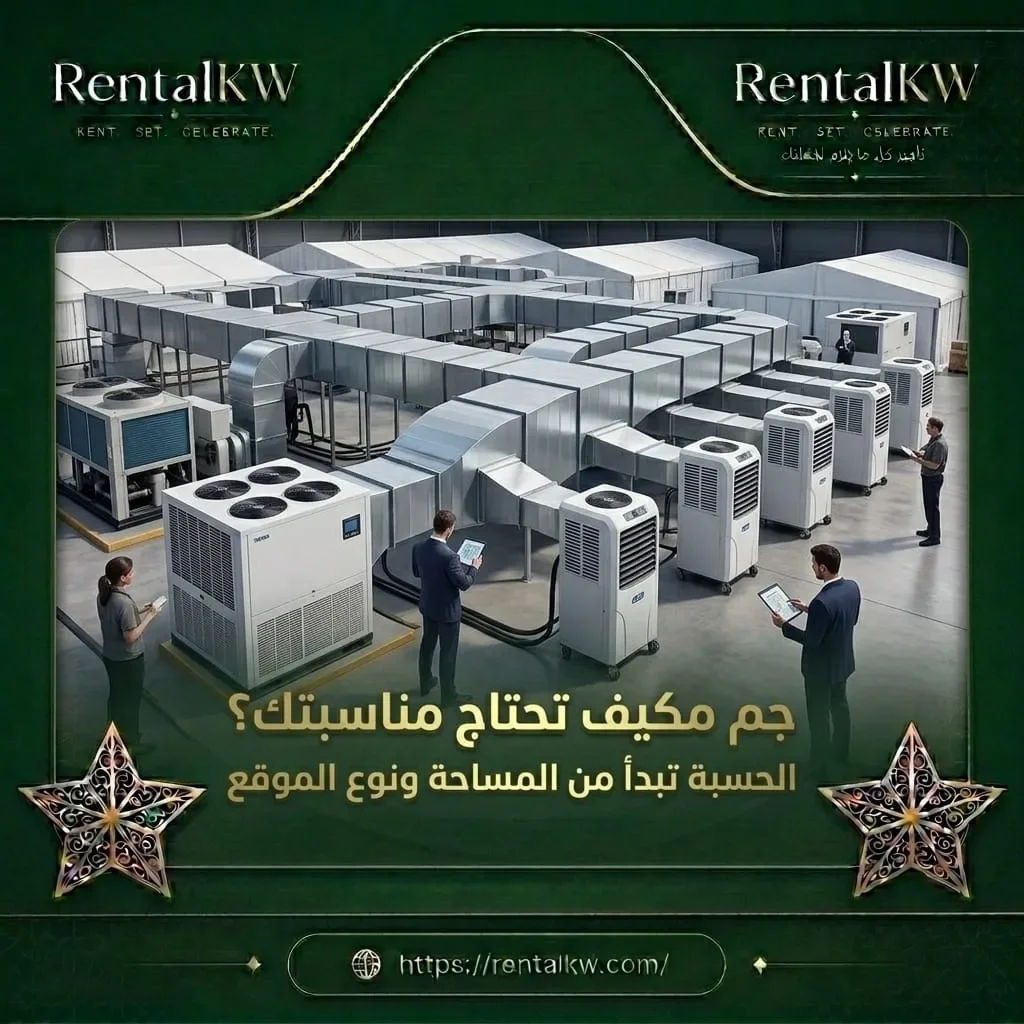
Mobile central AC rental prices are determined by the required cooling capacity, equipment size, air distribution method, distance between the unit and the area being cooled, and any electrical or ducting requirements necessary for operation. These systems are commonly used for larger tents and events that require greater cooling capacity than individual units can provide together with more organized distribution of cooled air.
From practical experience preparing large events, selecting a mobile central cooling system requires an advance calculation of the expected heat load. Guest numbers, tent dimensions, height, insulation, and the time of the event all affect the appropriate capacity. Choosing an undersized unit can cause continuous operation without reaching the desired comfort level, while selecting substantially more capacity than necessary can increase costs without delivering a proportional benefit.
Air distribution also requires careful attention. Mobile central systems may need ducts or outlets that carry cooled air to several points throughout a tent. The quality of this distribution can influence the final result as much as the capacity of the cooling unit itself. A quotation should therefore explain the proposed installation and distribution method rather than covering only the equipment.
When evaluating mobile central AC rental prices, review:
• The actual cooling capacity required according to venue area height and expected guest numbers
• The method used to distribute cooled air throughout the tent or hall and whether it reaches all occupied sections
• Electrical or other operating requirements needed to run the equipment throughout the event
• The distance between the unit and the event space and its effect on the ducting required to deliver cooled air
• Operating duration and the time at which pre-cooling should begin before guests arrive
• Installation testing dismantling and transportation costs within the final quotation rather than comparing equipment rental alone
Cost of Cooling an Event Tent

The cost of cooling an event tent depends on tent size, height, fabric or insulation characteristics, number of guests, frequency of entrance opening, and seating distribution inside the structure. A tent does not retain cooled air in the same way as an enclosed permanent hall, so floor area alone is not sufficient when calculating the required number or capacity of air conditioners. Two tents with identical dimensions may need different cooling arrangements if one receives more direct sunlight or has entrances that remain open more frequently.
From practical experience preparing events, one of the biggest mistakes in tent cooling is increasing the number of units without improving air distribution. If all units are concentrated on one side, that section may become noticeably cooler while distant areas remain warm. Air outlets or cooling units should therefore be distributed according to actual seating areas, service routes, and entrances so cooled air reaches the sections guests will use throughout the event.
The cooling system should also begin operating sufficiently before guests arrive because reducing the temperature of an empty tent is generally easier than trying to cool it after it becomes crowded. As guest numbers increase, internal heat generation also rises, making it more important to establish comfortable conditions before peak occupancy.
When calculating event tent cooling costs, consider:
• The net area used for seating and service rather than relying only on the external dimensions of the tent
• Tent height and its effect on the total volume of air that must be cooled throughout the event
• Insulation level fabric characteristics and exposure of the tent sides to direct sunlight during operating hours
• The number of entrances and how frequently they are opened because incoming warm air directly affects cooling performance
• Seating distribution and air conditioner positions so airflow reaches guests instead of remaining concentrated in one area
• Operating time before the event and throughout the occasion and whether this period is included in the booking package
AC Rental Price by Cooling Capacity
The AC rental price by cooling capacity changes because cooling capacity determines the amount of heat load the equipment can manage rather than simply reflecting the physical dimensions or appearance of the unit. As the need to cool larger spaces or accommodate more guests increases, selecting an appropriate capacity becomes increasingly important so the equipment can maintain comfortable conditions without operating at maximum demand continuously.
From a practical perspective, the highest available capacity should not automatically be considered the best choice. A unit significantly larger than required may increase rental costs, power requirements, and operating demands without delivering meaningful additional value. An undersized unit, however, may operate continuously and still fail to reach the required temperature. The correct approach is to select capacity according to the actual heat load of the venue.
Several factors beyond floor area influence this calculation, including guest numbers, ceiling height, insulation quality, internal heat sources, and exposure to sunlight. Two venues with the same floor dimensions can therefore require very different cooling capacities when their operating conditions differ.
When comparing prices according to cooling capacity, consider:
• The actual cooling capacity required by the venue rather than automatically selecting the highest available rating
• The number of guests expected during peak attendance and their contribution to the internal heat load
• Venue height and insulation and how effectively the space retains cooled air after operation begins
• External and internal heat sources that may increase requirements beyond calculations based on floor area alone
• Required operating duration and whether the venue needs to be pre-cooled before guests arrive
• Operating installation and associated service costs that may change as equipment capacity increases
Cooling Cost Based on Venue Size
The cooling cost based on venue size can only be determined accurately after identifying the type of venue rather than using floor area alone. A square meter inside an enclosed hall does not have the same cooling requirement as a square meter inside a tent or semi-open location. Any estimate based only on floor area without considering height, insulation, guest numbers, and entrance activity will therefore provide an incomplete picture.
From practical event preparation experience, the area genuinely used by guests can be more important than the total dimensions of the venue. An event may take place inside a large tent while seating is concentrated in a particular section and the remaining space is used for circulation or service. Cooling can then be directed more efficiently instead of distributing equipment equally across areas that guests rarely occupy.
Air distribution throughout the space also influences cost. If the venue requires several airflow points to reach all seating sections, using multiple appropriately sized units may be more effective than relying on one high-capacity unit whose airflow cannot reach distant areas properly.
When calculating cooling cost according to area, review:
• The space actually occupied by guests rather than the complete venue footprint when some sections are used only for circulation or service
• Ceiling or tent height because the internal air volume is what ultimately needs to be cooled
• The type of venue and how effectively it is enclosed and insulated from external heat
• Seating distribution and whether several cooled-air delivery points are required
• The number of guests expected simultaneously rather than the total number of invitees throughout the event
• How increasing the area changes the required number of units cooling capacity electrical demand and installation requirements
Daily AC Rental Prices
Daily AC rental prices depend on the equipment type, cooling capacity, time spent at the venue, and the services included within the rental day. Some offers calculate the period according to a complete calendar day, while others are based on a specific event-use window. Customers should therefore understand how the rental day is defined before comparing quotations.
From a practical perspective, an event lasting only several hours does not necessarily mean that air conditioning is required only during the event itself. Equipment usually needs to operate before guests arrive so the venue can reach comfortable conditions and then continue running until the occasion ends. Installation and dismantling times must also be coordinated with furniture and decoration schedules to avoid conflicts during venue preparation.
Customers should also determine whether the daily rate includes delivery, installation, testing, and collection. A low equipment rate can become substantially more expensive after operational services are added. The most accurate comparison therefore uses the complete daily cost rather than the basic rental price of the unit.
When reviewing daily AC rental prices, confirm:
• The beginning and end of the period considered a rental day so there is no misunderstanding about duration
• The time required to operate the air conditioners before guests arrive and whether this period is included in the booking
• How long the equipment may remain after the event until dismantling and collection take place
• Services included in the daily rate such as transportation installation testing and operational preparation
• The cost of extending use if the event requires additional hours or another day
• The difference between renting several separate units and one larger system when the venue requires extensive cooling
AC Delivery and Installation Cost

The AC delivery and installation cost is one of the most important elements of the booking because temporary air-conditioning equipment must be transported, positioned, prepared, and tested before it becomes ready for use. This cost varies according to equipment dimensions, weight, type, transportation distance, accessibility, and any electrical or ducting requirements associated with the installation.
From practical implementation experience, the intended position of each unit should be determined before delivery whenever possible. Moving a large cooling unit after unloading can consume additional time and delay the overall venue setup. Electrical sources, airflow routes, and entrances should therefore be reviewed so the equipment can be installed correctly from the beginning.
Installation requirements differ considerably between a relatively simple desert cooler, a vertical air conditioner, and a mobile central system that requires ducts or air outlets. A quotation that includes complete installation should therefore not be compared directly with one that only delivers the equipment as though both provide an equivalent service.
When calculating delivery and installation costs, review:
• The size weight and number of units that must be transported to the event venue
• The delivery vehicle access point and how easily equipment can be moved into its operating position
• Equipment type and any electrical water or air distribution requirements associated with it
• The time required for installation and testing before the event begins
• Whether the price includes adjusting airflow distribution after the units are operating and checking overall performance
• Dismantling and collection costs after the event and whether they are included in the final quotation or charged separately
Event AC Rental Offers in Kuwait
When comparing event AC rental offers in Kuwait, looking only at the number of units or the advertised discount is not enough. A strong offer should provide suitable cooling capacity for the venue together with appropriate airflow distribution and clearly defined operating services. One package may include more air conditioners but use capacities that do not match the tent size or conditions, while another may provide fewer units with properly calculated capacity and better distribution that maintains more stable conditions throughout the event. Comparison should therefore begin with the actual cooling requirement and only then move to price.
The details of every package should also be understood precisely. Some offers may include air conditioners, delivery, installation, operation, testing, dismantling, and collection, while others cover only the equipment rental value. Comparing the advertised figures in these cases does not reflect the actual amount the customer will pay before the cooling system is ready for use. Requesting a clear final price that includes all necessary event services provides a more accurate comparison.
The offer should also be evaluated according to event conditions rather than the number of units alone. A daytime event inside a tent exposed to direct sunlight may require different cooling capacity from an evening event in the same location. Higher guest numbers and frequent opening of entrances also increase the heat load and affect cooling performance. An offer that ignores these details may appear suitable during booking but fail to represent the actual requirement during use.
It is also important to determine whether the package can be modified when event details change before the scheduled date. Guest numbers may increase, the tent dimensions may change, or seating arrangements may be redesigned. Flexibility to adjust capacity or unit quantities can prevent customers from paying for unnecessary equipment or arriving at the event with insufficient cooling.
When comparing event AC rental offers, focus on:
• The total cooling capacity provided by the package and whether it matches venue conditions rather than comparing the number of units alone
• The type of air conditioners included and whether they are appropriate for the tent hall or event space
• The proposed airflow distribution and whether it can reach the primary seating areas without leaving significant hot sections
• Services included in the package such as delivery installation operation testing dismantling and collection after the event
• The ability to modify unit numbers or capacities if venue size or guest numbers change before the occasion
• The final cost after all required services have been included so different offers can be evaluated on the same basis
Conclusion
Understanding AC rental prices and what determines booking costs requires viewing event cooling as an integrated system rather than simply counting the number of units placed inside the venue. The required capacity is influenced by venue size, internal air volume, insulation quality, ceiling height, guest numbers, exposure to sunlight, entrance activity, and event timing. Two venues with similar floor areas can therefore have noticeably different cooling costs when their surrounding conditions are different.
Controlling the cost accurately begins with identifying the actual heat load and then selecting the appropriate type of cooling equipment. A desert cooler has different operating conditions from a vertical air conditioner, while a mobile central system can be more appropriate for certain large venues requiring organized air distribution. Selecting the cheapest equipment type before studying the venue can result in requiring more units or achieving poor performance, turning apparent savings into additional expense.
Cooling capacity alone is also insufficient when airflow is not distributed correctly. A powerful unit positioned at one end of a tent does not guarantee that cooled air will reach the opposite side when seating arrangements or physical obstacles interfere with airflow. Unit positions and air outlets should therefore be planned as part of the preparation process from the beginning rather than decided after the equipment arrives.
Another mistake that can increase booking costs is determining the requirement according to floor area alone. Tent height, guest numbers, insulation quality, and direct sunlight can all change the heat load. Entrances that remain open frequently also allow warm outside air to enter and increase demand on the cooling equipment. A more accurate calculation combines these factors rather than applying one standard rule to every event.
Rental duration and service scope also contribute to the final cost. An event may last only several hours, but cooling often needs to begin before guests arrive, while the service team also requires time for installation, testing, dismantling, and collection. Customers should therefore determine whether all these stages are included in the booking package and whether additional charges apply to extended operating periods or extra services.
Ultimately, the best offer is not the one that provides the largest number of air conditioners at the lowest advertised price. Better value comes from suitable cooling capacity, carefully planned airflow distribution, and a clearly defined service that matches the conditions of the event. When requirements are calculated before booking, unnecessary equipment can be avoided while also reducing the risk of inadequate cooling during the occasion, allowing the budget to be connected directly to the comfort guests actually need.
Frequently Asked Questions
What are the main factors that determine event AC rental prices?
Prices are affected by the air conditioner type, cooling capacity, number of units, venue size and height, insulation quality, guest numbers, exposure to sunlight, and rental duration. Delivery, installation, operational preparation, testing, dismantling, and collection may also contribute to the final cost depending on the details of the rental package.
Can the required number of air conditioners be calculated from tent size alone?
It is not advisable to rely on floor area alone because two tents with identical dimensions can require different capacities. Tent height, insulation quality, number of entrances, event timing, guest numbers, and exposure to sunlight all affect the heat load. These factors should be evaluated together with the area before selecting equipment quantity and capacity.
When is a desert cooler suitable for an event?
That depends on the venue, ventilation, and surrounding conditions because a desert cooler operates differently from other cooling systems. It can be suitable for certain open or well-ventilated spaces, but it should not automatically be selected for every tent or hall simply because its rental price is lower.
Is the highest-capacity air conditioner always the best choice?
No. Selecting significantly more capacity than required can increase rental costs and operating requirements without providing proportional benefits. On the other hand, insufficient capacity can cause equipment to operate continuously without achieving comfortable conditions. The better approach is to match cooling capacity to the actual heat load.
Why should air conditioners operate before guests arrive?
Cooling an empty venue is generally easier than trying to reduce its temperature after it becomes crowded. Pre-cooling helps establish more comfortable conditions before the event begins, allowing the equipment to maintain that level during occupancy instead of starting the cooling process from a high temperature when guests are already present.
Does increasing the number of air conditioners guarantee better cooling?
Not necessarily. Poorly positioned equipment may create one excessively cool area while leaving other sections warmer. Effective planning should combine appropriate total cooling capacity with suitable unit positioning and airflow distribution so cooled air reaches the areas guests actually use.
What should be included when checking AC delivery and installation costs?
Confirm whether the price covers transportation, unloading, installation, operating requirements, pre-event testing, dismantling, and collection afterward. Any additional electrical, water, or air-distribution requirements associated with the selected equipment should also be clarified before the booking is confirmed.
How should I compare event AC rental offers in Kuwait?
Compare total cooling capacity, equipment type, airflow distribution, rental duration, included services, and the flexibility to modify the package if event requirements change. Then compare the complete final cost rather than relying only on the individual unit price, number of air conditioners, or advertised discount.