
Decorative Light Rental for Tents and Outdoor Seating
In this article
- Decorative Light Rental in Kuwait
- Decorative Lights for Tents
- Outdoor Seating Lighting
- LED Lights for Events
- String Lights for Tents
- Decorative Garden Lights
- Wedding Tent Lighting
- Entrance Lighting for Seating Areas
- Installing Lights for Outdoor Events
- Booking Tent Decoration and Lighting
- Conclusion
- Frequently Asked Questions
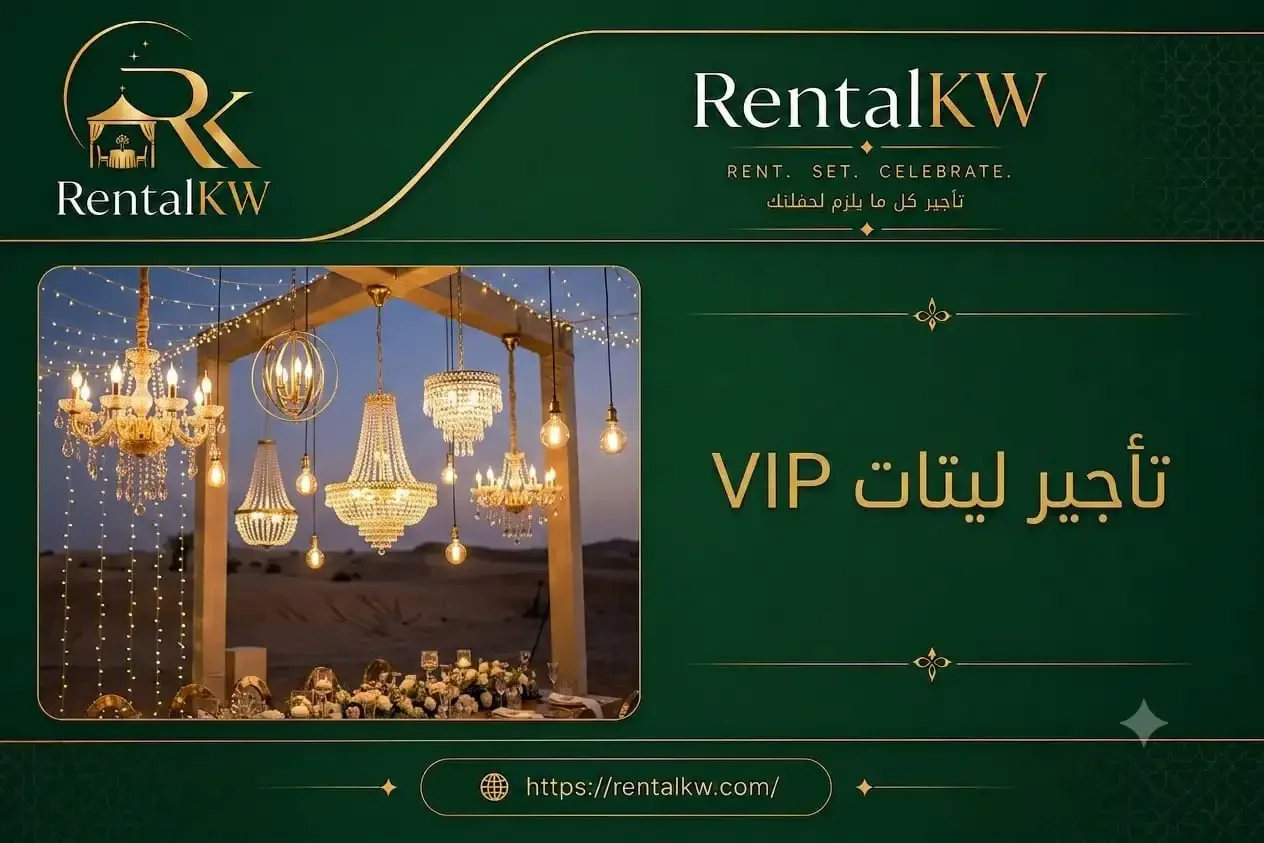
Event lighting should not be measured only by the number of bulbs being installed because good decorative lighting should create a comfortable atmosphere, make circulation routes easier to see, and highlight the tent and seating areas without turning the venue into an excessively bright space filled with competing visual details. From practical event setup experience, one of the most common mistakes is hanging lights randomly and then discovering that some corners remain dark while other areas are so bright that they disturb guests and affect photography. The right approach starts by understanding the shape of the venue, the type of event, decor colors, tent height, and seating locations. The type of lights, installation method, electrical supply, and the areas that genuinely require illumination can then be determined before the final lighting design is approved.
Decorative Light Rental in Kuwait
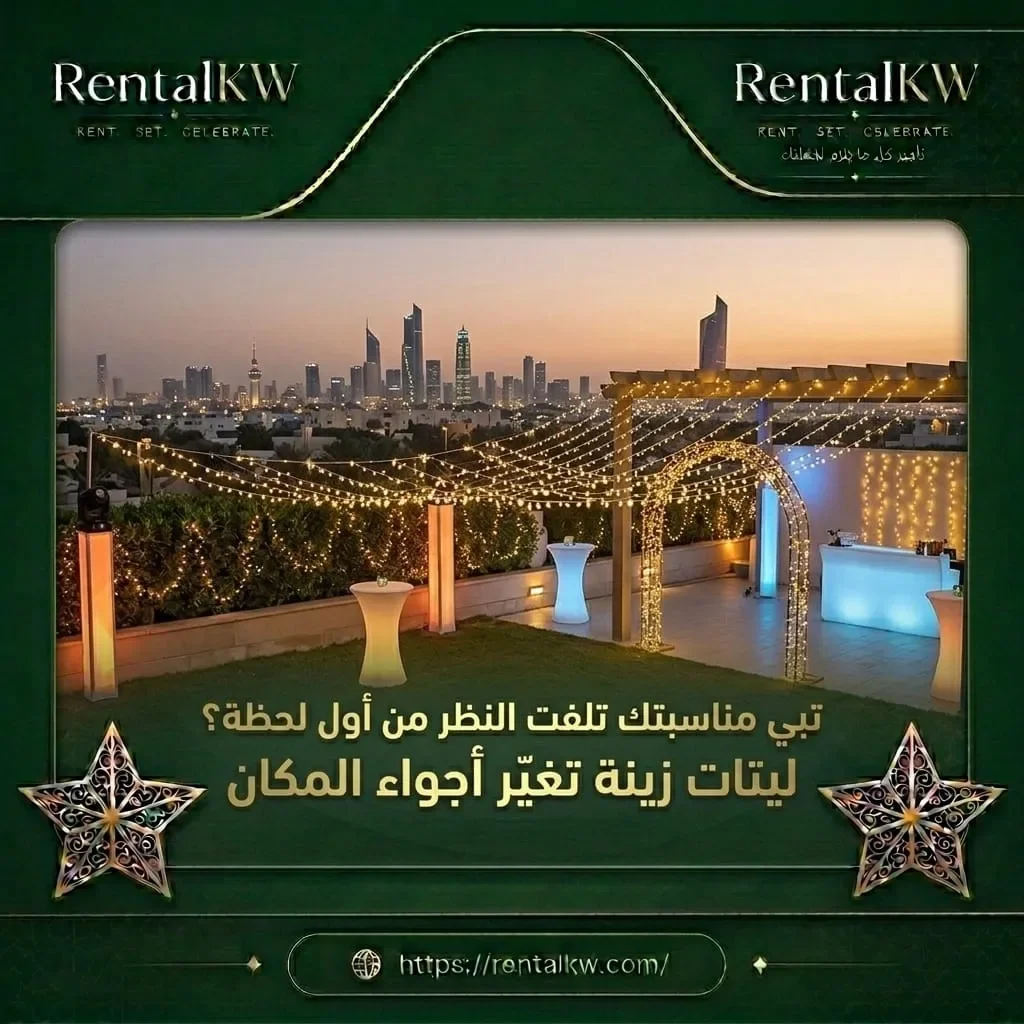
When looking for decorative light rental in Kuwait, asking only about the price per meter or the number of available light strings is not enough. A good service begins by understanding the venue and the atmosphere the customer wants to create before selecting lighting that supports the design. Some events need a warm and relaxing atmosphere, while others require clearer lighting around entrances, outdoor areas, or photography locations. Using exactly the same type of decorative lighting for every event will therefore rarely produce the best result.
From a practical perspective, decorative lighting should first be distinguished from functional lighting. Decorative lights can create an attractive background, define the shape of a tent ceiling, or highlight trees, but they may not always provide enough illumination for walkways, entrances, and service areas. A professional design combines visual appeal with practical use rather than relying entirely on one function.
The color of the lighting also has a major effect. Warm tones generally create a calmer atmosphere and often coordinate naturally with wooden seating, traditional furniture, and heritage-inspired decor. Cooler tones may work better with certain modern designs. However, mixing too many colors without a clear purpose can weaken the overall appearance instead of making it richer.
Practical installation experience also shows that installation quality is just as important as the quality of the lights themselves. A string that hangs unevenly or has a cable crossing the middle of a seating area can damage the final appearance regardless of how good the lighting product is. The suspension method, electrical source, and protection from environmental conditions should therefore be reviewed before installation.
Pricing is usually influenced by the total length and type of lights, number of lighting points, installation method, installation height, rental duration, event location, and whether the quotation includes dismantling, installation, and electrical extensions. It is therefore better to compare complete services rather than the price of an individual bulb or light string.
Before booking decorative lights, it is useful to:
• Define the intended visual atmosphere from the beginning whether it should feel warm and relaxed or brighter and more contemporary so the light color and string style support the personality of the event
• Divide the venue into decorative zones and areas that need practical illumination instead of assuming that one type of lighting can perform both functions equally well
• Review the height of the tent trees or other suspension points because the appearance of the light strings changes considerably depending on the distance between attachment points and the amount of hanging curve
• Ask exactly what the price includes in terms of supply installation electrical extensions and dismantling so additional costs do not appear after the design has been approved
• Agree on cable routes and how they will be concealed or secured before installation so they do not become visually distracting or create problems in circulation areas
• Test part of the lighting or inspect the actual color temperature when possible because photographs do not always represent the real appearance of light color and brightness at the venue
Decorative Lights for Tents
Choosing decorative lights for tents requires understanding the shape of the tent both internally and externally because an installation style that works beautifully in a tall tent may look crowded in a lower structure. The ceiling shape, interior lining, column locations, and air-conditioning equipment also determine where light strings can be installed attractively and safely.
Inside the tent, strings can be used to define ceiling lines, create a graduated arrangement, or distribute points of light above seating areas. However, the important thing is not to turn the ceiling into an overcrowded network that removes the calm visual character of the venue. In many cases, a cleaner arrangement with fewer clearly organized lines looks more elegant than covering the entire ceiling with excessive numbers of strings.
Lighting also affects the appearance of fabrics and decor colors. Tent lining can look noticeably different under warm yellow-toned lighting compared with cool white lighting. The color temperature of decorative lights should therefore be selected after considering the fabric, carpets, tables, and surrounding decor rather than choosing it separately.
In tents that already contain chandeliers, spotlights, or primary lighting, decorative strings should complement these sources rather than compete with them. If every source operates at high brightness simultaneously, the decorative effect of the strings may disappear and photographs may become excessively bright. This can be addressed by assigning different functions to the main and decorative lighting.
From practical setup experience, the distance between strings and the consistency of their installation have a major influence on the finished appearance. Uneven distribution becomes particularly obvious in wide-angle photographs and can make the installation look rushed.
When choosing decorative lights for a tent:
• Study the ceiling shape and height before selecting the suspension pattern because each string needs enough visual space to hang naturally without appearing too low or crowded
• Coordinate the light color temperature with the tent lining and carpets because lighting can change how colors are perceived and affect the appearance of the entire decor
• Define the role of decorative strings in relation to chandeliers and spotlights so different lighting sources do not compete for the same visual space and weaken each other's effect
• Maintain consistent spacing between suspension points because noticeable irregularities become easy to see in larger tents and reduce the quality of the finished installation
• Avoid routing cables or power components near air-conditioning outlets or in areas exposed to moisture or frequent guest movement
• Switch on all lighting sources together before the event and review the complete scene from several angles so excessively bright or underlit areas can be adjusted
Outdoor Seating Lighting
Outdoor seating lighting requires a different approach from lighting an enclosed tent because an open venue has no ceiling or walls to reflect light in the same way. A light source that appears powerful inside a tent may look considerably weaker when used in an open courtyard or large garden. Outdoor spaces should therefore be planned around the areas where guests actually gather rather than the total size of the property.
The first step is identifying the boundaries of the seating area. If chairs and tables are concentrated within a defined section, decorative lights can create a visual envelope around that zone instead of being spread across a large unused area. This helps the seating arrangement feel intentional and complete rather than appearing like furniture placed in the middle of a dark outdoor space.
Outdoor pathways are equally important. The entrance and the routes between parking areas, seating, buffet stations, and other facilities need functional lighting that serves a different purpose from the decorative lights above tables. Decorative strings alone may not provide enough illumination to reveal the ground, steps, or changes in level.
Wind also affects the design. Strings suspended between poles or trees need attachment methods suitable for the site so they do not move excessively or experience inappropriate tension. Outdoor components should also be selected according to their suitability for the environmental conditions and their technical ratings for exposure to moisture and dust.
Another obvious mistake is excessive brightness. Outdoor seating does not always need to turn nighttime into daylight because part of its beauty comes from a relaxed atmosphere and the contrast between illuminated areas and softer shadows.
When designing outdoor seating lighting:
• Define the actual seating zone and concentrate lighting around it instead of distributing decorative lights throughout an entire garden or courtyard without a direct relationship to guest areas
• Separate walkway and step illumination from decorative lighting so the venue remains attractive while still providing clear and safer movement
• Use stable attachment points suitable for outdoor conditions instead of relying on weak temporary solutions that may move or loosen during the event
• Select equipment intended for outdoor use according to its technical rating rather than using indoor components in areas exposed to moisture or dust
• Avoid increasing brightness beyond what the venue actually needs because evening seating areas often benefit from a softer layered design that creates depth instead of flat intense illumination
• Review the venue after actual sunset because a lighting arrangement that appears suitable during daylight can reveal completely different dark areas once night begins
LED Lights for Events
LED lights for events have become a practical option for many lighting setups because they provide considerable flexibility in shapes and color temperatures while generally using less electricity than many traditional lighting technologies when products delivering comparable illumination are considered. However, the term LED alone does not guarantee quality. Products vary in brightness, color consistency, component quality, operating method, and whether they are designed for indoor or outdoor use.
One of the most important details is color temperature. Warm lighting can give tents and outdoor seating a calmer atmosphere and often works naturally with wooden furniture, traditional sofas, and classic decor. Neutral white or cooler lighting may suit more contemporary designs. There is no universal rule here because the correct choice should form part of the event's overall visual identity.
Brightness should also be considered rather than color alone. Some lights look attractive when tested individually but become excessively bright when dozens of meters are installed in a relatively small area. The combined effect of the full installation should therefore be evaluated instead of judging every string separately.
The difference also becomes visible in photography. Inconsistent lighting or randomly mixing different color temperatures can cause skin tones and decor colors to change from one area to another. Events where photography and video are especially important should therefore coordinate decorative lighting with the requirements of the photography team.
For outdoor applications, the lights and electrical components should be appropriate for the environment according to their technical specifications rather than assuming that every LED product can safely withstand dust or moisture.
When selecting LED lights:
• Define the required color temperature as part of the complete decor concept so one area of the tent does not appear warm while another becomes unintentionally cool
• Evaluate the combined brightness after deciding how many strings will be installed because many small light sources together can create much greater illumination than a single test string suggests
• Choose products designed for the environment where they will be used and confirm that connectors and power supplies are appropriate for indoor or outdoor operation according to the event location
• Coordinate the decorative lighting with the photography team when photographs and video are important parts of the event so conflicting light temperatures do not create inconsistent backgrounds
• Avoid mixing models with visibly different light colors in the same zone simply to complete the required quantity because those differences become more noticeable after dark
• Test the lights at their actual installation height because brightness and distribution can feel very different when the source moves from eye level to a high tent ceiling
String Lights for Tents

String lights for tents can transform a simple ceiling into a major part of the event decor when the suspension pattern is selected according to the shape of the structure. The difference between an impressive installation and an ordinary one does not always come from the type of bulb. It can come from where each string begins and ends, the spacing between lines, the amount of sag, and the way the lights connect visually with the other ceiling elements.
In rectangular tents, longitudinal lines can emphasize the length of the venue, while a design extending from a central point can work when the ceiling structure allows it. In tents with multiple sections or numerous columns, it may be better to treat selected zones separately rather than forcing one pattern across the entire space.
The actual string length should be calculated according to the suspension route rather than tent dimensions alone. When a design includes curves or hanging arcs, the required quantity will be greater than the straight-line distance between the starting and ending points. Ignoring this detail can cause shortages during installation or force last-minute changes to the design.
Allowing strings to hang too low can also create visual and practical problems. They should remain clear of guest movement, tall decorative elements, and service equipment while still maintaining the intended appearance.
From practical installation experience, an organized string becomes part of the ceiling design, while randomly sagging cable looks temporary even when the bulbs themselves are high quality.
When designing string lighting for a tent:
• Select the suspension pattern according to the shape and orientation of the tent instead of copying a design created for another venue with completely different proportions
• Calculate string length according to the actual installation route including curves and hanging sections so the booked quantity is sufficient to execute the agreed design
• Determine the hanging height before installation while considering guests decor and service equipment so the strings do not become an obstacle inside the venue
• Distribute attachment points in a way that maintains a balanced appearance without placing unsuitable loads on one section of the tent structure
• Organize connection points between strings and electrical sources so they remain outside guest sightlines and photography angles as much as possible
• Inspect the complete arrangement after the lights are switched on at night because breaks or inconsistent hanging levels become much more obvious when the strings become the main illuminated ceiling feature
Decorative Garden Lights
Using decorative garden lights requires respecting the character of the landscape instead of treating the garden as an empty hall. Trees, walkways, plants, and exterior walls can become part of the lighting design itself. The objective is therefore not to cover everything with lights but to choose which features deserve emphasis while allowing other areas to remain visually quieter.
Trees, for example, can become strong focal points by illuminating trunks, highlighting selected branches, or suspending strings between them when the site and attachment method allow it. Decorating every tree in exactly the same way, however, can make the garden feel overcrowded and remove the sense of depth.
Walkways require a different approach. Their primary purpose is to help guests understand the direction of movement and see the ground clearly. Their lighting should therefore not depend entirely on elevated strings that may not provide adequate illumination at walking level.
Protecting the plants and venue is also important. Installation methods that could damage branches or vegetation should be avoided, and cables should not be routed carelessly through irrigation areas. Electrical equipment appropriate for outdoor conditions should also be used.
A garden becomes more visually attractive when lighting is built in layers. The seating area can be warmer and more prominent, pathways can be clearer, and the planted background can use softer illumination instead of applying the same brightness throughout the entire property.
When installing decorative garden lights:
• Select a limited number of prominent trees or landscape features to become illuminated focal points instead of decorating every element identically and losing visual depth
• Give pathways lighting that helps guests see the ground and move comfortably rather than relying entirely on elevated decorative lights
• Route electrical cables away from irrigation and water areas as much as possible and use components rated for outdoor conditions according to the site environment
• Choose attachment methods that do not damage trees or branches and avoid tightening strings in a way that could affect either the plants or the stability of the installation
• Build several levels of illumination so the seating area remains the main visual focus while trees and backgrounds act as supporting elements rather than competing attractions
• Inspect the garden after dark before approving the final arrangement because corners that appear unimportant during daylight can become significant visual areas once the lighting is switched on
Wedding Tent Lighting
Wedding tent lighting needs to balance several functions simultaneously because illumination supports guest reception, seating, the wedding stage, tables, photography, circulation, and decor. Using one brightness level for all these purposes often produces a visually flat tent where no individual feature receives meaningful emphasis.
A better approach begins by identifying the main focal elements. The wedding stage or bridal area may require a separate lighting treatment from the tables, while walkways need enough visibility for comfortable movement. Decorative strings can then visually connect these zones through a consistent color temperature or repeated ceiling pattern.
One mistake seen in wedding setups is choosing lighting only according to how it appears to the eye without considering the camera. Some light sources may look attractive to guests while producing overexposed areas or unwanted shadows in photographs. Coordination between decorative lighting and photography requirements can therefore make a significant difference.
Different stages of the celebration should also be considered. Lighting that works during guest reception may not create the desired atmosphere during seated portions of the event or the bride's entrance. When the system allows suitable adjustment, changing lighting levels can alter the mood without changing the decor.
When planning wedding tent lighting:
• Divide the tent into layers that include the wedding stage tables walkways and ceiling instead of trying to perform every function with one lighting type and one brightness level
• Give the bridal area enough emphasis to make it a focal point without increasing brightness so much that the rest of the tent appears excessively dark in comparison in photographs
• Coordinate color temperatures between ceiling lights and primary illumination so skin tones and decor do not appear noticeably different when guests move between areas
• Review lighting positions in relation to expected camera angles so strong sources do not shine directly into lenses or create distracting backgrounds
• Consider how the atmosphere may change during different stages of the celebration when the lighting equipment allows brightness adjustment without compromising safe walkway visibility
• Conduct a complete nighttime test after the wedding stage tables and decor are installed because lighting cannot be accurately evaluated before the elements that reflect and absorb it are in place
Entrance Lighting for Seating Areas
Entrance lighting for seating areas serves a different purpose from the lighting above tables because the entrance is the first point from which guests understand the venue. It should be visible from an appropriate distance, comfortable to look at, and naturally guide movement inside without becoming the brightest part of the entire event.
Decorative lights can define an entrance frame, mark the route leading toward it, or highlight surrounding architectural and landscape elements. The design should remain connected to the visual identity inside the seating area so guests do not feel that they have moved from one style of entrance into an event with a completely unrelated character.
Steps and changes in ground level need particular attention. Elevated decorative lighting may make an entrance look beautiful in photographs but does not necessarily help guests see the edge of a step. Practical illumination at walking level should therefore support the decorative elements.
Electrical cables and power supplies should also not be positioned directly where guests enter. The entrance is one of the busiest areas of an event, making it important to route electrical equipment away from foot traffic or secure unavoidable extensions appropriately.
When preparing entrance lighting:
• Make the entrance visible from the direction guests actually approach instead of placing decorative elements where they look attractive but cannot be seen clearly during arrival
• Connect the color and design of the entrance lighting with the main seating area so the entrance works as an introduction to the event rather than a separate visual feature
• Provide adequate illumination for steps edges and changes in ground level instead of relying entirely on elevated decorative strings
• Avoid strong lighting aimed directly toward guests' faces as they enter and use a more comfortable distribution that helps the eyes transition naturally into the seating area
• Keep cables transformers and power sources away from the main entry path and properly secure any extensions that cannot be relocated
• Test the entrance from the actual guest arrival point after dark to confirm that the route remains visually clear from the outside until guests reach the seating area
Installing Lights for Outdoor Events
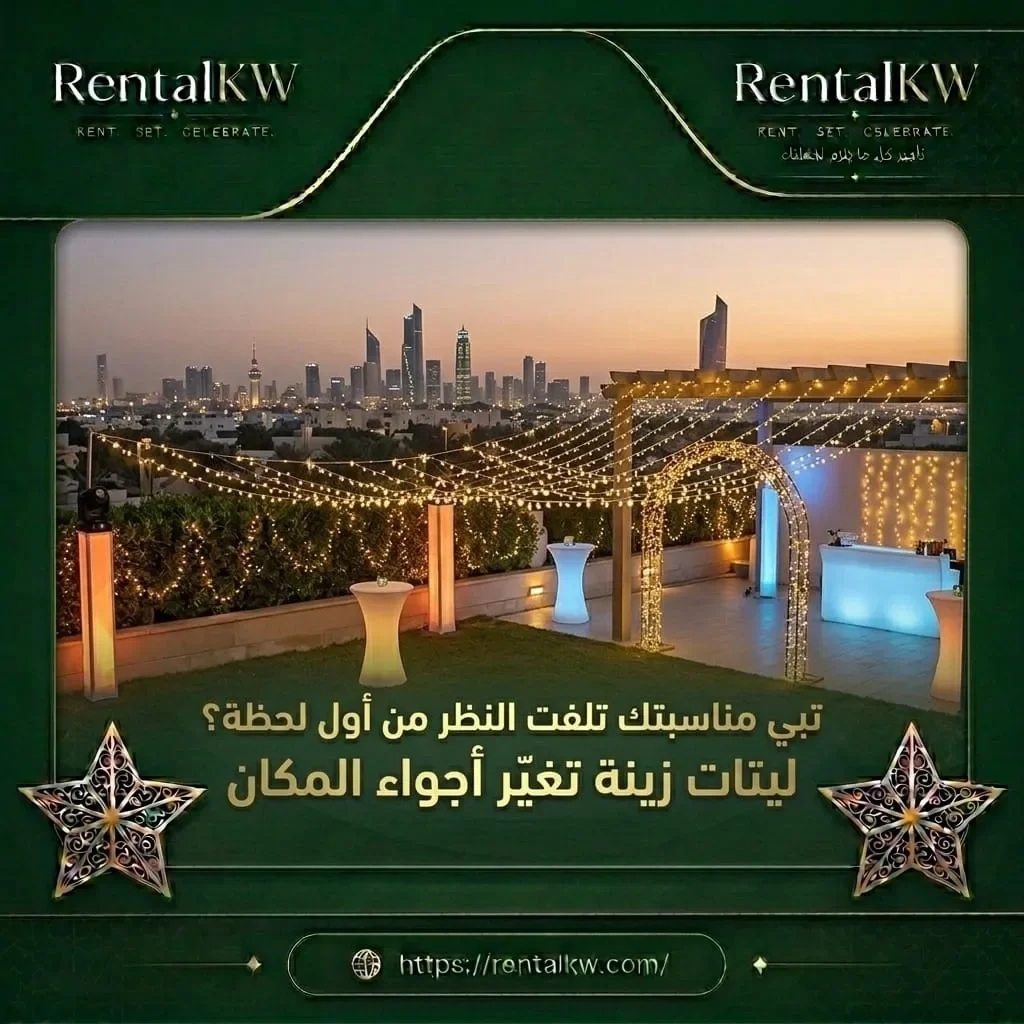
Installing lights for outdoor events requires greater technical attention than hanging them inside a protected venue because wind, dust, moisture, and the nature of attachment points all affect the safety and stability of the installation. An attractive design cannot be considered successful if it depends on components unsuitable for the environment or unstable suspension points.
Before installation, the attachment locations should be identified and assessed, whether they are purpose-built structures, poles, or existing site features. A tree, wall, or lightweight structure should not automatically be treated as an appropriate load-bearing point simply because it is located in the ideal visual position.
Electrical planning comes next. Connections and power supplies used outdoors should be suitable for the conditions according to product specifications and positioned to reduce unnecessary exposure to water or interference. Cables should also be organized so they do not cross walkways openly.
At larger venues, dividing lighting into appropriately planned circuits can also improve operation. Connecting the entire installation to one point may allow a single problem to affect all the decorative lighting, while better organization can make testing and troubleshooting easier according to the electrical setup of the site.
When installing outdoor event lights:
• Inspect attachment points before installing strings and do not use an unsuitable feature simply because it occupies the ideal position from a visual perspective
• Use lights connectors and electrical components appropriate for outdoor use according to their product ratings and the expected environmental conditions at the venue
• Protect cable routes from guest movement and service equipment rather than leaving exposed wires running across circulation areas
• Consider how strings may move in the wind and avoid either excessive tension or excessive looseness that could affect installation stability as conditions change
• Organize circuits and operating points at larger events in a way that makes testing easier and helps isolate a problem without unnecessarily affecting the entire lighting design
• Perform a final nighttime test after installation to confirm string stability electrical organization and visual consistency across the complete setup
Booking Tent Decoration and Lighting
Properly booking tent decoration and lighting begins by defining the appearance of the event rather than immediately requesting a specific number of meters of decorative lights. The service provider needs to understand the tent dimensions, ceiling height, seating style, decor colors, outdoor areas, and entrances to develop a design that reflects the actual venue.
Reference photographs are useful for communicating personal taste, but they do not mean a design can always be copied exactly. Differences in ceiling height, column positions, or tent size may require adjustments to the string layout so the final installation maintains the same sense of balance.
Pricing comes after the concept has been defined. The quotation should clarify the type of lights, quantity or scope of work, installation method, and whether electrical extensions, power supplies, installation, and dismantling are included. Any additional work for entrances or gardens should also be clearly identified separately from the main tent.
Installation timing is important because the elements that influence lighting should already be known. Installing decorative lights before confirming the location of the wedding stage or major decor elements may lead to unnecessary rework.
Time should also be reserved for a nighttime test because decorative lighting cannot be judged accurately under daylight conditions.
Before confirming the booking:
• Provide the tent dimensions height and site photographs when available so the lighting design can be based on the real venue rather than a generic template
• Explain the decor colors seating style and intended atmosphere so the light color temperature and string pattern can be selected to match the event's personality
• Identify every area included in the quotation such as the tent interior entrance garden and walkways so important sections are not accidentally excluded from the price
• Request clear details regarding installation dismantling electricity and extensions so the final cost is understood before work begins
• Coordinate the installation schedule with the wedding stage furniture and other decorative elements so the lighting can be designed around the final arrangement rather than requiring later changes
• Allow enough time for operation and inspection after dark so brightness or direction can be adjusted in specific areas before guests arrive
Conclusion
Successful decorative light rental for tents and outdoor seating is not determined by how much lighting is installed but by how effectively it is used to create a clear identity for the venue. Decorative lights can make a simple tent feel warmer and more elegant, and they can transform a large garden into a visually connected seating environment when illuminated zones are planned carefully.
The first step is always understanding the purpose of each part of the lighting system. Some lights are decorative, others support movement, some highlight the entrance or wedding stage, and others help create a suitable background for photography. When all these functions are forced into one lighting type, problems with brightness and distribution begin to appear.
Color temperature is equally important. Choosing warm or white lighting should be connected to the colors of the tent, furniture, decor, and type of event rather than personal preference alone. Keeping light temperatures consistent within the same area also helps the design appear more professional.
Outdoor seating introduces additional factors such as wind, moisture, attachment points, and electrical routes. Equipment should therefore be suitable for outdoor conditions and installed in a way that protects guests while keeping the strings stable throughout the event.
Weddings require another level of coordination because lighting directly affects photographs and video. In these situations, cooperation between decor, lighting, and photography becomes more valuable than simply increasing the number of light sources.
Price should also be evaluated according to the design, materials, quantity, installation, electrical extensions, dismantling, and rental duration rather than the price per meter alone. The cheapest quotation is not necessarily the best when it excludes essential parts of the complete installation.
Ultimately, the best lighting is lighting whose beautiful effect guests notice without feeling that the venue is crowded with bulbs and cables. When color, brightness, height, distribution, and electricity are planned as one system, decorative lights become part of the event experience itself rather than simply an accessory hanging in the background.
Frequently Asked Questions
How do I choose the right decorative lights for a tent?
The selection begins with the tent height, ceiling shape, lining colors, decor, and type of event. The appropriate color temperature, string pattern, and quantity can then be chosen to achieve the desired appearance without overcrowding the venue.
Are LED lights suitable for outdoor events?
Products designed and rated for outdoor use can be used when their connectors, power supplies, and installation methods are also suitable for the environmental conditions at the venue.
Are decorative lights enough for illuminating walkways?
Not always. Decorative lighting may not provide enough visibility for the ground and steps, so functional walkway lighting should usually be provided alongside decorative elements when required.
What is the best light color for tents?
There is no single color that works for every tent. Warm lighting suits many relaxed and traditional seating designs, while other color temperatures can be selected according to the decor colors and overall identity of the event.
How is the required length of string lights calculated?
The length should be calculated according to the actual suspension route rather than tent dimensions alone because curves and hanging sections between attachment points increase the required quantity beyond the straight-line distance.
Do decorative lights affect wedding photography?
Yes. Light color temperature, brightness, and source position can affect skin tones, backgrounds, and photographs, which is why decorative lighting should ideally be coordinated with photography requirements.
When should tent lights be installed?
Installation should be coordinated after the locations of major elements such as the wedding stage, furniture, and decor are known while leaving enough time for nighttime testing and any necessary adjustments.
What should a decorative light rental quotation include?
A clear quotation should specify the type of lighting, quantity or scope of work, installation areas, electrical extensions, installation, dismantling, rental duration, and any additional lighting required for entrances or gardens.