
Heater Rental for Tents and Outdoor Events

In this article
- Heater Rental for Tents in Kuwait
- Pyramid Heaters for Outdoor Events
- Gas Heaters for Tents
- Electric Heaters for Seating Areas
- Heating Wedding Tents
- Garden Heaters for Parties
- Heating Camps and Outdoor Majlis Areas
- Heaters for Open-Air Events
- Choosing the Number of Heaters for a Tent
- Booking Outdoor Heaters in Kuwait
- Conclusion
- Frequently Asked Questions
Heater rental for tents and outdoor events requires more planning than simply choosing several units and placing them around the seating area because outdoor heating is directly affected by airflow, tent size, ceiling height, number of entrances, seating layout, and event duration. From practical experience preparing winter events, one heater positioned in the wrong place can be less effective than a lower-capacity unit placed in a more suitable location. The correct approach therefore begins by identifying the actual guest seating zones, evaluating how exposed each section is to moving air, and then choosing the heater type and quantity according to real use rather than relying only on the total venue area or booking a large number of units as a precaution.
Heater Rental for Tents in Kuwait
Heater rental for tents in Kuwait requires a clear understanding of the tent itself before the heater type or quantity can be selected because tents differ significantly in their ability to retain warmth. A tent with enclosed sides and one limited entrance behaves differently from a large structure whose doors remain open frequently or which contains several access points. Ceiling height also affects how warm air is distributed because some of the heat naturally rises above the guest seating level.
From practical experience preparing winter tents, heater distribution is often more important than the number of units alone. If all heaters are placed in the center, outer sections and areas close to entrances may still remain noticeably colder. In contrast, distributing the units around occupied seating zones and adding extra support to sections that are more exposed to airflow usually provides better use of every heater.
The seating configuration must also be considered. Rows of chairs require a different heating arrangement from sofa seating or round tables because guest spacing and circulation routes are different. There is therefore no single fixed quantity that can be applied to every tent of the same size.
When renting heaters for tents, review:
• The actual occupied seating area inside the tent rather than relying only on the external dimensions
• Tent height and how it affects heat retention around guest level
• The number of entrances and how frequently they will be opened during the event
• The layout of seating tables and aisles before heater positions are selected
• The heater type that is appropriate for the tent and expected use
• Delivery installation operational preparation and collection services included in the booking
Pyramid Heaters for Outdoor Events

Pyramid heaters for outdoor events are often selected because they combine heating with a strong visual presence. Their vertical design makes them a visible part of the seating environment rather than equipment hidden behind the event setup. For this reason, they are frequently used in gardens, reception areas, and open outdoor spaces that require direct heating while maintaining an organized appearance.
From a practical perspective, pyramid heaters should be selected according to seating distribution rather than the outer boundaries of the venue. A garden may be large, but if guests are concentrated in only two main seating areas, it is more efficient to place the heaters around those zones instead of spreading them across the complete perimeter. This improves practical heating performance and reduces the need for unnecessary units.
Spacing also matters. Positioning a heater too far from guests reduces the benefit, while placing it directly inside a busy circulation route can make movement uncomfortable. Its location should therefore be considered as part of the seating design from the planning stage.
When selecting pyramid heaters, consider:
• The number of independent seating zones that genuinely require heating
• Appropriate distance between heaters and guests to support comfort without congestion
• Wind direction and how it affects the perceived warmth around each seating group
• Heater position in relation to tables aisles and service routes
• The visual importance of the unit within the event design
• The ability to modify the layout if guest numbers or seating arrangements change
Gas Heaters for Tents
Gas heaters for tents may be used in certain outdoor or semi-open spaces when the location is suitable for the operating requirements of the equipment. Their selection should therefore depend on the characteristics of the venue and the manufacturer’s operating instructions rather than heating strength or rental price alone.
From practical experience, one of the biggest mistakes is assuming that gas heaters are suitable for every tent. Ventilation, appropriate clearances, circulation routes, and surrounding materials all need to be considered carefully. Units should not be placed in heavily congested locations or directly beside materials that are not suitable for close proximity to a heat source. Planning the heater positions in advance is therefore an essential part of the setup.
Event duration also affects operating requirements. A short gathering differs from a celebration that continues for several hours, so it is important to understand whether the booking includes the full operating support required throughout the event or whether additional arrangements may be needed.
When using gas heaters, consider:
• Whether the tent or outdoor location is appropriate for the equipment according to its operating requirements
• Maintaining suitable clearance around every heater and keeping it away from crowded circulation routes
• Avoiding placement near fabrics or other materials that should not be exposed to close heat sources
• The expected operating duration throughout the event
• Distributing units across several occupied areas instead of concentrating them in one location
• Confirming that delivery setup and collection are included in the required service
Electric Heaters for Seating Areas
Electric heaters for seating areas require planning around available electrical sources and the ability of the venue to support the required number of units appropriately. They can be practical in certain majlis areas or covered spaces, but their effectiveness depends on outlet locations, connection routes, and the characteristics of the seating area.
From a practical perspective, having a nearby outlet does not automatically mean the venue can operate several heaters simultaneously. The operating requirements of each unit should be understood, and electrical demand should not be concentrated on one source beyond what the setup can support. Cables should also be routed so they do not pass through guest walkways or create unnecessary trip hazards.
The performance of electric heaters also changes according to how enclosed the location is. A protected space may retain warmth more effectively than a completely open seating area that loses heat continuously through moving air. The decision should therefore be based on actual venue conditions.
When preparing seating areas with electric heaters, review:
• The number and location of available electrical sources in relation to the seating
• Equipment operating requirements and the number of units that can be supported appropriately
• Cable routing away from guest circulation areas
• The level of enclosure and continuous exposure to airflow
• The number of operating hours required during the event
• The need to test all heaters before guests arrive
Heating Wedding Tents
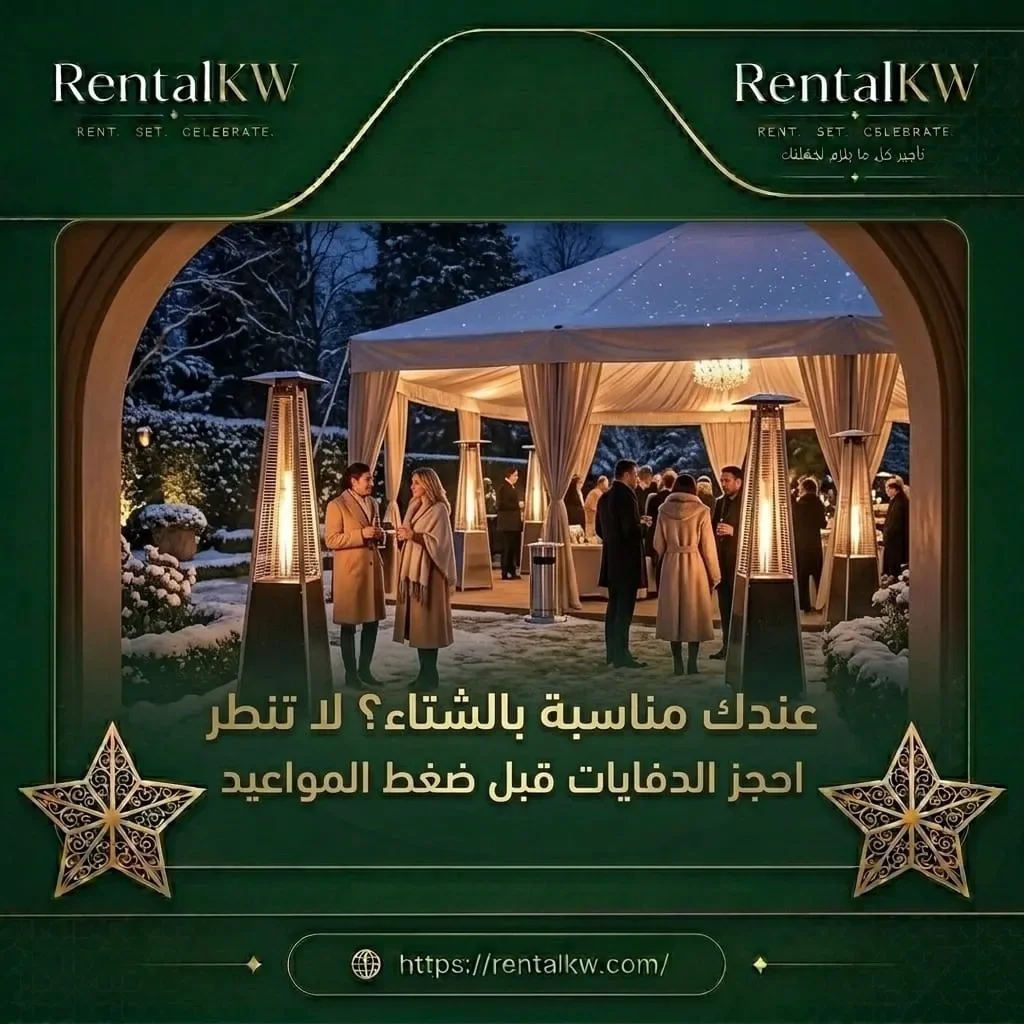
Heating wedding tents requires a higher level of planning because a wedding tent usually contains tables, seating, lighting, decoration, circulation routes, and a main platform, all of which affect the locations where heaters can be placed. A large guest count and continuous movement through entrances also influence the perceived temperature inside the tent.
From practical experience, one of the best methods is to divide the tent into separate heating zones rather than treating it as one uniform space. The reception area may require a different level of support from the main seating section, while entrances may need additional attention because they allow colder air to enter. This zoning approach reduces dependence on a large number of heaters distributed without a clear strategy.
The equipment should also avoid becoming a visual or operational obstruction. Heater positions should preserve the overall wedding appearance and should not interfere with decoration, photography routes, or service movement.
When heating a wedding tent, consider:
• The table and seating layout before final heater locations are confirmed
• Entrances and sections where heat loss is likely to be more noticeable
• The couple’s platform and photography routes and whether heaters would interfere with those areas
• The balance between thermal comfort and the overall visual design of the celebration
• The number of guests expected during peak attendance
• Operating and reviewing the heating arrangement before guest reception begins
Garden Heaters for Parties
Garden heaters for parties should be planned according to the shape and features of the garden rather than total area alone because trees, walls, pathways, and seating zones create different levels of exposure to airflow. One corner may be relatively protected while another requires stronger heating support even when the two areas are only a short distance apart.
From a practical perspective, heaters should be concentrated around the primary seating areas rather than positioned along the outer limits of the garden. Guests need warmth where they are actually sitting rather than in unused parts of the property. Natural and structural features such as walls or dense planting can also reduce airflow in certain locations and influence where additional heating is required.
Guest and child movement should also be considered so heaters are not positioned directly in transition routes, play areas, or main entrance paths.
When preparing garden heaters, review:
• The primary seating locations rather than the complete garden area
• Wind direction and features that provide some protection from moving air
• Walkways used continuously by guests
• Appropriate clearances around each heater
• Coordination between heaters outdoor lighting and decoration
• The ability to reposition certain units if the seating plan changes during setup
Heating Camps and Outdoor Majlis Areas
Heating camps and outdoor majlis areas requires attention to longer periods of use because these locations may receive guests for many hours extending late into the night. The objective is therefore to maintain stable and comfortable heating around occupied areas rather than create only a short-term increase in warmth.
From practical experience, the most frequently used seating areas should be identified first. Some camps include one main majlis, secondary seating zones, and outdoor pathways, and it is not necessary to heat all of these areas to the same level. Equipment can be concentrated around the main majlis, with limited support added to secondary areas when required.
The degree to which outdoor majlis sides are opened or closed can also significantly change heating requirements. Any change in enclosure should therefore influence the quantity and distribution plan.
When heating camps and outdoor majlis areas, consider:
• The expected duration of use especially during late-night hours
• The zones where guests spend most of their time
• The degree of enclosure and the effect of outdoor airflow
• Circulation space between sofas chairs and tables
• Selecting a heater type suitable for the specific location
• Having a reasonable contingency plan if temperatures become lower than expected
Heaters for Open-Air Events
Heaters for open-air events are affected more strongly by airflow than most other uses because there are no surrounding walls to retain warmth. Heating should therefore be treated as localized comfort around people rather than an attempt to warm the entire outdoor venue.
From a practical perspective, two heaters positioned around one occupied seating group can sometimes be more effective than several units located farther away. The more closely the heating plan follows actual guest use, the better the performance and the less need there is to increase the quantity.
Wind direction may also change during the evening, so it is useful to create a layout that allows reasonable flexibility if heater positions need to be adjusted.
When preparing an open-air event, review:
• The number of independent seating groups inside the venue
• The distances between seating areas and whether one heater can effectively support more than one nearby section
• Expected wind direction and overall venue exposure
• Keeping aisles and exits clear of heater units
• The most suitable heater type for the open environment
• The possibility of adjusting positions after the actual temperature conditions are tested before guests arrive
Choosing the Number of Heaters for a Tent

Choosing the number of heaters for a tent depends on several factors that cannot be reduced to floor area alone. Tent height, number of entrances, enclosure level, heater type, airflow, and guest numbers all influence the appropriate quantity.
From practical experience, using a fixed rule such as one heater for a specific area can produce inaccurate results because two tents with identical dimensions may have completely different requirements. A better approach is to divide the tent into occupied seating zones and evaluate every section individually.
It is also useful to separate the primary quantity from the reserve quantity. Keeping one additional unit available when justified can be better than operating a large number from the beginning without a clear need.
When choosing the quantity, consider:
• The occupied seating area rather than unused space inside or around the tent
• Tent height and the amount of warmth that may rise above guest level
• The number of entrances and how frequently they are opened
• The output and type of each heater rather than counting units alone
• Seating zones that are more exposed to colder airflow
• The ability to keep a reserve heater available without placing it in circulation routes
Booking Outdoor Heaters in Kuwait
Booking outdoor heaters in Kuwait should begin after identifying the venue type, number of seating areas, event timing, and expected duration of use. The clearer these details are, the easier it becomes to select the appropriate heater type, quantity, and delivery and installation plan.
From a practical perspective, heaters should not be booked according to photographs alone. Their dimensions, operating characteristics, and suitability for a garden, tent, or outdoor majlis should be understood before confirmation. The services included in the rental price should also be explained clearly.
Delivery should ideally be scheduled early enough to allow the heaters to be tested and the distribution adjusted if necessary before guests arrive rather than operating the equipment for the first time once the event has already started.
When booking, confirm:
• The heater type and quantity and whether they match the venue requirements
• Delivery and installation timing before the event begins
• Services included in the booking such as operational preparation testing and collection
• Whether the quantity can be adjusted if seating arrangements or weather expectations change
• The amount of space required around each heater at the location
• The final cost after all required services have been included
Conclusion
Successful heater rental for tents and outdoor events begins with understanding that outdoor heating is not determined by the number of units alone. Tent characteristics, airflow, seating locations, entrances, and heater type all influence the level of comfort guests will actually experience.
Carefully planned distribution is more important than simply increasing the quantity. Positioning heaters near occupied seating zones and identifying sections with greater exposure to airflow allows every unit to work more effectively and prevents the budget from being spent on equipment that creates little practical difference.
The heater type should also match the location. Pyramid heaters, gas heaters, and electric heaters all have different operating and placement requirements, so selection should never be based on appearance or rental price alone.
Safety and organization are also part of a high-quality setup. Heaters should not restrict aisles or be positioned in locations unsuitable for their operating characteristics. Electrical connections and operating sources should also be organized clearly before guests arrive.
Ultimately, the strongest booking begins by evaluating how the venue will actually be used and then defining the required heater type, quantity, distribution, and supporting services. This gives guests a more comfortable environment and ensures that spending is connected to genuine heating needs rather than general estimates that do not suit every event.
Frequently Asked Questions
How do I know how many heaters a tent needs?
The quantity should be determined according to occupied seating area, tent height, number of entrances, level of enclosure, heater type, and guest numbers. Floor area alone is not enough because tents can differ significantly in how they retain warmth.
Are pyramid heaters suitable for outdoor events?
They can be suitable for many gardens, outdoor seating areas, and open reception spaces, but their positions should support actual guest zones, preserve circulation routes, and remain appropriate for the operating characteristics of the equipment.
Can gas heaters be used inside tents?
That depends on the heater type, tent characteristics, and the operating instructions for the equipment. The location, ventilation, and required clearances should all be confirmed before using a gas heater in any tented environment.
When are electric heaters a suitable choice?
They can be practical in some covered seating areas when suitable electrical sources are available and connections can be organized properly away from guest movement.
Does a wedding tent need a different heater layout?
Yes. Wedding tents contain tables, circulation routes, a main platform, and several entrances, so it is usually better to divide the tent into heating zones rather than distributing equipment equally throughout the entire structure.
Does increasing the number of heaters always improve heating?
Not necessarily. Heater position and distribution can be just as important as quantity. Fewer units placed correctly can sometimes be more effective than many heaters located too far from guests or in unsuitable positions.
When should heaters be operated before the event?
They should be tested early enough before guest arrival to identify colder areas and allow any necessary distribution adjustments rather than waiting until the event has already begun.
What is most important before booking outdoor heaters?
Identify the venue type, occupied seating area, guest numbers, and event duration, then confirm the heater types, included services, and delivery, installation, and collection arrangements.