
Transparent Chair and Table Rental for Events
In this article
- Transparent Chair and Table Rental
- Acrylic Chairs and Glass Tables
- Transparent Napoleon Chairs with Tables
- Round Tables with Transparent Chairs
- Illuminated Tables and Acrylic Chairs
- Transparent Seating for Wedding Celebrations
- Modern Table and Chair Coordination
- Transparent Engagement Seating Setup
- Transparent Chairs for Hospitality Tables
- Booking a Transparent Chair and Table Set
- Conclusion
- Frequently Asked Questions
Transparent chair and table rental for events has become a popular choice for weddings, engagements, and celebrations built around a light, modern design because transparent furniture allows decorations, lighting, and table details to remain visually prominent. However, the success of this seating style does not depend on the appearance of the chair or table alone. It requires proper coordination between dimensions, materials, guest numbers, lighting conditions, and available circulation space. From practical event preparation experience, one of the most common mistakes is selecting chairs and tables separately and only discovering during installation that they do not work well together. The correct approach is to design the seating arrangement as one complete unit first and then determine the required quantities, spacing, and appropriate locations for every piece.
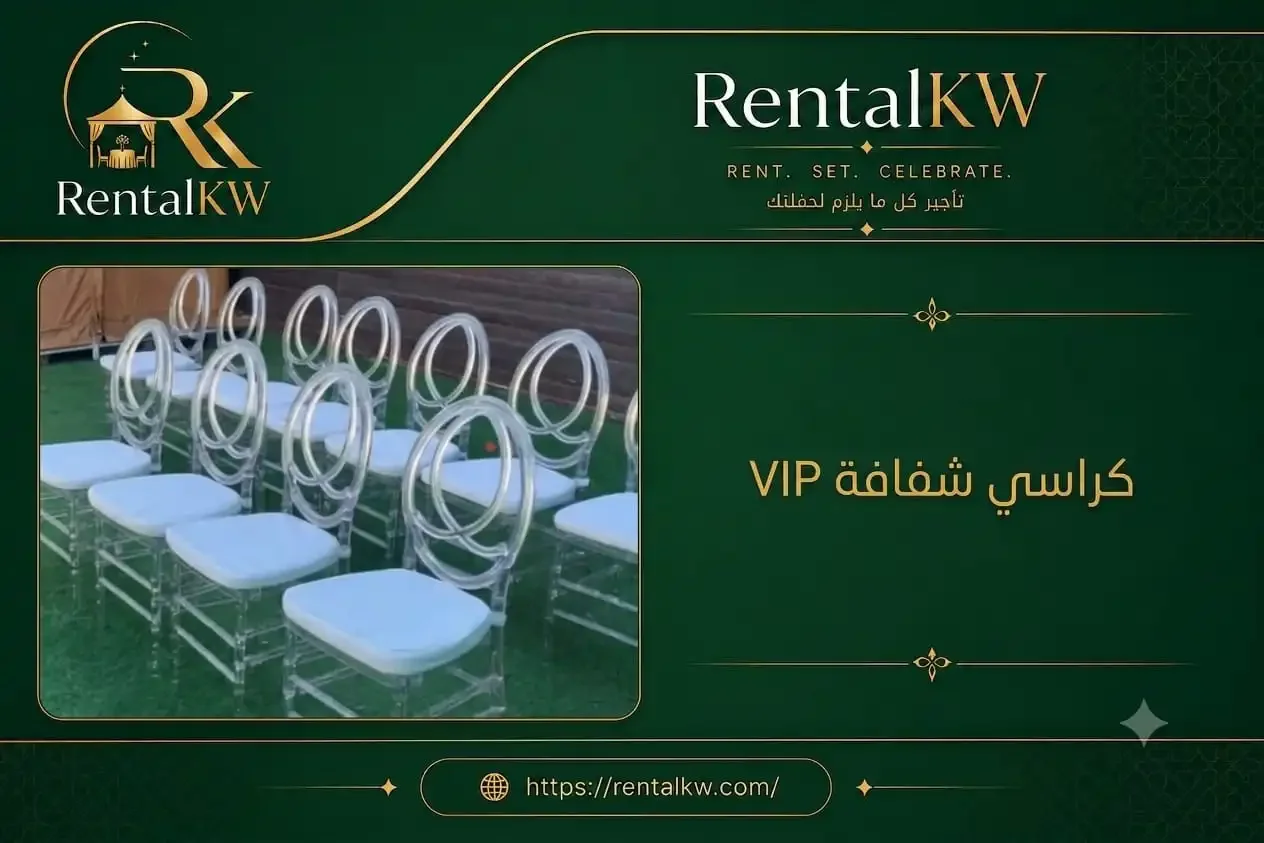
Transparent Chair and Table Rental
Transparent chair and table rental should be approached as the creation of a complete seating arrangement rather than simply combining two types of furniture in one order. A transparent chair naturally reveals the surrounding environment instead of visually covering background elements like some solid chairs. This means the table, its base, the flooring, and even the empty spaces between furniture pieces all become visible parts of the overall design. Matching the chairs and tables in height, dimensions, and style is therefore an essential step before confirming the booking.
From practical experience preparing weddings and events, some furniture combinations look excellent when each individual piece is photographed separately but lose their visual harmony once assembled. A table may have a large base that limits legroom, or its diameter may be too small for the selected number of chairs. The result can be an overcrowded seating area even though the furniture itself is elegant. For this reason, the complete arrangement should be evaluated rather than judging every piece independently.
Transparency also makes accurate furniture arrangement more important. Any inconsistency in chair direction, spacing, or table position becomes noticeable in wide photographs. The final arrangement stage is therefore just as important as furniture selection itself, particularly at weddings and engagement celebrations where photography forms an important part of the event.
When selecting transparent chairs with tables, review:
• Chair height compared with table height so guests can remain comfortable throughout the event
• Table dimensions and the realistic number of seats that can be distributed around it without overcrowding
• The design of the table base because transparent furniture makes it a visible part of the scene rather than a hidden structural element
• The space required to pull chairs back and move comfortably around every seating group
• Consistency in the condition and finishing of tables and chairs so obvious differences do not appear between groups
• The final arrangement within the venue and how effectively it works with circulation routes and photography areas
Acrylic Chairs and Glass Tables

Combining acrylic chairs and glass tables can create a strong sense of visual lightness and openness because transparent elements reduce the appearance of heavy furniture and allow flooring, decorations, and flowers to remain more visible. However, this combination requires careful control because too many reflective surfaces or overly strong lighting can transform a calm and elegant design into a scene filled with distracting reflections.
From practical coordination experience, a successful arrangement often begins by evaluating the table base before focusing on the tabletop. The glass surface itself is transparent, but the base remains highly visible through both the table and surrounding chairs. If the base is oversized or visually inconsistent with the other elements, it may become an unwanted focal point. The entire table should therefore be evaluated as one complete design rather than considering only its glass surface.
Flooring also plays an important role. When the floor contains patterns or substantial visual detail, combining glass and acrylic makes these features fully visible. This can be an advantage when the flooring is attractive and coordinated with the event design, but it can create visual congestion when the background already contains many decorative elements.
Lighting directly affects the final result as well. Carefully directed lighting can create attractive reflections on glass, while poorly distributed illumination may produce distracting bright spots in photographs. Testing the lighting is therefore an essential part of final preparation.
When choosing acrylic chairs with glass tables, consider:
• The table base design and how prominently it will appear through transparent surfaces and chairs
• Flooring colors and elements beneath the seating because they will remain clearly visible
• The level of reflections created by venue lighting and their effect on photography
• Table thickness and dimensions and whether they suit the number of surrounding chairs
• The condition and cleanliness of glass and acrylic surfaces before guests arrive
• Coordination between flowers tables and chairs so the overall scene does not become visually overloaded
Transparent Napoleon Chairs with Tables
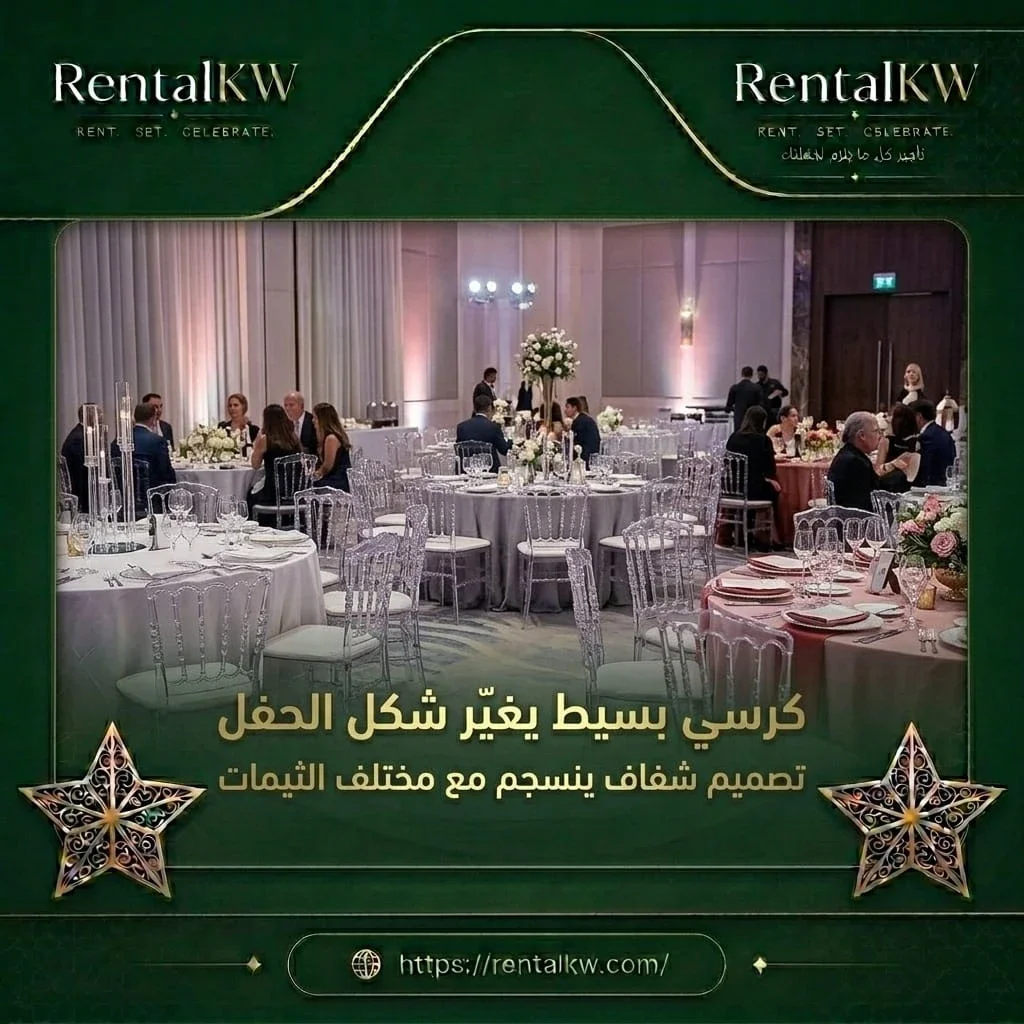
Transparent Napoleon chairs with tables are used when an event aims to combine the familiar character of Napoleon-style chairs with the contemporary appearance created by transparent furniture. This style can have a strong visual presence around guest tables because the repeated chair-back design becomes part of the complete seating composition. The number of chairs and the way they are distributed around each table therefore have a significant effect on the final result.
From practical experience, placing too many transparent Napoleon chairs around one table can reduce their visual impact. This chair style contains noticeable details in the back, and when the seats are positioned too closely together, the arrangement appears dense while guests may struggle to pull chairs out comfortably. It is better to use a quantity that matches the table diameter and available space rather than increasing capacity at the expense of comfort.
The table design also requires careful selection. Some tables with large bases may interfere with legroom, while central or visually lighter bases can work better for certain arrangements. There is no single solution suitable for every situation because the base design, table dimensions, and number of guests must be evaluated together.
Consistency also becomes important when several tables are prepared. If some chairs are older or show more scratches than others, the differences may become noticeable as seating groups repeat across the venue. The complete quantity should therefore be reviewed as one collection before final distribution.
When preparing transparent Napoleon chairs with tables, consider:
• The suitable number of seats for each table according to its dimensions rather than the maximum number that can physically be compressed around it
• The distance between chair backs so the arrangement preserves visual lightness and comfortable use
• The table base design and whether it provides sufficient legroom and freedom of movement
• Consistent chair direction around all tables to create an organized appearance in photographs
• The condition of transparent furniture pieces and whether they are consistent in cleanliness and clarity
• The distance between table groups so movement remains comfortable even after guests pull their chairs backward
Round Tables with Transparent Chairs
Round tables with transparent chairs combine practical guest grouping with a visually light appearance, making them suitable for weddings, engagements, and events where clearly defined seating groups are required inside a hall or tent. However, the success of this arrangement depends on table diameter, seat quantity, and spacing between groups because transparency cannot compensate for poor furniture distribution or restricted circulation routes.
From practical preparation experience, a round table requires calculated clearance around its entire perimeter because chairs move outward in several directions. If too many seats are positioned around a small table, movement becomes difficult. If the table diameter is unnecessarily large, it consumes valuable floor space and reduces the number of seating groups that can fit comfortably inside the venue.
The centerpiece also affects the quality of the seating arrangement. Flowers or decorations that are excessively tall may block visibility between guests, while a carefully designed lower arrangement can support comfortable conversation and keep the transparent chair design visible. The table must therefore support both comfort and appearance.
When using round tables with transparent chairs, review:
• Table diameter and the realistic number of chairs that can fit around it without overcrowding
• The space required around each table for pulling chairs back and moving between seating groups
• Centerpiece height and size so it does not obstruct guest visibility or dominate the arrangement
• The distance between tables to allow service staff to move without colliding with chairs
• The coordination of table linens or tabletop surfaces with the transparent chair design
• The distribution of seating groups throughout the venue to maintain visual balance and comfortable circulation
Illuminated Tables and Acrylic Chairs
Illuminated tables and acrylic chairs create a distinctive contemporary appearance, particularly in reception areas, side seating sections, and spaces intended to attract visual attention. However, this combination should be used carefully because transparency and illumination together can become visually overwhelming when repeated throughout the entire venue.
From practical experience, stronger results are usually achieved when illuminated tables are positioned at selected focal points rather than distributed equally across every seating area. They can be used at a reception point, photography corner, or primary seating section while simpler tables serve the remaining areas. This preserves their visual impact and prevents the event design from becoming overloaded with light.
Lighting intensity should also be reviewed carefully. If the table illumination is too strong, it may appear excessively bright in photographs and reduce the visibility of surrounding furniture details. The tables should therefore be tested after the venue’s general lighting has been switched on so the balance between furniture and surrounding illumination can be evaluated accurately.
When preparing this type of seating arrangement, consider:
• The locations where illuminated tables will provide meaningful visual impact
• Lighting intensity and how well it coordinates with the venue’s general illumination
• Acrylic chair design and the way light reflects through or across its surfaces
• Electrical sources and connection routes that do not interfere with guest movement
• Appropriate table dimensions in relation to the number of surrounding chairs
• Required operating duration and a complete testing plan before the event begins
Transparent Seating for Wedding Celebrations
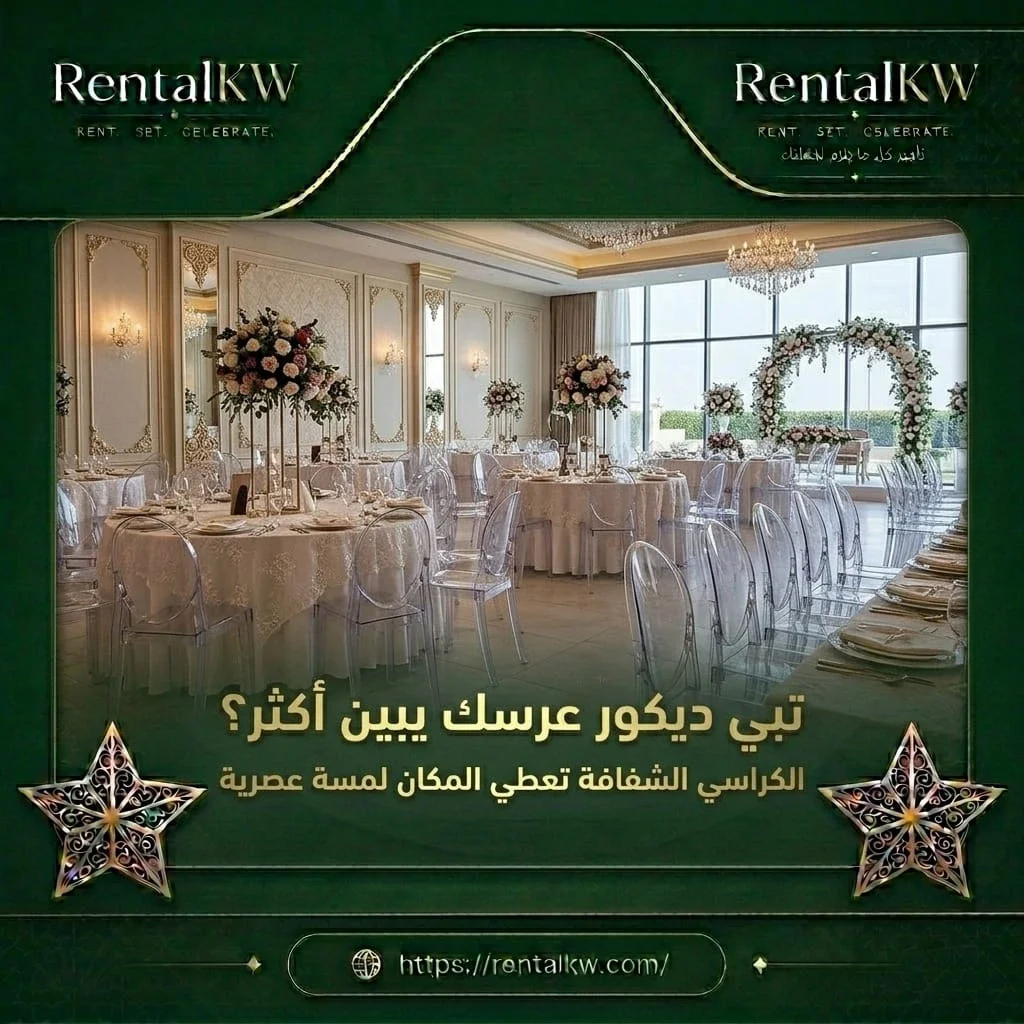
Transparent seating for wedding celebrations requires coordinated planning between furniture, décor, lighting, and flooring because transparent surfaces allow most surrounding elements to remain visible. Successful arrangements therefore depend more on organized simplicity than on adding large quantities of decorative detail.
From a practical perspective, one of the main advantages of transparent seating is its ability to reduce the visual impression of overcrowding, particularly in halls containing noticeable decorations or several colors. However, if excessive flowers, lighting, or reflective elements are added, this advantage can disappear and the venue may still look visually crowded despite the lightweight furniture.
Accurate alignment is also important because transparency makes lines and spacing particularly noticeable in photographs. Consistent chair direction and table positioning help create a more organized appearance when the venue is viewed from wider angles.
When preparing transparent wedding seating, review:
• The number of primary seating areas that genuinely benefit from transparent furniture
• Flooring and surrounding décor colors and how they influence the final appearance
• The density of flowers and lighting so decorative elements do not eliminate the visual lightness of the furniture
• Consistent chair and table direction across different seating areas
• Circulation space around seating groups after the venue becomes fully occupied
• The overall scene from the primary photography angle before the celebration begins
Modern Table and Chair Coordination
Modern table and chair coordination relies on clean lines and balanced empty space more than excessive furniture or decorative details. Transparent chairs work particularly well within this approach because they allow tables and surrounding decorations to remain visible without creating heavy visual blocks.
From practical experience, modern design works best when every element has a clear purpose. If the table already has a strong design, the chairs do not need additional visual complexity. When the background is simple, transparent furniture itself can become an important part of the overall appearance. The objective is to avoid repeating elements without a functional or visual reason.
Spacing must also be calculated accurately. Contemporary designs often reveal alignment problems more quickly than traditional arrangements containing many decorative details that can partially conceal inconsistencies. Final furniture positioning is therefore a fundamental part of execution quality.
When coordinating modern seating arrangements, consider:
• Selecting a limited number of primary design elements instead of combining several competing styles
• Maintaining consistent chair direction around tables according to a clear visual axis
• Using lighting to highlight furniture rather than overwhelming it with reflections
• Preserving sufficient open space between seating groups to maintain a visually light environment
• Selecting tables with bases that complement transparent furniture
• Reviewing seating arrangements from several angles before approving the final appearance
Transparent Engagement Seating Setup
Transparent engagement seating setup differs from preparing a full wedding because engagement celebrations are often smaller and more concentrated in terms of guest numbers and usable space. This provides a greater opportunity to make transparent tables and chairs visually prominent instead of distributing them across a very large venue.
From a practical perspective, an engagement arrangement can focus on a main area for the couple alongside a limited number of guest tables. This allows more of the available budget to be directed toward precise coordination and finishing rather than simply increasing furniture quantity. Smaller venues still require careful calculations so chairs and tables do not become unnecessarily close together.
The seating arrangement should also connect visually with the engagement backdrop and lighting. If the background already has a strong visual presence, transparent furniture can prevent unnecessary distraction. When the background is more restrained, transparent tables and chairs can become a central component of the overall visual identity.
When preparing transparent engagement seating, review:
• The actual guest count and the dimensions of the main event area
• The location of the couple’s seating and its relationship with guest tables
• The visual strength of the background and how it influences furniture selection
• Spacing between seating groups within a smaller and potentially denser venue
• Lighting coordination with transparent surfaces
• The required furniture quantity without unnecessary reserve pieces
Transparent Chairs for Hospitality Tables
Transparent chairs for hospitality tables are suitable when these tables form part of actual guest seating rather than functioning only as operational service stations. It is important to distinguish between a table intended for guests to sit around while receiving hospitality and a service table used exclusively by staff.
From practical experience, positioning transparent chairs around hospitality tables that are too narrow can make the seating uncomfortable even when the arrangement looks elegant. The tabletop area and height should therefore be checked before determining the number of chairs.
The location of these seating areas in relation to service routes is also important. If chairs are positioned directly within staff circulation paths, repeated interference may occur throughout the event. Sufficient clearance should remain behind occupied chairs so staff can continue moving comfortably even when every seat is being used.
When preparing this type of table, consider:
• The actual function of the table and whether it is intended for guest seating or service use only
• Table height and whether it is compatible with chair height
• The suitable number of seats according to the width or circumference of the table
• Clearance behind chairs required for service movement
• The seating location in relation to food and hospitality areas
• How easily the furniture can be cleaned and reorganized during the event
Booking a Transparent Chair and Table Set
Booking a transparent chair and table set should begin after determining the number of complete seating groups rather than considering the guest count alone. Every set should have a clearly defined location and arrangement before the order is confirmed so furniture pieces are not rented without having an appropriate place on the event day.
From a practical perspective, it is important to understand the table design, the number of chairs included with each set, the condition of the furniture, and the services included in the booking. When several sets are required, confirming that matching quantities are available also prevents noticeable differences between seating groups.
Delivery and arrangement timing should be confirmed because transparent furniture requires a final review for cleanliness and alignment before guests arrive. Leaving this stage until the final moments can reduce the quality of the finished presentation.
When booking a transparent furniture set, confirm:
• The number of tables and chairs included in every set
• The table type base design and materials used
• The condition and consistency of furniture when several sets are required
• Delivery setup and collection times
• Included services such as final cleaning and arrangement
• Whether the quantity can be adjusted if the seating plan changes before the event
Conclusion
Successful transparent chair and table rental for events depends on treating the seating arrangement as one integrated design rather than selecting chairs and tables independently. Heights, dimensions, table bases, flooring, lighting, and circulation distances all influence the final result and should be considered together.
The primary advantage of transparent furniture is its visual lightness and ability to highlight surrounding decorative details. Excessive flowers, lighting, or reflective pieces can therefore weaken this advantage. A more effective approach is to use carefully selected elements while preserving enough visual space for the design to remain elegant and balanced.
Practical space should remain a priority as well. It is not enough for the seating arrangement to look attractive while the venue is empty. Guests must be able to pull their chairs back, sit comfortably, and move freely, while service staff need sufficient space to pass between tables after the venue becomes occupied.
Final coordination is particularly important because differences in alignment and spacing become easy to notice with transparent furniture. Reviewing chair direction, surface cleanliness, table positions, and lighting before guests arrive is therefore an essential part of preparation quality.
Ultimately, the best furniture set achieves a balance between comfort, visual lightness, and coordination with the surrounding décor. When the seating style, location, and expected number of users are defined in advance, it becomes easier to select the correct quantities, dimensions, and materials without unnecessary furniture or compromises in the final appearance.
Frequently Asked Questions
Are transparent chairs suitable for all types of tables?
They can be used with many table styles, but chair height, table dimensions, and base design should be checked carefully. Large table bases may reduce legroom, while lighter or more compact bases may work better for certain seating arrangements.
Are glass tables better with acrylic chairs?
Not necessarily, but the combination can create a light and distinctive appearance when the flooring and surrounding décor are coordinated properly. Reflections and the table base should be considered because both remain clearly visible with transparent furniture.
How many chairs can be placed around a round table?
The appropriate number depends on the table diameter, chair dimensions, and the clearance required for movement. It is better to choose a quantity that allows guests to pull chairs out comfortably rather than using the maximum number that can physically fit.
Are illuminated tables suitable for every seating area?
No. They are generally more effective when used in selected areas such as reception sections or prominent decorative corners so they retain their visual impact without competing with the rest of the event lighting.
Are transparent seating arrangements suitable for small venues?
Yes. They can help reduce the visual impression of overcrowding, but sufficient circulation space must still be maintained. The number of seating groups should not be increased simply because transparent furniture appears visually lighter.
What is most important when preparing transparent engagement seating?
The main priorities are defining the couple’s primary area, confirming the number of guests, preserving appropriate spacing around seating groups, and coordinating the furniture with the backdrop and lighting so the complete scene remains balanced.
Does the booking include delivery and arrangement?
That depends on the specific quotation. Transportation, arrangement, final cleaning, and collection should all be confirmed because these services may either be included or calculated separately.
How can transparent seating arrangements remain elegant?
Reduce unnecessary decorative elements, keep transparent surfaces clean, maintain consistent chair direction and spacing, and test the lighting before the event begins.