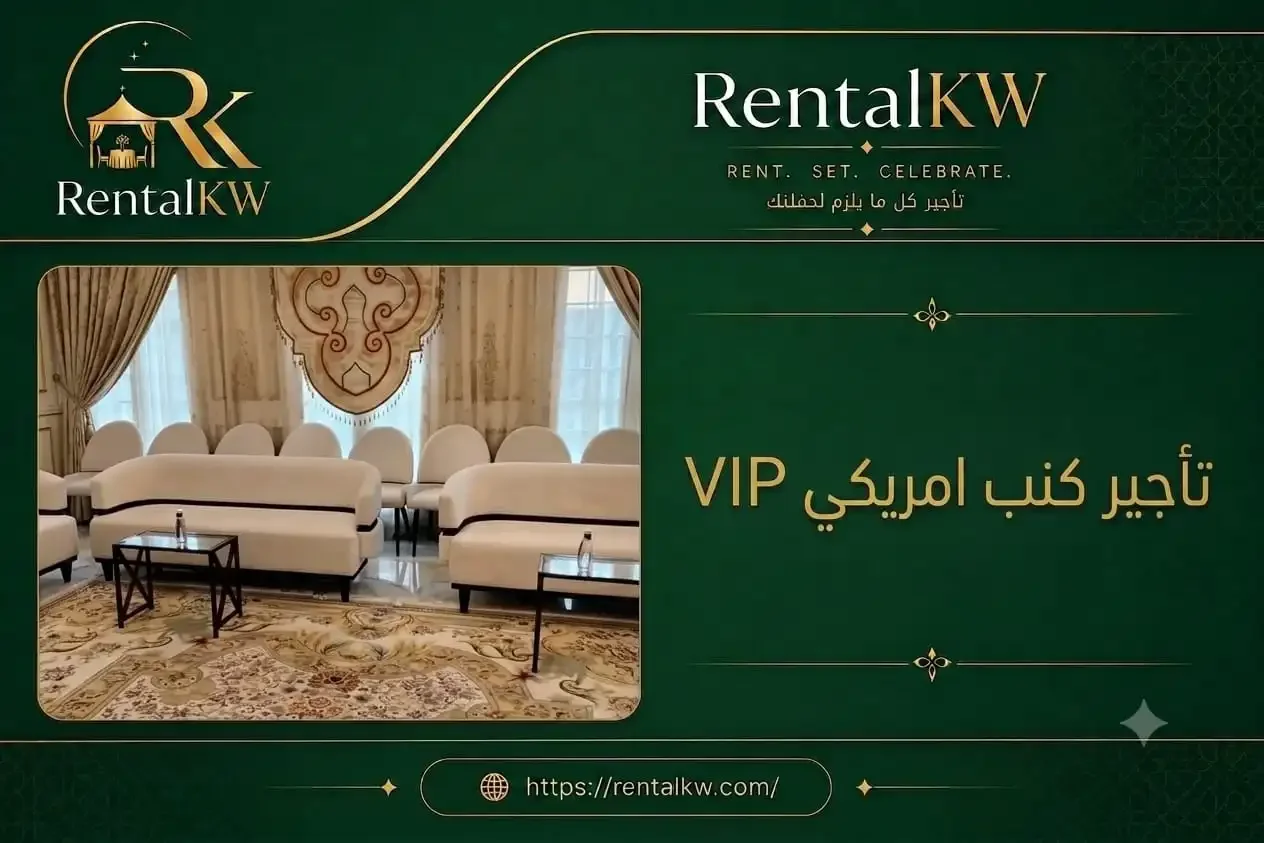
Matrouq Sofa Rental for Majlis Setup
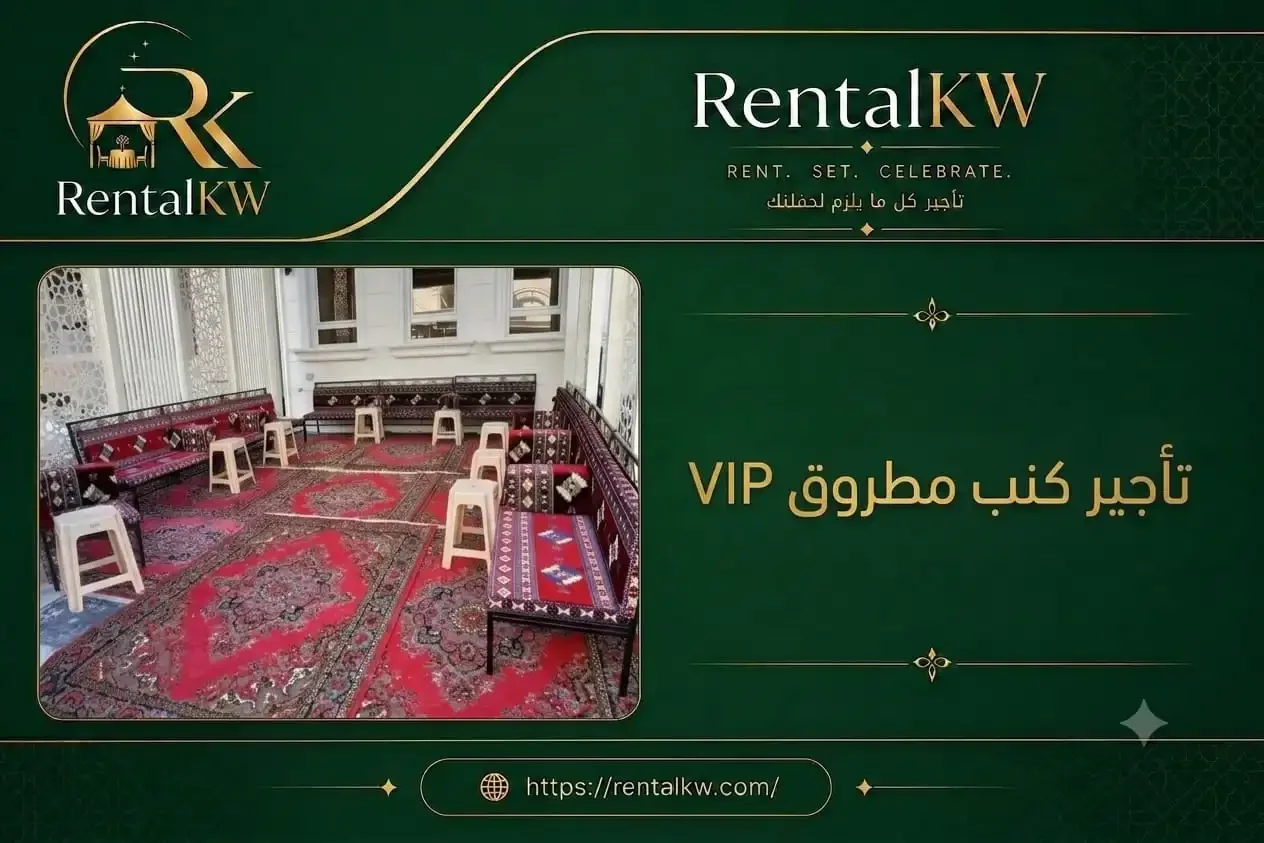
In this article
- Matrouq Sofa Rental for Majlis Areas
- Preparing a Diwaniya with Matrouq Sofas
- Traditional Matrouq Sofas for Majlis Areas
- Modern Matrouq Sofas for Diwaniyas
- Matrouq Seating for Receiving Guests
- Matrouq Sofas for Tents and Majlis Areas
- Preparing a Kuwaiti Majlis with Sofas
- Matrouq Sofas for Family Occasions
- Coordinating Diwaniya Seating
- Booking a Matrouq Sofa Majlis
- Conclusion
- Frequently Asked Questions
Matrouq sofa rental for majlis setup depends on understanding the nature of the majlis before choosing the number of pieces or the fabric pattern because this type of seating is connected to the identity of the space as much as it is connected to comfort and guest capacity. A successful majlis is not the one filled with the largest quantity of sofas but the one that allows guests to sit, communicate, move, and receive hospitality comfortably. From practical experience preparing diwaniyas and majlis areas, differences in room dimensions, door locations, columns, and service routes can completely change the way the sofas should be arranged. The correct process therefore begins by measuring usable walls, determining the required seating capacity, then selecting a traditional or modern style and coordinating tables, cushions, and complementary elements without overloading the available space.
Matrouq Sofa Rental for Majlis Areas
Matrouq sofa rental for majlis areas requires treating the perimeter of the room as the foundation of the layout because Matrouq sofas are commonly positioned along walls or arranged around a large part of the seating area. For this reason, the most useful measurement is not only the total floor area but also the length of the walls that can actually be used after excluding doors, windows, passages, and sections that must remain open. A majlis may appear spacious overall while still allowing only a limited amount of sofa seating because several entrances or permanent features interrupt the usable wall lines.
From practical experience preparing majlis seating, calculating capacity according to sofa length alone can create an inaccurate estimate. The width required for every seated guest, the space needed for comfortable posture, and the locations of corner connections or breaks between furniture pieces should all be considered. Trying to fit the maximum possible number of seats may increase theoretical capacity, but it can reduce comfort and make the majlis feel crowded.
The arrangement style should also be defined before the booking is confirmed. Some rooms work better with sofas along three sides and one side left open for movement, while others benefit from opposing seating that makes communication between guests easier. This decision is functional as well as visual.
When renting Matrouq sofas for a majlis, review:
• The actual usable wall lengths after excluding doors walkways and areas where furniture cannot be positioned
• The number of guests expected during peak attendance rather than the total number of visitors throughout the entire occasion
• The planned seating layout and whether it will run around the perimeter face opposite sides or be divided into several sections
• Sofa depth and how it affects the central area remaining for movement and hospitality tables
• Upholstery cushion and pattern consistency across all pieces used inside the majlis
• The plan for bringing the furniture inside arranging it and collecting it later without interfering with entrances or existing contents
Preparing a Diwaniya with Matrouq Sofas
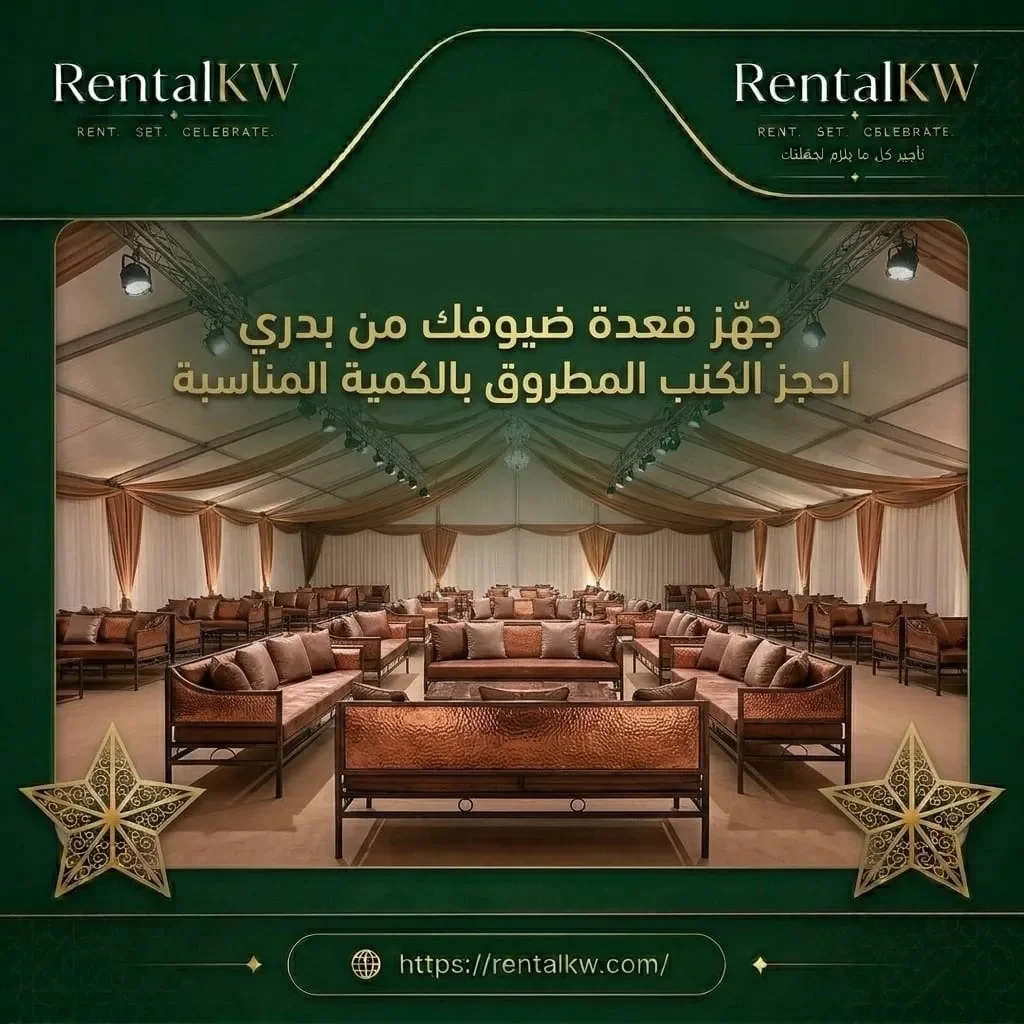
Preparing a diwaniya with Matrouq sofas requires understanding whether the space will be used regularly or temporarily because the seating needs differ from those of a short event. Guests may remain for longer periods, hospitality service may move continuously, and everyone should be able to see and communicate with others comfortably. The shape of the seating and the distances between opposite sides therefore matter more than adding numerous decorative elements.
From practical experience, a successful layout should begin with the main seating lines rather than the tables. Once sofa positions have been established, the actual central space becomes clear and tables can then be selected according to the remaining dimensions. Reversing this process can lead to oversized tables that force the sofas tightly against the walls or reduce circulation space.
Access points into the seating area should also be considered. If sofas surround the room completely without enough openings, guests may need to pass between tables or directly in front of seated people to reach their places. Larger spaces usually benefit from more than one clear access point.
Seat height also affects usability. Very low seating may create a strongly traditional appearance but may not be equally comfortable for all guests, while overly high seating can reduce some of the majlis character. A balance between identity and practical comfort is therefore important.
When preparing the diwaniya, consider:
• Establishing the main seating lines first and then selecting tables and central elements according to the remaining space
• Leaving clear entry points so guests do not repeatedly pass between tables to reach the seating
• Choosing a seat height and depth that support expected use rather than focusing only on appearance
• Maintaining clear sight lines between guests seated on different sides of the diwaniya
• Distributing hospitality tables so they remain easy to reach without filling the central area completely
• Confirming that the arrangement can still function during periods of higher attendance without restricting service movement
Traditional Matrouq Sofas for Majlis Areas
Traditional Matrouq sofas for majlis areas create a strong visual identity and therefore require coordination that preserves the traditional character without turning the space into a collection of competing colors and patterns. Much of the visual value comes from the fabric detail, repeated motifs, and the way the pattern extends across the seating. The result is usually stronger when surrounding elements remain calmer.
From practical experience, one recurring mistake is selecting a bold sofa pattern and then combining it with carpets, curtains, and cushions that also use heavy patterns at the same intensity. Every individual element may look attractive by itself, but together they can make the space visually confusing. It is usually better to choose one dominant visual feature and allow the remaining elements to support it.
Pattern consistency between sofa pieces is especially important in long seating arrangements. When pieces are similar but not identical, the differences become obvious when they are placed side by side along one wall. The direction of the fabric pattern also matters because two neighboring pieces with different motif directions can break the continuity of the design.
Colors should ideally be evaluated inside the actual room because lighting can change how the fabric appears. A tone that looks quiet in daylight may become stronger under warm interior lighting and vice versa.
When choosing traditional Matrouq sofas, consider:
• Selecting one clear primary pattern and reducing decorative intensity in the surrounding elements
• Keeping the fabric and motif direction consistent between neighboring pieces
• Evaluating colors under the actual majlis lighting instead of relying only on photographs
• Coordinating cushions and back supports so they reinforce the traditional identity without adding unnecessary visual detail
• Selecting carpets and tables that complement the sofas rather than compete with them
• Reviewing all furniture pieces together before final placement to confirm similar condition and color consistency
Modern Matrouq Sofas for Diwaniyas
Modern Matrouq sofas for diwaniyas are suitable for customers who want to preserve the spirit of Kuwaiti seating while reducing decorative density and using cleaner visual lines. The objective is not to remove the Matrouq identity but to present it through calmer colors, simpler patterns, and layouts that preserve more open space.
From a practical perspective, this approach works particularly well in diwaniyas with contemporary interiors, architectural lighting, and simple wall finishes. Highly decorative sofas can sometimes dominate these environments, while modern Matrouq seating can connect more naturally with the existing design.
A single primary color with limited decorative details in the cushions can also make seasonal changes or future furniture adjustments easier without requiring a complete redesign of the majlis.
When choosing a modern style, consider:
• The simplicity of the pattern and how well it coordinates with existing walls and flooring
• Using a limited color palette to avoid visual overcrowding
• Preserving sufficient open space between complementary furniture pieces
• Selecting tables with simple designs that support the modern character of the diwaniya
• Maintaining seating comfort and not reducing seat depth simply to achieve a slimmer appearance
• Choosing cushions and additional details only after the main color direction has been established
Matrouq Seating for Receiving Guests
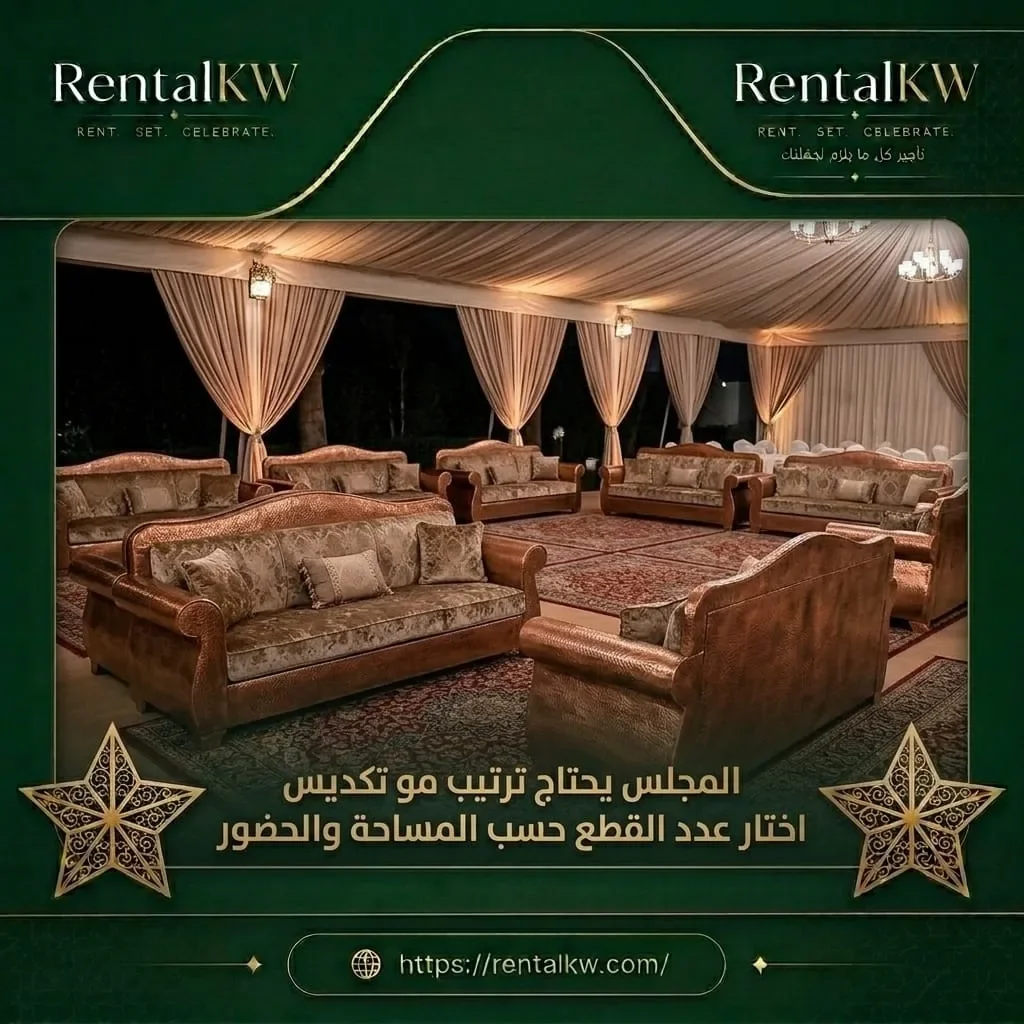
Matrouq seating for receiving guests should provide comfort from the moment people enter, which means access to the seating needs to be direct and clear without forcing guests through a crowded area or around several tables. The layout should also support welcoming and conversation rather than dividing people into disconnected groups.
From practical experience, opposing seating can work well when conversation is the primary purpose, while perimeter seating can accommodate more guests while leaving the center of the room open. The better choice depends on the occasion, expected attendance, and the shape of the venue.
Keeping a few flexible seats near the entrance can also be useful when attendance increases because additional guests can be accommodated without disturbing the main seating arrangement.
When preparing guest reception seating, review:
• How easily guests can reach the seating directly from the entrance
• Seat direction and whether it supports natural conversation between people
• The availability of space for temporary increases in attendance
• Table locations in relation to seating positions and hospitality movement
• Avoiding large furniture pieces at transition points between different sections of the majlis
• Maintaining an organized appearance even when most seats are occupied
Matrouq Sofas for Tents and Majlis Areas
Matrouq sofas for tents and majlis areas require attention to the differences between temporary and permanent spaces because a tent does not have the same fixed wall structure as an indoor majlis. Entrances, structural supports, cooling equipment, and flooring conditions all influence where the seating can be positioned and how much space is genuinely usable.
From a practical perspective, sofa positions are best finalized after the tent structure has been installed and the main operational elements are visible rather than relying only on theoretical dimensions. A layout may appear suitable on paper but become impractical when a support column, entrance, or cooling unit interrupts one of the planned seating lines.
Floor level should also be checked because uneven surfaces can affect the stability of sofas and tables. Preparing the ground before arranging furniture reduces the need for repeated adjustments after the seating is complete.
When preparing Matrouq seating inside tents and majlis areas, consider:
• Tent support and entrance locations before determining the full length of the seating arrangement
• Preserving appropriate space around cooling equipment and airflow outlets
• Confirming that the flooring is sufficiently level beneath sofas and tables
• Avoiding long furniture runs that block required circulation routes
• Choosing a layout that can be adjusted if the tent capacity or internal use changes
• Protecting upholstery during transportation and installation at the venue
Preparing a Kuwaiti Majlis with Sofas
Preparing a Kuwaiti majlis with sofas requires balancing the social function of the space with its visual identity. The majlis exists for seating, communication, and hospitality, so decoration should never interfere with actual use. The sofas are usually the largest visual element, but they need tables, cushions, lighting, and carpets that work together as one complete environment.
From practical experience, it is helpful to determine the required level of formality before selecting all decorative details. A family majlis used repeatedly may benefit from practical materials and a flexible arrangement, while a majlis prepared for a specific occasion can support a more detailed visual treatment.
The seating layout should also preserve the central area without leaving it excessively empty or filling it with too many tables. A balanced center makes hospitality service easier while keeping guests at a comfortable conversational distance.
When preparing a Kuwaiti majlis, review:
• Whether the majlis is intended for regular use or for one particular occasion
• The required seating capacity during the busiest periods
• The balance between sofa space and the central open area
• Coordination between carpets tables lighting and the selected fabric pattern
• Ease of cleaning and maintaining the seating during use
• The flexibility of the layout if guest numbers change over time
Matrouq Sofas for Family Occasions
Matrouq sofas for family occasions work well for gatherings that need a more social and flexible seating style than rows of individual chairs because guests can sit in groups and communicate more naturally. However, the number of pieces should reflect the duration of the occasion and the expected attendance pattern rather than only the maximum possible number of guests.
From a practical perspective, attendance at family occasions can change continuously throughout the event. It can therefore be useful to preserve space for a limited number of additional seats rather than filling the entire majlis from the beginning.
Different age groups should also be considered. Very low seating may not be comfortable for some older guests, so a moderate seat height or a small number of alternative seats can improve usability without disrupting the overall appearance.
When preparing a family occasion, consider:
• The nature of attendance and how much guest numbers may change throughout the event
• Providing a comfortable seating height for different age groups
• Preserving space where additional seating can be introduced if needed
• Distributing tables in a way that supports shared hospitality service
• Avoiding tight corners that are difficult to enter or leave
• Selecting materials suitable for repeated use throughout the gathering
Coordinating Diwaniya Seating
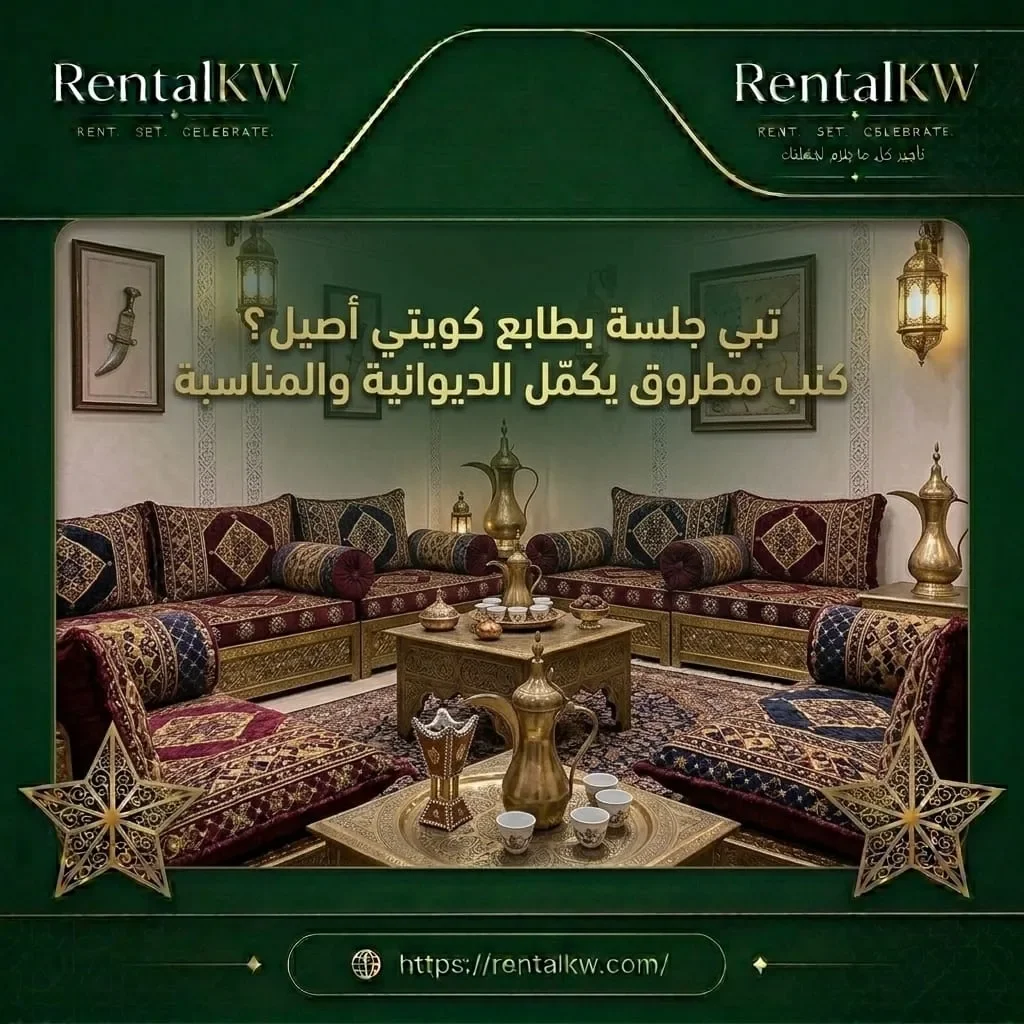
Coordinating diwaniya seating depends more on the relationships between elements than on the number of pieces. The distance between the sofas and tables, cushion height, carpet placement, and lighting all influence how the space feels to the people using it. Adding more furniture therefore does not automatically improve the majlis.
From practical experience, a successful arrangement often begins by fixing the sofa positions, then defining the center of the seating area, and finally placing tables and accessories according to actual use. This sequence helps prevent excessive furniture from accumulating in the middle and preserves clear movement lines.
The space should also be evaluated from the entrance because this is the first angle guests see. A balanced composition from this viewpoint creates a stronger sense of organization before anyone sits down.
When coordinating the diwaniya, consider:
• Defining one primary visual element rather than allowing every detail to compete for attention
• Adjusting distances between sofas and tables according to practical use
• Distributing lighting so upholstery colors appear natural
• Maintaining a clear movement axis from the entrance to the seating
• Using cushions and back supports in quantities that support comfort without overcrowding the arrangement
• Reviewing the final appearance from the entrance and from several different seating positions
Booking a Matrouq Sofa Majlis
Booking a Matrouq sofa majlis requires identifying usable wall lengths, required capacity, pattern style, and included services before the order is confirmed. Relying on a photograph of a furniture set without knowing its dimensions can result in a quantity that does not suit the actual venue.
From a practical perspective, the number, length, and depth of all pieces should be understood instead of accepting a general description such as a complete majlis. The meaning of a complete majlis changes according to room dimensions and layout. Customers should also confirm whether tables, cushions, and other complementary elements are included in the booking or priced separately.
Delivery, arrangement, and collection times should also be agreed in advance, particularly when the venue will be used at a specific time and there is no additional space for storing the furniture before setup.
When booking, confirm:
• Detailed furniture dimensions and how they compare with the venue measurements
• The actual seating capacity provided by the final arrangement
• The agreed pattern color and condition before delivery
• Complementary elements included with the majlis
• Transportation arrangement and collection costs clearly
• Whether certain furniture pieces can be changed if the space or guest count changes
Conclusion
Successful Matrouq sofa rental for majlis setup does not depend on selecting the most attractive pattern or the largest quantity of furniture. It depends on creating a seating arrangement that matches the venue and the way it will actually be used. Accurate measurements, entrance locations, circulation space, and expected guest numbers should all be established before decorative details are selected.
A majlis differs from many other event seating arrangements because communication between seated guests is one of its central functions. Sofa direction and spacing should therefore support conversation, hospitality, and easy movement rather than focusing on appearance alone.
The choice between traditional and modern Matrouq styles should also reflect the overall identity of the space. Traditional patterns create a stronger decorative presence and generally work better with calmer surrounding elements, while modern designs use cleaner lines and preserve more visual space.
Upholstery quality, consistency between furniture pieces, and seating comfort remain just as important as the design. Majlis seating may be used for long periods, so an attractive piece that does not provide comfortable seating does not fully serve the real purpose of the setup.
Ultimately, the strongest booking begins with measuring the location, defining capacity and function, and then selecting the sofas, tables, cushions, and complementary elements according to those requirements. This approach produces a balanced and comfortable majlis that preserves its identity without overcrowding the space or adding furniture that provides little practical value.
Frequently Asked Questions
How do I determine the right amount of Matrouq sofas for a majlis?
Measure the usable wall lengths and estimate the number of guests expected during peak attendance. Then preserve enough room for entrances, circulation routes, and tables before determining the final seating length.
What is the difference between traditional and modern Matrouq sofas?
Traditional styles generally use more prominent patterns and decorative detail, while modern styles rely on simpler motifs and calmer colors while still preserving the identity of Kuwaiti majlis seating.
Can Matrouq sofas be used inside tents?
Yes, provided that support columns, entrances, cooling equipment, flooring level, and the actual usable area after the tent is installed are all considered before the seating is arranged.
Is it better to place sofas along every wall of the majlis?
Not necessarily. The right approach depends on the room shape, guest count, and entrance locations. Leaving one side open can sometimes improve circulation, while perimeter seating may work better in larger spaces.
How do I choose the right pattern for a diwaniya?
Review the colors of the walls, flooring, carpets, and lighting first, then choose a pattern that either becomes the primary visual feature or supports the existing design without combining several strong decorative patterns in one space.
Are tables an essential part of Matrouq seating?
Most majlis areas need tables for hospitality service, but the quantity and dimensions should be determined according to the central space and practical use. Too many tables can restrict movement without providing meaningful additional value.
What should I know before booking a Matrouq sofa majlis?
You should know the venue dimensions, expected guest count, preferred layout, pattern and color, included elements, delivery arrangement and collection timing, and the final cost of the complete service.
Are Matrouq sofas suitable for family occasions?
Yes, particularly when the occasion involves extended seating and conversation. The important factors are choosing a comfortable seat height, maintaining a flexible layout, and preserving enough space to respond to changes in attendance during the event.