How Much Traditional Sofa Seating Do You Need
In this article
- Number of Traditional Majlis Sofas Based on Guest Count
- Calculating Majlis Sofa Requirements Based on Space
- Traditional Majlis Sofas for 50 Guests
- Seating Capacity of Traditional Majlis Sofas
- Number of Sofa Sections Needed for a Diwaniya
- Arranging Traditional Majlis Sofas Inside the Room
- Traditional Majlis Sofas for Large Gathering Rooms
- Traditional Majlis Seating for Small Spaces
- Calculating Guest Seating Capacity in a Majlis
- How Much Traditional Majlis Sofa Seating Is Required?
- Conclusion
- Frequently Asked Questions
Choosing the right quantity of traditional Majlis sofas for an event requires calculations that reflect the nature of Majlis seating and Diwaniyas rather than simply dividing the number of guests by the number of seats. Traditional Majlis sofas, often referred to locally as Matrouq sofas, are commonly arranged along walls or as connected seating configurations. This makes the length of each piece, corner arrangements, and entrances important factors in determining how many guests can be accommodated comfortably. A Majlis may provide sufficient seating with relatively few furniture pieces, while adding too many sofas to a smaller space can obstruct movement. This guide explains how to choose the right quantity of traditional Majlis sofas based on guest count, with calculation examples for fifty people, methods for measuring walls, estimating seating capacity, and avoiding mistakes that increase rental costs without improving the seating arrangement.
Number of Traditional Majlis Sofas Based on Guest Count
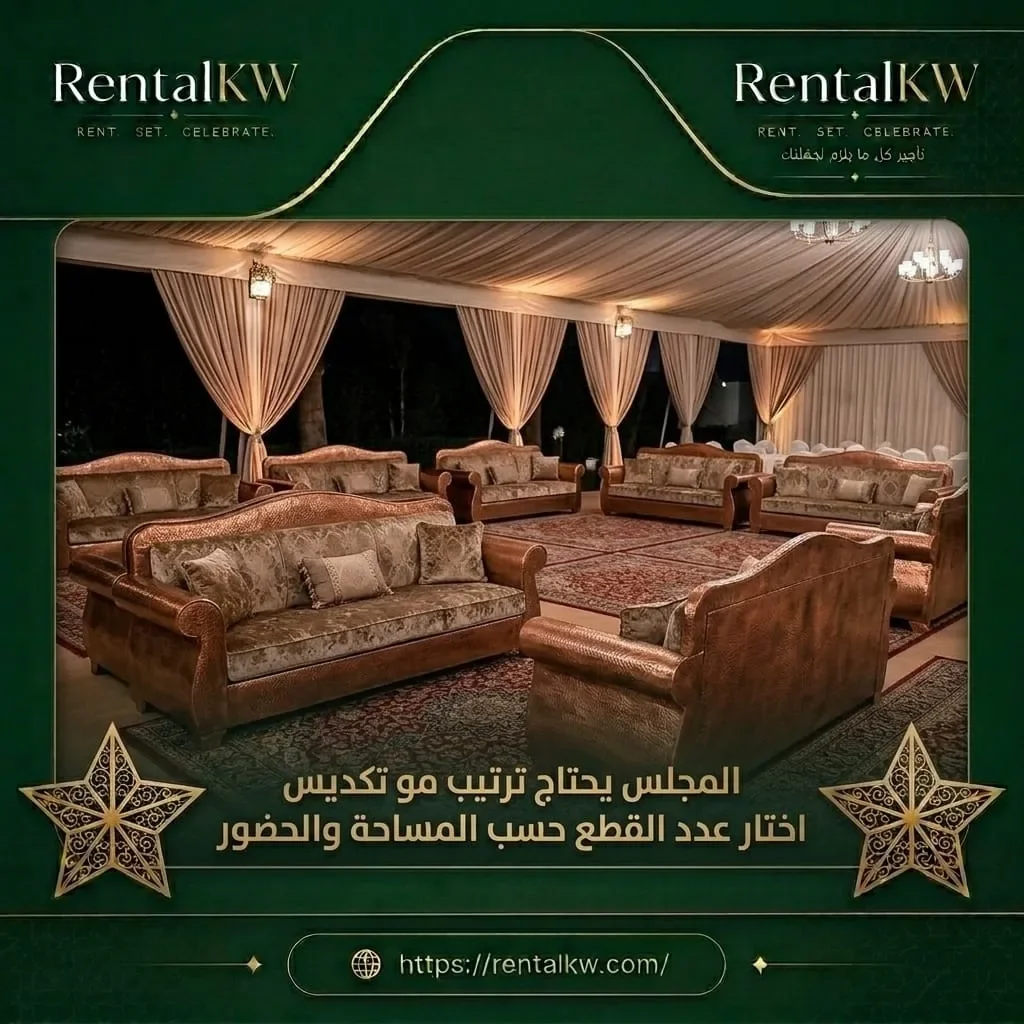
Determining the number of traditional Majlis sofas based on guest count differs from calculating individual American-style sofas because traditional Matrouq sofas used in Majlis rooms and Diwaniyas may consist of consecutive straight sections or arrangements connected at corners. The number of furniture pieces alone therefore does not indicate the seating capacity of the Majlis. Three long sections may provide more seats than five shorter sections depending on their dimensions and the seating design.
The correct approach begins by identifying how guests will be received. In some Majlis gatherings, attendees remain seated for extended periods and participate in conversations within closely arranged groups. Other gatherings experience a continuous flow of arriving and departing visitors. This difference affects the number of seats required because a Majlis receiving guests in successive groups may need a different capacity from one where all invitees are expected to be present simultaneously.
The next step is to establish the actual seating capacity of the furniture available for rent. Some traditional Majlis sofas have clearly divided upholstered sections that indicate individual seating positions, while others feature continuous cushions. It is not accurate to assume that every linear meter provides a fixed number of seats without knowing the seating depth, usable width, and backrest design.
For example, if a Majlis needs to accommodate thirty people simultaneously and the selected sofa section seats three people according to the supplier's specifications, the initial requirement would be ten sections. However, if each selected section accommodates four people, eight sections may provide thirty-two seats. These figures remain mathematical estimates until the Majlis dimensions, corners, and entrances have been reviewed.
One mistake that can affect calculation accuracy is counting corner seating positions twice. Two sofa sections may meet at a corner, but the connecting area does not always provide two independent seating places. The capacity of the completed arrangement should therefore be confirmed after installation rather than simply adding the theoretical capacity of each section separately.
It is also important to consider seats reserved for elderly guests or event hosts. If these places are unavailable to other attendees, they must be calculated separately from general seating so the Majlis does not appear to accommodate more guests than it actually can.
The objective is not to maximize the number of sofas but to choose a quantity that accommodates guests comfortably while preserving the organized traditional appearance of the Majlis.
When determining the number of traditional Majlis sofas based on guest count, consider the following:
-
Determine how many guests will be seated during peak attendance: Do not begin with the total number of invitations alone but estimate how many people are expected during the busiest period while considering whether guests remain seated for extended periods or arrive and depart in successive groups
-
Confirm the seating capacity of each selected section before deciding the quantity: Ask the rental company how many people each sofa section is intended to accommodate and request its length and design specifications because traditional Majlis sofa sections can vary in size even when they appear similar in photographs
-
Do not automatically count sofa connections as additional seating: Review how the furniture sections meet at the corners because some arrangements lose part of their usable seating area after installation and their capacities cannot always be added without considering the completed configuration
-
Separate general seating from places reserved for particular guests: If seats are reserved for elderly family members or event hosts calculate them independently rather than relying on those places to accommodate the remaining guests
-
Compare long and short sections according to their actual capacity: A long sofa section may provide suitable seating with fewer connections while shorter sections may offer greater flexibility in arranging the Majlis so the choice should depend on venue dimensions rather than the number of pieces alone
-
Connect the furniture quantity to the final Majlis layout: Once the mathematical quantity has been calculated review the arrangement of the seating sections the entrance locations and the available circulation space because a quantity that appears suitable on paper may require adjustment when the furniture is positioned
Calculating Majlis Sofa Requirements Based on Space
Calculating Majlis sofa requirements based on space depends on measuring the wall lengths available for furniture rather than considering floor area alone. A Majlis measuring forty square meters may have suitable wall lengths for connected traditional sofas, while another room with the same floor area may contain doors, low windows, or columns that reduce the usable wall space.
The process begins by drawing a simple floor plan showing the length of each wall and the positions of doors, columns, and fixed equipment. The sections where sofas can be placed without blocking entrances or interfering with the room's use are then identified. Any features requiring clear access, such as service equipment or hospitality preparation areas, should also be considered.
Suppose a rectangular Majlis measures six meters by five meters. The combined length of its walls is twenty-two meters, but this does not automatically represent the length of sofas that can be installed. If a door occupies part of one wall and other areas must remain clear, the usable length decreases. Corner connections must also be considered when calculating connected sections to avoid counting the same seating length twice.
After identifying the suitable wall lengths, the actual dimensions of the available sofas should be compared. The rental company may offer sections measuring two meters or other lengths that vary by supplier. The selected combination should fit the available spaces without creating unintended gaps or requiring furniture pieces that do not match the remaining dimensions.
The calculation is not limited to wall length. Sofa depth affects the open space in the center of the Majlis, particularly when hospitality tables or staff circulation areas are needed. As the depth of the furniture increases, the available central space becomes smaller even when the length of the wall seating remains unchanged.
It is also preferable to determine where coffee and tea will be served before approving the furniture layout. Staff may need to move in front of seated guests or reach specific tables, so the sofa arrangement should allow hospitality services to be provided without overcrowding.
There is no single formula suitable for every Majlis because door positions, wall configurations, and furniture dimensions vary. However, measuring the space in advance and comparing multiple configurations can help select an accurate quantity and avoid renting furniture that is difficult to install.
To calculate Majlis sofa requirements based on available space, follow these steps:
-
Measure each wall section suitable for sofa placement separately: Record the length of every wall and identify the portions that can actually accommodate furniture rather than relying on the entire room perimeter because doors columns and fixed equipment may prevent certain sections from being used
-
Exclude areas that must remain clear before calculating furniture quantities: Identify entrances service zones and equipment requiring direct access so the installation of traditional sofas does not block an important part of the Majlis or interfere with its normal use
-
Review corner dimensions in connected sofa arrangements: When placing sections along two perpendicular walls determine how the furniture connects and account for its depth so the same space is not counted twice and incompatible section lengths are not selected
-
Match available sofa lengths to actual wall measurements: Compare the lengths of rental furniture sections with the usable wall spaces because selecting appropriately sized pieces reduces awkward gaps and avoids the need to modify the arrangement after delivery
-
Calculate how sofa depth affects the central floor area: Do not focus only on the length of the seating arrangement but examine the space remaining in the center after installing sofas and tables because deep furniture may restrict guest movement even when it fits the wall dimensions
-
Test hospitality service routes before approving the layout: Make sure there is sufficient space for staff serving coffee and tea to reach guests without stepping across seating areas or moving furniture because practical organization is an essential part of preparing a successful Majlis
Traditional Majlis Sofas for 50 Guests
When arranging traditional Majlis sofas for 50 guests, it is necessary to establish whether fifty seats must be provided in one Majlis or whether guests can be distributed across several Diwaniyas or reception areas. This decision changes the selection of furniture sections and seating lengths. Dividing guests between two areas may be more appropriate than attempting to accommodate everyone in a Majlis whose dimensions do not permit it.
If fifty people must be seated simultaneously, the calculation begins with the actual capacity of the available furniture. For example, if each section comfortably accommodates four people, providing fifty seats would mathematically require thirteen sections, offering a total capacity of fifty-two seats. If each section accommodates three people, seventeen sections would be needed to provide fifty-one seats.
However, this example does not mean that thirteen sections can be installed in every Majlis. The available wall lengths may be insufficient, or entrances and hospitality areas may limit how the furniture can be arranged. It is therefore necessary to move from calculating seats to calculating furniture lengths and placement positions before making a rental decision.
Suppose the occasion takes place in two Diwaniyas of similar size, each capable of accommodating twenty-five suitable seats. In this situation, fifty seats can be distributed between the two areas rather than concentrated in one room. However, the suitability of this solution depends on the nature of the occasion and whether dividing guests into two groups is appropriate.
It is also important to determine whether fifty people represents the total number of invitees or the number expected during peak attendance. At gatherings where visitors arrive at different times, occupancy may change throughout the event. Other Majlis occasions may require a large number of guests to be accommodated simultaneously during a specific period.
Regarding cost, traditional Majlis sofa rental offers should not be compared solely by the number of furniture sections. Rental pricing may be based on the length of each piece, the type of configuration, or the number of units, depending on the supplier's pricing policy. Transportation and installation costs may also vary according to the quantity, event location, and rental duration.
It is therefore preferable to request a quotation showing the number of furniture sections, their lengths, seating capacities, and installation costs, then compare the offer with the actual Majlis layout. The appropriate choice is not simply one that mathematically provides fifty seats but one that can be installed successfully and suits the way guests will be received.
When choosing traditional Majlis sofas for fifty people, review the following scenarios:
-
If all fifty guests will sit in one Majlis: Calculate the actual number of seats required and then confirm that the available wall lengths and central floor area allow the appropriate sofas to be installed without obstructing entrances or the routes used for hospitality services
-
If each section accommodates four people: Providing fifty seats mathematically requires thirteen sections with a total capacity of fifty-two seats provided that the seating capacity is confirmed and the Majlis layout allows the furniture to be distributed appropriately
-
If each section accommodates three people: Seventeen sections can provide fifty-one seats but the combined furniture lengths must be compared with the available space because increasing the number of sections may affect the seating layout and corner connections
-
If the event is distributed across two Diwaniyas: Consider allocating twenty-five seats to each area when this suits the way guests will be received and both Diwaniyas have sufficient space and facilities to accommodate their seating independently
-
If guests arrive at different times: Review the expected busiest periods before automatically providing fifty seats because the actual requirement may depend on peak occupancy rather than the total number of people visiting the Majlis throughout the occasion
-
If you are comparing rental quotations: Request a detailed statement showing sofa lengths actual seating capacity pricing methods and transportation and installation costs so you can select a configuration that meets the required capacity without paying for furniture that does not fit the Majlis
Seating Capacity of Traditional Majlis Sofas
The seating capacity of traditional Majlis sofas is not determined solely by the number of furniture sections visible in the room. It depends on the actual space guests can use after the complete seating arrangement has been installed. Traditional Matrouq sofas often feature extended seating surfaces and connected backrests, but this continuous design does not necessarily mean every part provides an independent seating position.
This distinction becomes important when comparing sofas with continuous cushions against designs featuring individual seat cushions. With continuous seating, the number of people who can sit may appear more flexible, while separate cushions make seating positions more clearly defined. Nevertheless, the actual furniture specifications should be consulted because cushion count alone is not enough to establish comfortable capacity.
The width of side armrests and the design of the sofa ends must also be considered. Some traditional designs feature raised ends or decorative details that occupy part of the total length. The exterior length of a section should therefore not be treated as entirely usable seating space.
Arrangements containing corner sections require particular attention. A corner may be designed simply to connect two straight sections, or it may provide an independent seat depending on its construction. The seating capacity should therefore be confirmed after assembling the configuration instead of adding individual section capacities without considering their connection points.
When selecting traditional Majlis sofas for a family gathering or formal occasion, reviewing seat depth and height is also useful. Very deep seats may not suit every guest, while seat height affects how easily people can sit down and stand up. These considerations become particularly important when the event includes elderly guests or people who require better support while using the furniture.
Advertising photographs alone are not sufficient for evaluating comfort. It is preferable to request dimensions and clear photographs of seats and backrests and inspect a sample when possible. Cushion condition and furniture stability should also be checked because a sofa may appear spacious without providing a suitable seating experience if its padding is sagging or uneven.
After confirming the advertised capacity, the actual number of seats provided by each furniture type can be recorded and used to calculate the required quantity rather than assuming all traditional Majlis sofas have the same capacity.
To evaluate traditional Majlis sofa seating capacity accurately, consider the following:
-
Distinguish between the sofa's external length and its usable seating length: A furniture section may contain wide side armrests or decorative ends that reduce the space available for sitting so the internal seating width should be established before converting sofa dimensions into a number of seats
-
Review whether the seating surface is continuous or divided: The way seating positions are identified differs between sofas with one long cushion and those with individual cushions so the capacity should reflect the specific design rather than simply the number of visible cushions
-
Confirm the purpose of the corner section: Ask whether the corner provides an actual seating position or is used only to connect two sections because counting it as an additional seat without checking its design can overestimate the final Majlis capacity
-
Choose seat depth and height appropriate for the guests: Review the furniture specifications if attendees include elderly people or individuals who need easily accessible seats because having enough seating places does not compensate for unsuitable seat dimensions
-
Inspect cushion stability and consistency across the seats: Make sure the different parts of the sofa provide a comparable level of support and that the cushions do not show noticeable sagging because the capacity stated in a rental quotation does not reveal the quality of every seating position
-
Record the approved capacity of each furniture model separately: If the arrangement includes straight sections corner pieces or different lengths calculate the capacity of each type independently so the total seating figure is based on actual specifications rather than an inaccurate general average
Number of Sofa Sections Needed for a Diwaniya
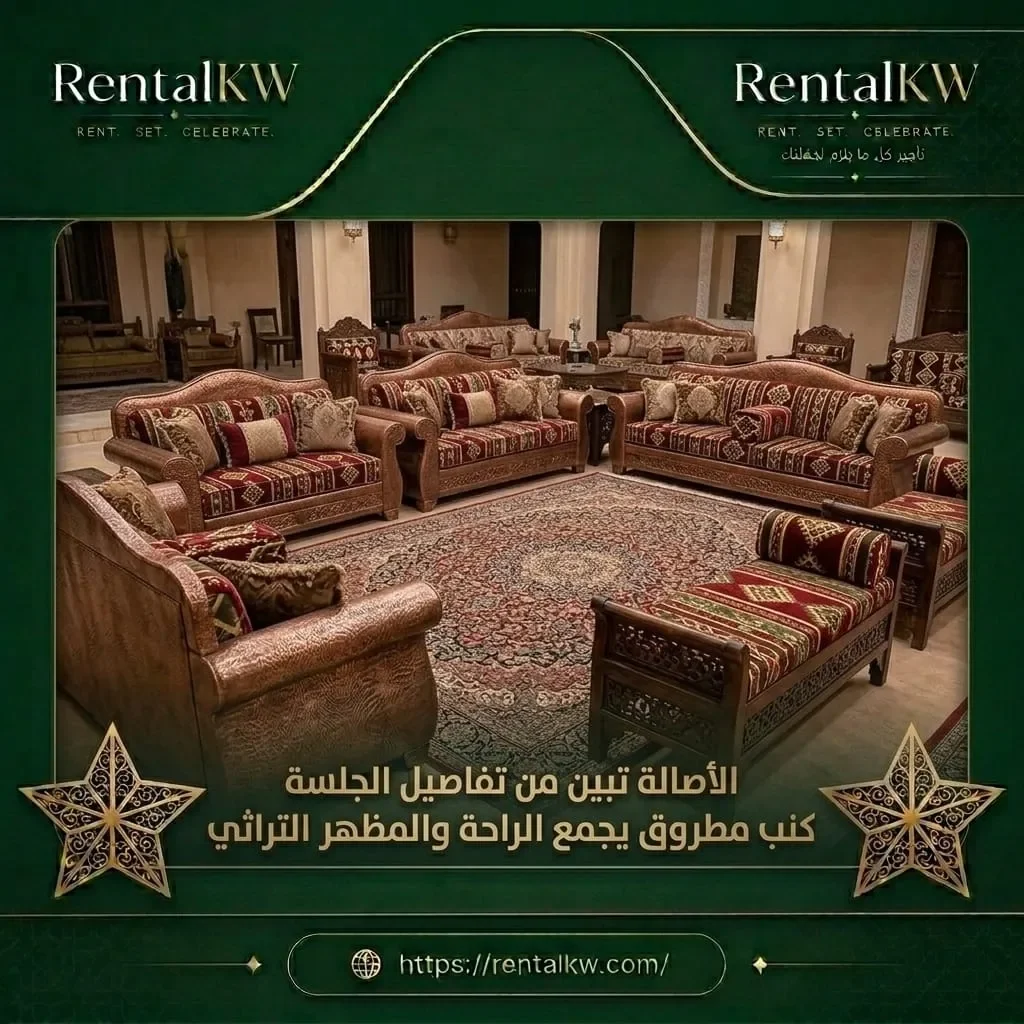
Determining the number of sofa sections needed for a Diwaniya depends on how the space is used daily or during an event. A Diwaniya is not simply a room whose walls need to be filled with furniture. It is a place for receiving guests, exchanging conversation, and serving coffee and tea. Depending on its design, it may contain a main seating area and an additional side area.
Before choosing the furniture, it is preferable to decide on the intended Majlis layout. Some Diwaniyas use connected sofa sections along three walls, while others are better suited to seating on two sides with an open front. This decision affects the required number and lengths of the sections more than the number of invited guests alone.
If the Diwaniya is rectangular, long sections may be suitable along the main walls, with shorter pieces used where necessary to complete the arrangement. However, a Diwaniya with several entrances may require divided seating configurations to maintain convenient movement into and out of the room.
One possible mistake is selecting many small sections simply because they are easier to transport. Increasing the number of connections may create unwanted gaps or differences in backrest alignment, especially when the pieces do not share the same design. Conversely, exceptionally long sections may be difficult to bring through narrow doors or corridors.
The dimensions of the Diwaniya entrances and the furniture delivery route should therefore be checked before confirming the order. A sofa may have a suitable length for the wall inside the room, but transporting it to the installation location requires enough clearance through doors and around corners.
The presence of coffee-serving tables or hospitality cabinets may also influence the appropriate number of sofas. Some Diwaniyas need part of a wall reserved for guest services instead of covering it completely with seating.
When comparing many short sections with fewer longer sections, the overall appearance, ease of transportation, actual capacity, and cost should all be considered. No single ideal number works for every Diwaniya. The best configuration is one that suits the room's dimensions and the way guests are received.
To determine the number of sofa sections needed for a Diwaniya, consider the following:
-
Choose the seating layout before deciding the number of sections: Determine whether the Diwaniya will use three connected sides two facing sides or separate seating groups because this decision establishes the required lengths and prevents renting furniture that is difficult to incorporate into the final design
-
Compare long sections with shorter furniture pieces: Use longer sections when they reduce connections and create a consistent arrangement and choose shorter sections when greater flexibility is required around doors corners or fixed equipment
-
Check whether the sofas can be brought into the Diwaniya: Compare furniture dimensions with door widths corridors and turning points because a sofa that fits the intended wall may still be difficult to transport into the installation area
-
Identify the wall reserved for hospitality equipment: Leave the necessary space for coffee cabinets or service tables when they form part of the Diwaniya's use so that wall is not incorrectly counted as fully available for sofas
-
Reduce unnecessary connections between sections: Choosing coordinated lengths from the same design helps maintain consistent backrests and seating surfaces while reducing gaps that may appear when numerous small sofa sections are combined
-
Request an inventory showing the number and lengths of sections: Make sure the rental quotation identifies the number of straight sofas corner sections and their dimensions so the delivered furniture can be checked against the approved Diwaniya layout
Arranging Traditional Majlis Sofas Inside the Room
Arranging traditional Majlis sofas inside the room influences how guests communicate, the appearance of the seating area, and the ease of serving refreshments. Two configurations may provide the same number of seats, but one can create a more organized Majlis because the seating directions and open spaces better suit its intended use.
One familiar approach is placing sofas along the walls while leaving the center of the Majlis open. This arrangement provides a clear circulation area and can help guests see one another, but it requires consideration of wall lengths, door locations, and how refreshments will be served.
In some Majlis rooms, two facing rows may be appropriate when the space is long. This arrangement works when the distance between the rows allows comfortable seating and movement. In a narrow room, however, placing deep sofas along both sides may reduce the central space to an uncomfortable degree.
The main guest entrance should also be identified. Seats positioned too close to the door may be exposed to constant movement, while access to certain seating areas may become difficult if connected furniture sections leave no suitable passage.
The arrangement may differ in Majlis rooms that include a main area for receiving important guests. Highlighting a particular side of the room may be appropriate without changing every seat or adding large decorative furniture pieces. The layout should remain practical and should not unnecessarily isolate the other guests.
Hospitality tables should also be positioned according to their intended use. A large table in the center of a limited space may reduce freedom of movement, while smaller tables distributed thoughtfully may provide better access to drinks and personal belongings.
Lighting, electrical outlets, and air conditioning also affect furniture placement. Sofas should not be positioned in ways that obstruct ventilation openings or prevent access to equipment needed during the occasion.
Arranging traditional sofas therefore involves more than positioning furniture along walls. It requires testing a layout that considers seating, hospitality services, circulation, and fixed features within the Majlis.
When arranging traditional Majlis sofas, consider the following:
-
Choose seating directions that support conversation between guests: Select an arrangement that allows people to see and speak with one another naturally instead of positioning all seats in directions that do not suit the Majlis because communication is an essential part of a Diwaniya's purpose
-
Keep the center of the Majlis open when using wall seating: Distributing sofas around the edges can create space for movement and hospitality services provided that tables and additional equipment do not occupy the entire central area
-
Evaluate the distance between facing sofa rows: When positioning furniture along two parallel sides review the depth of each section and the remaining space between them because a long Majlis may appear suitable visually but become cramped when the furniture is actually used
-
Avoid blocking entrance routes with connected sections: Leave suitable access points so guests can reach their seats without walking directly in front of everyone already seated or needing furniture to be moved
-
Choose hospitality table positions after drawing the seating layout: Select table sizes that suit the remaining spaces so refreshments remain accessible without the tables becoming obstacles to circulation
-
Consider the Majlis's fixed equipment: Review air conditioning lighting electrical outlets and equipment requiring direct access before approving the sofa layout so furniture installation does not create operational problems during the event
Traditional Majlis Sofas for Large Gathering Rooms
When selecting traditional Majlis sofas for large gathering rooms, the main challenge is not simply providing a high number of seats but maintaining an organized and connected seating environment across an extensive space. A large Majlis may accommodate dozens of guests, but distributing sofas randomly can create crowded areas alongside sections that remain far from regular use.
Preparation begins by dividing the room into clearly defined functional areas. There may be a main reception area, an additional area for conversations, and seating near hospitality facilities. This division helps determine how many seats each section requires instead of distributing furniture equally without considering how the space will be used.
It is also important to prevent excessively long seating arrangements from interfering with communication. A very long sofa row may provide many seats, but conversation between people seated at opposite ends can become less convenient. In some Majlis rooms, this can be addressed by dividing seating into connected groups rather than relying on one continuous arrangement.
The distance between seating areas also needs attention. Having a large room does not necessarily mean placing furniture as far apart as possible. Excessive spacing may make the Majlis feel disconnected and complicate the organized delivery of refreshments.
Large Majlis rooms also require consideration of staff circulation. When coffee, tea, and water are served to several seating groups, clear routes to the different areas help reduce unnecessary movement in front of guests.
When selecting furniture, maintaining a consistent design and color may help create a coordinated appearance. Limited variations in section lengths can be used to suit different areas, but adjacent pieces should have compatible backrest heights and upholstery finishes.
Reviewing rental quotations becomes particularly important for large orders. Prices may vary according to furniture length, number of sections, rental duration, and transportation and installation arrangements. A detailed quotation should therefore identify the actual quantity and required services.
There is no rule requiring every wall to be covered with sofas. Leaving some areas open may be preferable for circulation or hospitality services, especially when the required seating capacity has already been achieved.
When preparing traditional Majlis sofas for large rooms, consider the following:
-
Divide the Majlis into seating areas with clearly defined functions: Identify the main reception area and additional seating zones according to how guests will be received so furniture is not distributed across the large space without considering its actual purpose
-
Avoid relying on one excessively long seating row: Extending seating over a very long distance can make communication between guests less convenient so consider dividing some sections into groups that support easier conversation
-
Maintain a connected layout despite the room's size: Do not place seating groups far apart simply because space is available but choose distances that balance privacy convenient access and communication between guests
-
Plan hospitality service routes between seating areas: Identify the paths staff will use to reach different groups so a large quantity of furniture does not create unnecessarily long service routes or obstruct guest movement
-
Maintain consistent sofa specifications across neighboring arrangements: Check backrest heights upholstery types colors and finishes when renting large quantities because noticeable differences between adjacent sections may affect the Majlis's overall appearance
-
Compare large rental orders using detailed specifications: Request the number of furniture sections their lengths seating capacities pricing method and transportation and installation costs instead of relying on a total price that does not explain what will be delivered
Traditional Majlis Seating for Small Spaces
Traditional Majlis seating for small spaces requires careful selection of furniture dimensions because even a modest increase in sofa depth or length can significantly affect the space available for movement. A small Majlis should therefore be treated as an area requiring thoughtful planning rather than simply a smaller version of a large gathering room.
A useful starting point is identifying the longest wall without major obstacles. Placing one straight sofa section along this wall may be more appropriate than attempting to cover every wall with connected seating. Another section can then be added if space permits without blocking entrances or restricting the center of the room.
In some situations, an L-shaped arrangement is suitable because it makes use of two adjoining walls. However, the success of this configuration depends on the furniture dimensions and how the sections connect. A corner section may occupy more space than photographs suggest.
A U-shaped arrangement may provide a good number of seats along three sides, but it is not automatically appropriate for every small room. If the distance between the facing sections is limited, circulation can become difficult, particularly when a central table is included.
It is also useful to consider the number of seats genuinely required. If the Majlis receives only a limited number of guests, two suitable sections may be preferable to renting four pieces that leave insufficient room for sitting down and standing up.
The choice of tables also affects the result. A large table may occupy a significant portion of the central space, while smaller tables can allow more flexible arrangements when they suit the hospitality service requirements.
Saving space should not come at the expense of comfort. Extremely narrow sofas may appear suitable in terms of dimensions but may not provide comfortable seating during longer gatherings. A balance is therefore needed between seating capacity, seat depth, and ease of use.
From a financial perspective, careful planning may help reduce the number of rented pieces, but the lowest price should not be the only consideration. It is better to choose furniture that suits the venue, even if that requires changing the configuration, rather than renting more unsuitable sofas.
When choosing traditional Majlis seating for small spaces, consider the following:
-
Start with the most suitable wall instead of covering every wall: Choosing a clear unobstructed wall for the main sofa section helps organize the Majlis without filling the room with furniture that the actual guest count may not require
-
Compare straight seating with corner arrangements: An L-shaped arrangement may use a corner effectively while straight furniture sections may be better in other spaces so both options should be tested using actual dimensions rather than photographs
-
Avoid choosing a U-shaped arrangement without reviewing the central space: Although this design may provide seating along three sides it can restrict movement if the distance between the sofas is limited or a large table occupies the middle
-
Choose an appropriate number of sections instead of multiplying small pieces: Numerous short sofas may create unnecessary connections and gaps and use space less efficiently than a simple configuration providing the required seating capacity
-
Use hospitality tables that fit the remaining space: Review table dimensions before adding them because successful seating in a small Majlis also depends on convenient access to the seats and the ability to serve refreshments without overcrowding
-
Balance seat depth with available circulation space: Do not select the shallowest sofas merely to increase the number of pieces but confirm that the seats are comfortable to use and that the remaining clearances allow guests to sit down and stand up naturally
Calculating Guest Seating Capacity in a Majlis
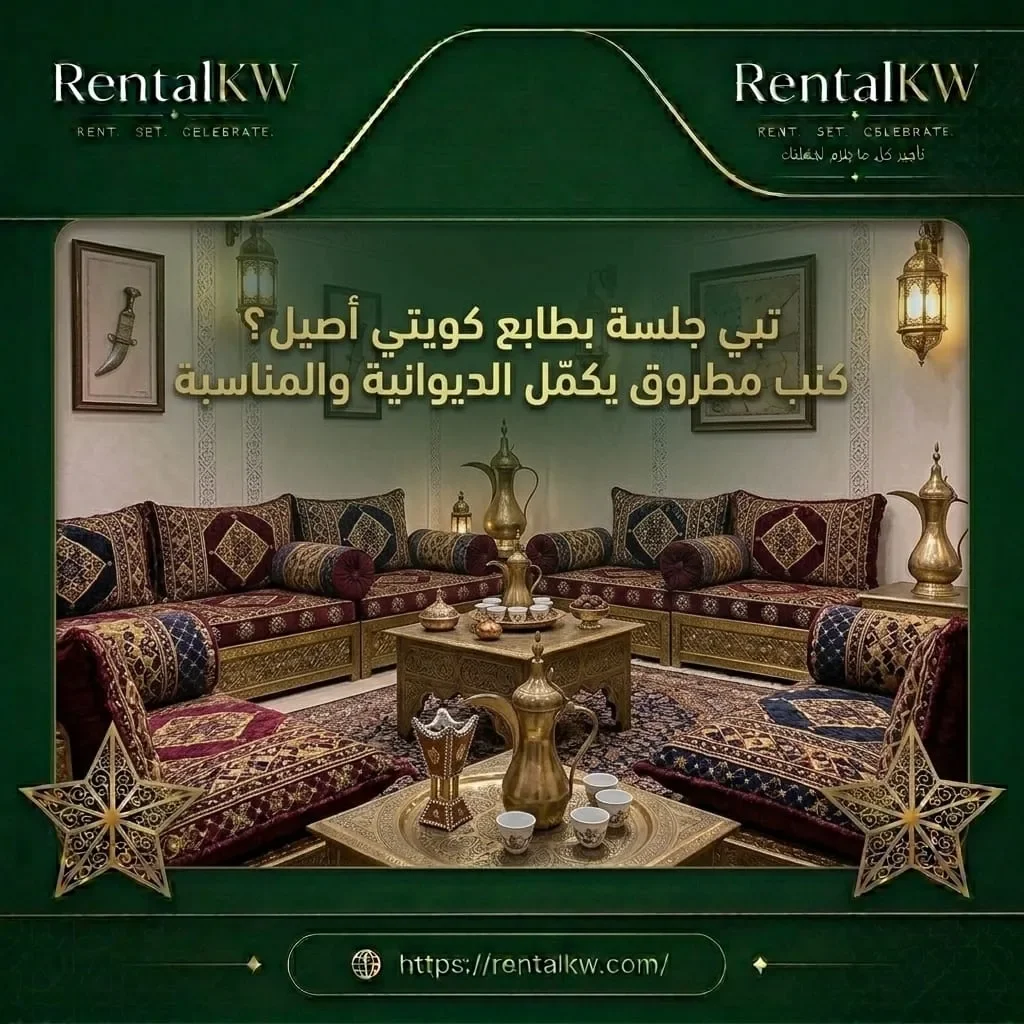
Calculating guest seating capacity in a Majlis requires a clear understanding of how the seats will be used, particularly when the room contains connected traditional sofas, additional chairs, or designated seating areas. Having many seats does not necessarily mean that all of them will be available to the same group of guests during the occasion.
The process begins by listing the different seating types inside the Majlis. These may include straight sofas, corner sections, individual chairs, and seats designated for elderly guests. The capacity of each category should be recorded separately before combining the figures to establish the total.
However, total capacity must be distinguished from the number of seats actually available. If the Majlis contains forty seats and six are reserved for particular individuals throughout the event, the number of general seats available to other guests becomes thirty-four.
Seats that become impractical after arranging tables or installing other equipment must also be considered. A particular seat may be too close to a table or positioned at a corner that is difficult to reach. Such seats should not be included in the final capacity until the layout has been reviewed.
One useful method is to prepare a numbered seating plan. Each usable seating position can be assigned a number on the drawing instead of simply writing the total capacity inside each furniture section. This approach helps identify mistakes involving corners, reserved seats, and areas that may be difficult to use.
If the event includes several Majlis rooms, it is preferable to calculate the capacity of each area independently before combining the results. Seats located in a distant room or an area reserved for a particular group do not necessarily resolve a shortage in the main Majlis.
The nature of the occasion must also be considered. During condolence gatherings or formal receptions, convenient access to seating and the movement of arriving and departing guests may be more important than maximizing capacity.
The ultimate objective is to establish a realistic number of usable seating places rather than recording the largest possible figure based on sofa lengths or furniture quantities.
To calculate guest seating capacity in a Majlis reliably, consider the following:
-
Prepare a separate inventory for each seating type: Record the capacity of straight sofas corner sections and additional chairs independently so the source of every seat in the final total can be identified and unsupported general estimates can be avoided
-
Subtract reserved seats from general seating capacity: If certain places are designated for elderly guests or particular individuals do not rely on those seats to accommodate everyone else because doing so would make the available capacity appear greater than it actually is
-
Number seating positions on the Majlis floor plan: Assigning a number to each usable seat helps review the configuration after installation and reveals whether any areas have been counted twice or seats are difficult to access
-
Review how tables and additional equipment affect seat usability: Installing a hospitality table or fixed equipment may reduce the space in front of certain seats so confirm that every seating position can be used before including it in the final calculation
-
Calculate the capacity of each Majlis separately when several areas are used: Do not combine seats from different Diwaniyas without explaining their distribution because additional seating in a separate area does not necessarily make it available to guests in the main room
-
Use comfortable capacity rather than an assumed maximum: The goal is to provide seats that guests can use appropriately while maintaining convenient entry and exit rather than increasing the total number at the expense of comfort and organization
How Much Traditional Majlis Sofa Seating Is Required?
Determining how much traditional Majlis sofa seating is required for an event is the final decision that combines guest count, seating capacity, usable wall lengths, and the nature of the Majlis into one calculation. At this stage, the initial estimates should be converted into a clear rental order identifying the number of furniture sections, their dimensions, and their placement within the venue.
Begin by preparing a list showing the number of guests expected during peak attendance, the seats required in each Majlis, and the seating already available. Next, determine how much capacity must be provided using traditional sofas, excluding reserved seats or places unsuitable for general use.
Suppose an event has seventy invited guests, with fifty people expected to be present simultaneously. If ten suitable seats are already available at the venue during the busiest period, the initial target may be forty traditional sofa seats. If each selected section accommodates four people, the mathematical requirement would be ten sections.
However, this calculation does not become a final decision until the layout has been reviewed. Wall measurements may reveal that some long sections do not fit the space or that several shorter pieces offer a better configuration. It may also be necessary to adjust seating positions because of entrances or hospitality equipment.
Comparing more than one option before confirming the booking is important. One company may offer straight sections in fixed lengths, while another provides corner configurations or a choice of different section lengths. Each offer should be evaluated according to the number of usable seats and how well the furniture fits the venue.
Rental prices are affected by several factors, including the number and length of sections, upholstery type, rental duration, transportation, and installation. The lowest price per section does not necessarily mean the least expensive overall offer because some configurations may require more pieces to achieve the same seating capacity.
It is also preferable to inspect the furniture condition before installation and check that colors and backrests match between neighboring sections. In a Majlis with connected seating, differences in backrest heights or upholstery shades are often more noticeable than in arrangements with separate sofas.
Before the event, agree with the rental company on the delivery time, the arrangement of the furniture, and responsibility for any differences between the agreed quantity and the actual installation. The conditions for modifying the order should also be established in case the guest count changes before the occasion.
Choosing the right quantity of traditional Majlis sofas then becomes a decision based on clear information rather than guesswork or simply renting as many pieces as possible.
Before approving the traditional Majlis sofa quantity for an event, review the following:
-
Match the required seat count to the actual capacity of the furniture: Calculate the seats that must be provided after identifying expected attendance and other available seating then choose the number of sofa sections according to the approved capacity of each model rather than relying on visual estimates
-
Review furniture lengths against the final Majlis layout: Confirm that all sections can be positioned along the walls or within the selected configuration without blocking entrances or interfering with hospitality service areas
-
Compare rental quotations based on total seating capacity and cost: Do not focus only on the price of an individual section but calculate the cost of the complete arrangement including transportation installation and additional services to identify the offer providing the required capacity at suitable value
-
Check that connected furniture sections have matching designs: Review upholstery colors backrest heights and seating styles because differences between adjacent pieces can affect the final appearance of the Majlis even when the quantity is correct
-
Confirm whether the rental order can be adjusted if attendance changes: Ask about the conditions for adding or removing sections before the occasion because flexible booking arrangements may help avoid unnecessary expenses when actual requirements change
-
Prepare a final delivery and installation checklist: Record the number of sections their lengths intended positions and arrival time so the completed setup can be checked against the agreement and the Majlis is ready before guests arrive
Conclusion
Understanding how to choose the right quantity of traditional Majlis sofas based on guest count requires combining the number of seats needed with usable wall lengths and the way the Majlis will be used. Traditional Matrouq sofas differ from separate seating arrangements in how they are positioned and connected at corners. Counting furniture sections without knowing their dimensions and actual seating capacity is therefore insufficient.
The appropriate method begins by estimating how many guests are expected to be seated simultaneously, identifying the capacity of each section, and reviewing corner positions and reserved seating. The wall lengths suitable for furniture are then measured to confirm that the selected configuration will not obstruct entrances or hospitality service routes.
Large Diwaniyas also have different requirements from small Majlis rooms. Spacious venues may benefit from dividing seating into connected groups, while limited spaces require furniture sections that match the available dimensions without unnecessarily increasing the number of units.
When renting traditional Majlis sofas, comparing quotations according to section lengths, actual seating capacity, upholstery condition, and transportation and installation costs is important. The lowest price does not always represent the best choice if the furniture does not fit the venue or provide the required seating.
Before confirming an order, it is preferable to prepare a Majlis layout, establish the number of seats required, and obtain clear specifications from the rental company. This approach helps create an organized and comfortable Majlis that accommodates guests appropriately without renting unnecessary furniture or discovering a seating shortage during the event.
Frequently Asked Questions
How do I calculate the number of traditional Majlis sofas based on guest count?
Start by determining how many people are expected to sit in the Majlis at the same time, then establish the actual seating capacity of each traditional sofa section. Divide the required number of seats by the capacity of each section and round the result upward when necessary. Afterward, review the available wall lengths and corner arrangements to confirm that the quantity can be installed appropriately.
How many traditional Majlis sofa sections do I need for 50 people?
If fifty seats are required and each section accommodates four people, the mathematical requirement is thirteen sections providing fifty-two seats. If each section accommodates three people, seventeen sections would provide fifty-one seats. The actual capacity and Majlis dimensions must be confirmed before approving the quantity.
Can traditional Majlis sofas be calculated by linear meters instead of sections?
Wall lengths and sofa lengths can be used to determine a suitable furniture quantity, but linear measurements alone do not establish seating capacity accurately. Capacity is affected by the width of armrests, seat design, and the way sections connect at corners. It is therefore preferable to combine length measurements with the approved capacity of each furniture section.
What is the best way to arrange traditional Majlis sofas in a Diwaniya?
The most suitable arrangement depends on the Diwaniya's shape, entrance locations, and the way guests are received. Placing sofas along the walls while leaving the center open may work well in some Majlis rooms, while other spaces require facing rows or divided seating groups. The most important considerations are convenient movement and the ability to serve refreshments efficiently.
Are traditional Majlis sofas suitable for small rooms?
Yes. Traditional Majlis sofas can be used in small rooms when their lengths and depths are selected according to the available space. Straight sections or compact corner arrangements may be suitable depending on the room's shape. However, covering every wall should be avoided if it restricts seating access or movement.
How do I calculate traditional Majlis sofa seating capacity at corners?
Determine whether the corner section provides an independent seat or is designed only to connect two straight sections. Seating positions at corners should not be counted twice. The best approach is to rely on the final capacity of the completed configuration according to the supplier's specifications.
Does the cost of renting traditional Majlis sofas depend on the number of sections?
Rental costs may vary according to the number of sections, their lengths, upholstery type, rental duration, and transportation and installation requirements. Pricing methods also differ between rental companies, so it is preferable to request a detailed quotation showing the configuration components and total cost rather than comparing the price of each section alone.
How can I avoid renting more traditional Majlis sofas than necessary?
Determine the number of guests expected during peak attendance, count the seating already available, and compare the remaining requirement with the capacity of the rental furniture. Then test the configuration on a Majlis floor plan before confirming the booking. These steps help reduce unnecessary furniture while maintaining enough suitable seating for guests.