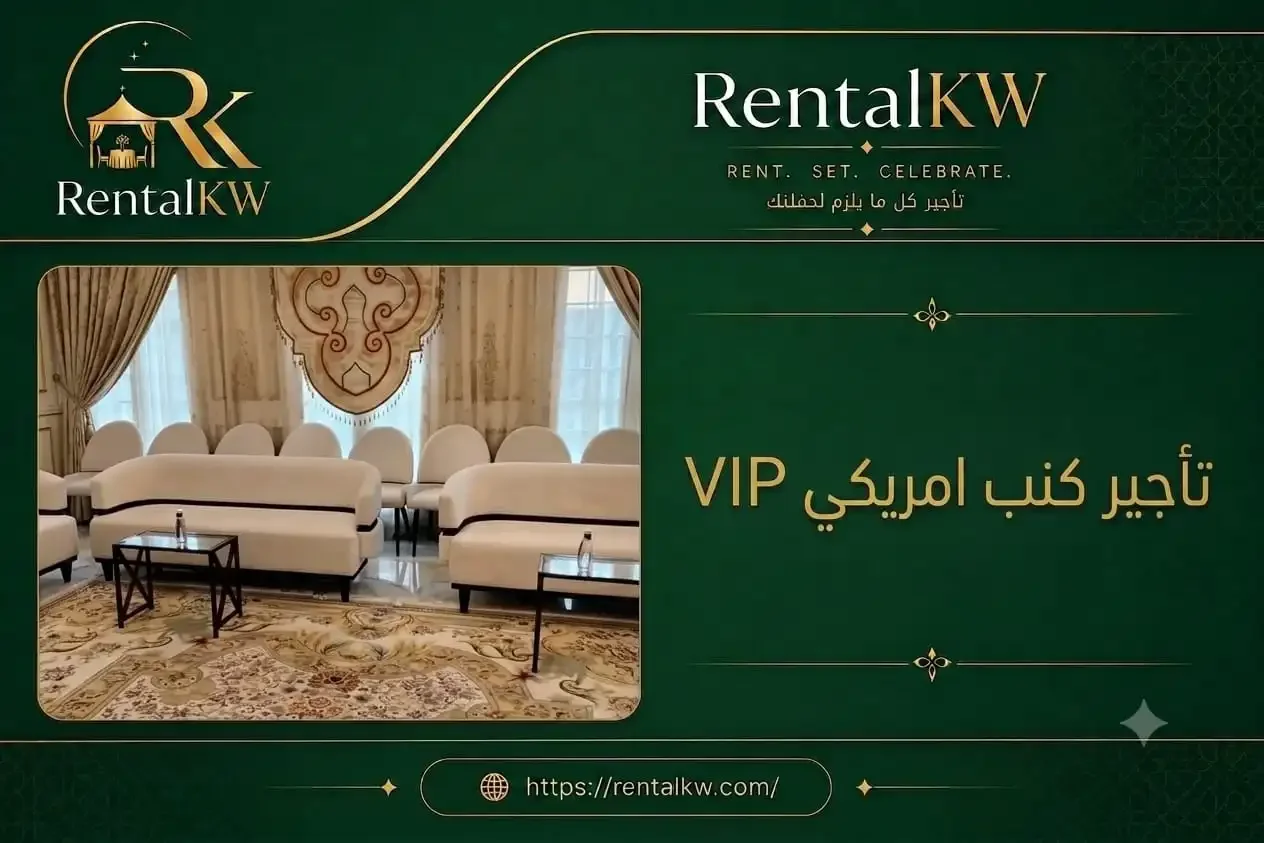
Matrouq Sofa Rental for Tents and Events
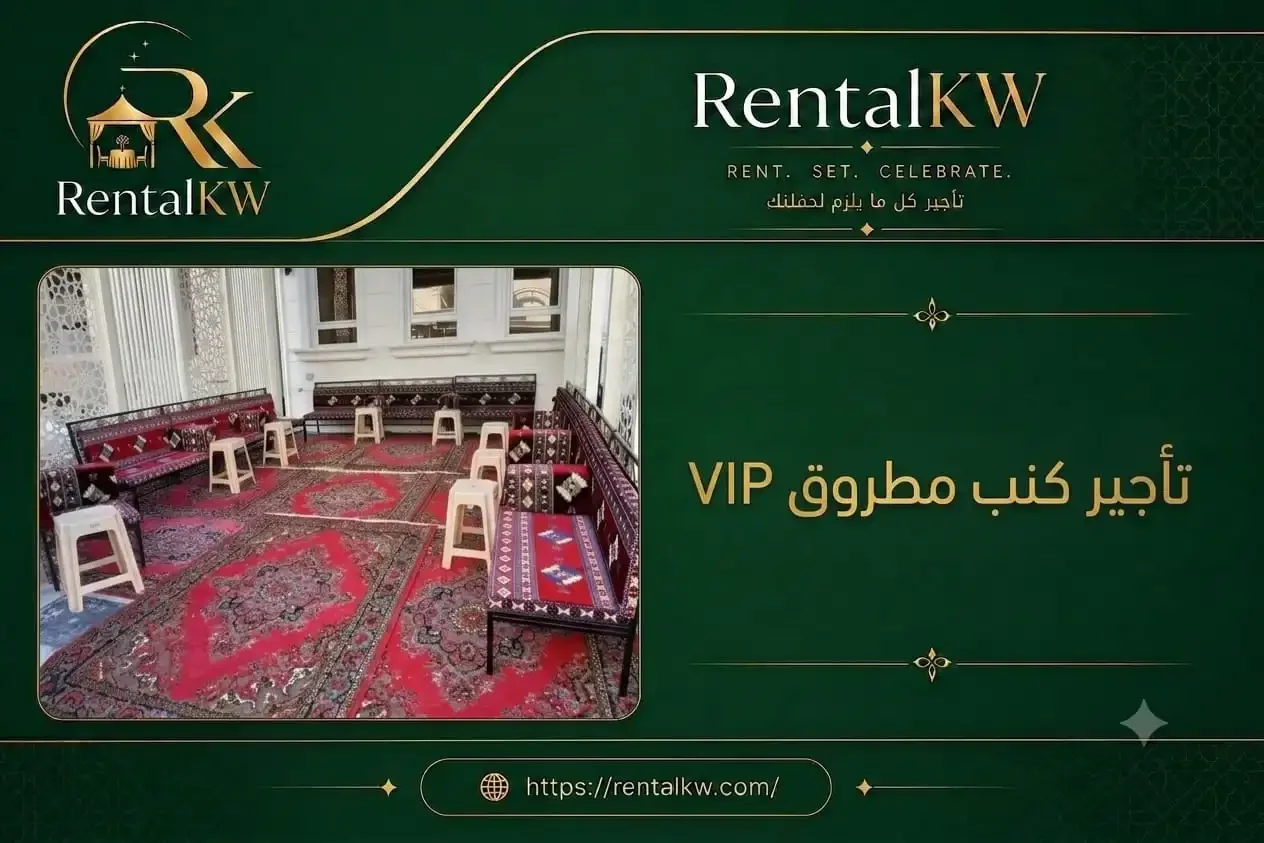
In this article
- Matrouq Sofa Rental in Kuwait
- Matrouq Sofas for Tents
- Matrouq Sofas for Events
- Matrouq Seating Inside Tents
- Matrouq Sofas for Diwaniyas
- Matrouq Sofas for Arabic Majlis
- Setting Up a Tent with Matrouq Sofas
- Traditional Seating for Events
- Matrouq Sofa Delivery for Events
- Booking Matrouq Sofas in Kuwait
- Conclusion
- Frequently Asked Questions
Matrouq sofas are not simply seats placed inside a tent. They are a central design element that defines the identity of the seating area and gives an event a distinctive Arabic and traditional character. A successful setup depends on how well the sofas coordinate with the carpets, tables, tent colors, and overall majlis arrangement rather than on the number of furniture pieces alone. From practical experience preparing tents, some seating arrangements lose their appeal when too many patterns are mixed together, when sofa lengths do not correspond with the sides of the tent, or when important layout decisions are left until the event day. The right selection therefore begins by understanding the type of occasion, tent size, expected number of guests, and desired seating style before choosing the model, quantity, and required services. This creates a complete traditional majlis rather than simply filling an empty tent with furniture.
Matrouq Sofa Rental in Kuwait
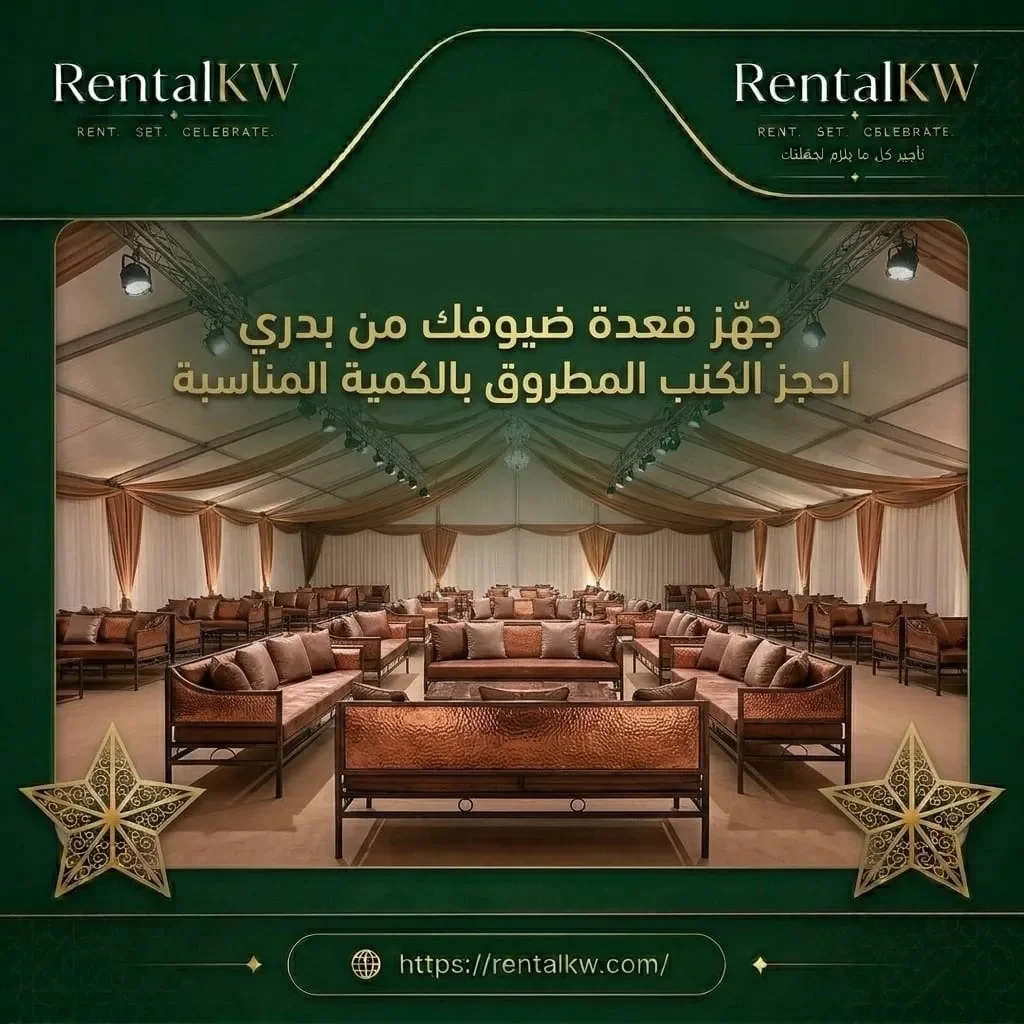
When considering Matrouq sofa rental in Kuwait, it is important to understand exactly what is included in the service because the term Matrouq sofa can describe seating collections that differ in patterns, colors, dimensions, overall condition, and configuration. A proper comparison should not begin only by asking how much each sofa costs. It should start by determining whether the available furniture can create a coordinated seating arrangement suitable for the specific tent or event being prepared.
In actual use, the difference between a coordinated collection and a group of pieces assembled merely to provide the required quantity becomes easy to notice. When sofas extend along several sides of a tent, randomly different patterns or noticeable variations in fabric condition can quickly affect the overall appearance. It is therefore better to see the style of the collection that will actually be supplied or receive a clear description of the model and colors before confirming the booking, particularly when the event requires a specific traditional identity.
Price should also not be evaluated separately from the rest of the service. Rental costs may be affected by the required sofa quantity, rental duration, delivery distance, carrying, arrangement, collection, and whether the setup includes any other agreed elements. A quotation that initially appears cheaper when looking only at the sofa rental rate may become more expensive once the services required to complete the tent setup are added.
From practical tent preparation experience, measuring the space in advance can prevent many adjustments on the event day. Knowing the lengths of the usable sides, door positions, tent poles, air-conditioning locations, and service points makes the required furniture quantity more realistic and reduces the risk of booking pieces that cannot be used according to the planned arrangement.
Before renting Matrouq sofas, it is useful to:
• Determine the required traditional seating style and primary colors before choosing the sofas so the patterns become part of the overall design instead of conflicting with the carpets tables and remaining setup
• Measure the sides where the sofas will actually be positioned rather than using the tent's total floor area as the only reference because doors columns and service zones reduce the usable seating length
• Review the condition of the collection or clearly agree on the expected furniture standard so major differences in cleanliness or patterns are not discovered after the majlis has been installed
• Request a price that clearly includes transportation arrangement rental duration collection and any additional agreed services so price comparisons are based on the complete service
• Schedule delivery early enough to review the appearance of the seating arrangement and reposition certain pieces if the layout does not balance properly with the tent
• Confirm the available quantity of the selected design for the event date especially when the majlis requires long continuous sections of visually consistent furniture
Matrouq Sofas for Tents
Choosing Matrouq sofas for tents requires understanding how the internal space actually works because a tent is not a conventional room where furniture can always be arranged in the same way. Some sides can be used completely while others may contain an entrance, air-conditioning equipment, service points, or partitions. Planning according to the usable lengths of the tent walls is therefore more accurate than depending only on the total floor area.
Matrouq sofas are particularly suitable for tents when the objective is to create a clearly defined Arabic majlis because arranging the seating along the perimeter leaves the center available for tables, hospitality service, and guest movement. However, completely filling every side should not be treated as an objective in itself. In some cases, intentional open space beside an entrance or between seating groups is necessary for circulation and can also give the overall design more visual breathing room.
Furniture size also has a significant effect inside smaller tents. Using visually heavy or high-backed sofas in a limited tent may make the ceiling appear lower and the entire space feel narrower, while a simpler and more proportionate seating design can create a better sense of openness. The furniture model should therefore not be selected from photographs without considering the actual dimensions of the tent.
Another practical mistake is completing the seating arrangement before discovering that airflow from an air conditioner is directed immediately behind certain guests or that a sofa blocks access to a service unit. Reviewing these details before furniture placement prevents unnecessary rearrangement after the tent setup has been completed.
When choosing Matrouq sofas for a tent, consider:
• Creating a simple plan of the tent sides and identifying the section of each side that can actually be used for seating instead of distributing sofas according to the tent's external dimensions alone
• Keeping entrances emergency exits circulation routes and service locations unobstructed rather than treating them as empty spaces that can be used to extend the sofa arrangement
• Selecting furniture height and dimensions that suit the proportions of the tent so the environment remains comfortable and the sofas do not visually dominate the entire space
• Reviewing air-conditioning unit locations and airflow directions before fixing the seating arrangement so guests are not exposed to direct airflow and access to equipment remains available
• Preserving an organized central area for tables hospitality service and movement instead of bringing opposing seating sections too close together simply to accommodate additional pieces
• Coordinating sofa colors and patterns with the tent lining and carpets because the success of traditional seating comes from the complete visual composition rather than the beauty of an individual piece
Matrouq Sofas for Events
Choosing Matrouq sofas for events should vary according to the nature of the occasion because seating suitable for a family reception may not be identical to what is needed for a large traditional celebration or a formal gathering inside a tent. Before selecting the quantity or design, it is important to understand how guests will use the space and whether the Matrouq seating will be the main reception area or only one of several zones within the event.
If the sofas will form the primary guest seating, comfort should receive as much attention as appearance because guests may remain seated for several hours. If the furniture will instead be used in a traditional corner or secondary reception zone, greater emphasis can be placed on visual identity while the quantity is calculated according to the actual use of that area rather than filling it with unnecessary seating.
Colors also play a different role depending on the event. Some occasions already have a defined decorative theme, which means sofa patterns should be selected after considering carpet colors, lighting, and table designs. Using more traditional patterns does not automatically create a stronger result. In many situations, one clearly coordinated and repeated pattern can look more elegant than several competing designs.
Photography should also be considered. Matrouq seating may become a major background in event photographs, which makes unintended gaps and mismatched pieces more noticeable in wide images. The majlis should therefore be visually reviewed after installation rather than evaluated only according to the total number of available seats.
When preparing an event with Matrouq sofas, it is useful to:
• Determine the purpose of the seating area first whether it will serve as the main guest majlis a reception corner or a traditional feature because its function influences quantity comfort level and distribution
• Select patterns after identifying the colors of the decor carpets and lighting so the traditional identity remains clear without creating excessive visual competition
• Position the best-condition pieces in the most visible areas when the seating will appear in photography backgrounds or is located directly opposite the entrance
• Arrange seating according to guest groups and the way people are expected to interact rather than creating long rows that do not match how the event space will actually be used
• Calculate table space and coffee and hospitality service routes before extending the sofa arrangement because a majlis needs practical service access as much as it needs sufficient seating
• Review the completed setup from several angles after installation to confirm that there are no random gaps or obvious differences between pieces that weaken the visual identity of the seating area
Matrouq Seating Inside Tents
The success of Matrouq seating inside tents depends significantly on the relationship between the furniture and the tent itself. The sofas are not placed in a neutral environment but inside a setting with its own lining, ceiling, lighting, carpets, air-conditioning equipment, and defined entrances. Every one of these elements affects the final appearance. A sofa may look attractive when viewed separately but become unsuitable after being placed inside a tent whose colors or proportions do not coordinate with the seating design.
From practical setup experience, it is usually better to build the seating arrangement from the edges toward the center. The process begins by identifying the most suitable sides for the sofas, followed by table positions and then the routes that will be used by guests and hospitality staff. This approach prevents reaching the end of installation only to discover that the central area is no longer large enough for coffee service or comfortable movement.
It is also important to understand that a longer continuous seating line does not necessarily provide greater comfort. A very long row of sofas without access gaps can make entry and exit difficult, especially once the tent is full. The seating can instead be divided into visually connected groups with carefully planned openings for movement.
Carpets should not be treated as an independent element either. If the carpet has strong colors and the sofa fabric includes dense patterns, combining the two requires careful selection to avoid creating an overly busy visual environment. In some situations, a calmer carpet design provides a better background for highlighting the details of Matrouq furniture.
When installing Matrouq seating inside tents, consider:
• Beginning with the main seating sides and then building the table and walkway arrangement around them instead of bringing every furniture piece into the tent first and searching for remaining space afterward
• Dividing long sofa sections with carefully positioned access points so guests can reach or leave their seats without disturbing a large number of people
• Considering sofa patterns carpet designs and tent lining as one complete visual composition because using three visually strong elements at the same time can make the environment feel overcrowded
• Leaving practical space in front of the seats for tables and hospitality service while remembering that service movement increases once the tent becomes fully occupied
• Ensuring that sofa edges do not extend into air-conditioning equipment utilities or service points that the setup team may need to access during the occasion
• Reviewing the seating arrangement after the actual tent lighting has been switched on because colors and patterns may appear different from how they looked under warehouse lighting or natural daylight
Matrouq Sofas for Diwaniyas
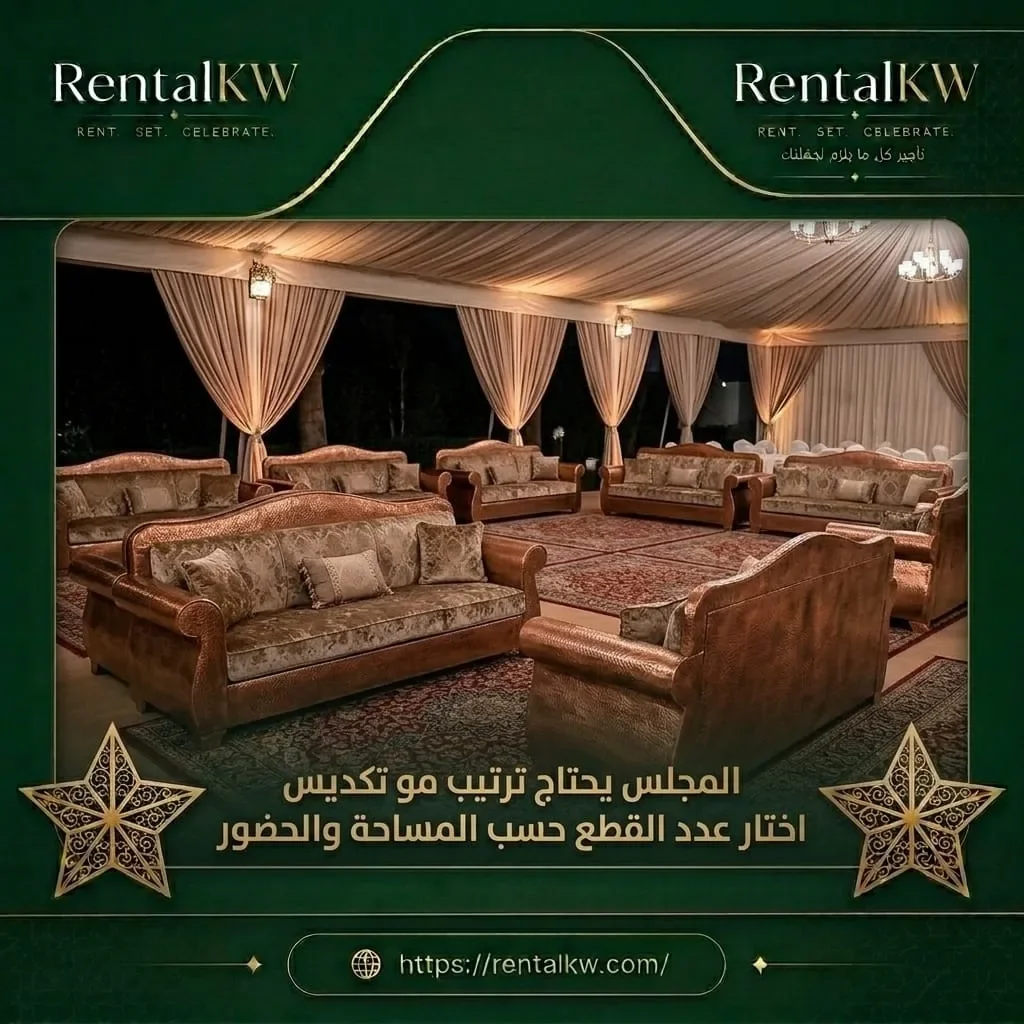
Using Matrouq sofas for diwaniyas is suitable when the objective is to maintain an Arabic identity while creating an organized seating arrangement for temporary use or a specific occasion. The priorities here differ from a traditional display area because a diwaniya is actively used by guests and therefore requires comfortable seats and clearly accessible hospitality areas.
An important consideration is whether Matrouq sofas will cover the entire diwaniya or only a specific section. Combining more than one type of furniture can work successfully when the transition is intentional and carefully planned, but it can look random when Matrouq pieces are used simply to fill gaps between unrelated furniture styles.
The diwaniya should also preserve easy communication between seated guests. Arranging the seating around the perimeter can work well, but the distance between opposite sides and the locations of hospitality tables should be considered so guests can communicate and reach refreshments comfortably.
The required quantity should not be calculated only by counting sofas because pieces may differ in length and seating capacity. Measuring the available seating length and matching it with the dimensions and capacity of each piece provides a more accurate result than ordering an approximate number and attempting to distribute it afterward.
When using Matrouq sofas for a diwaniya, consider:
• Determining whether the traditional design will cover the entire diwaniya or only one specific area so transitions between different furniture styles do not appear accidental
• Matching furniture lengths to the usable sections of the walls instead of determining quantity according to an approximate number of sofa pieces
• Maintaining easy access to coffee and water tables because a diwaniya depends on continuous hospitality service rather than seating alone
• Avoiding blocking important corners with long pieces when those areas are needed for circulation or majlis service while guests are present
• Selecting patterns that complement the overall identity of the diwaniya rather than introducing many colors simply to emphasize a traditional appearance
• Testing actual seating comfort on more than one piece before approving the collection when the diwaniya will host guests for extended periods or remain in use for several days
Matrouq Sofas for Arabic Majlis
Using Matrouq sofas for Arabic majlis can create a distinctive result when the objective is to establish a space with a clear local and traditional character rather than relying entirely on modern furniture. The strength of this seating style, however, comes from consistency rather than excessive decoration. A coordinated furniture collection arranged with suitable carpets and tables will often create a stronger visual identity than combining several traditional designs within the same space.
The required level of formality should also be determined. Some Arabic majlis settings work best with calm and coordinated seating, while heritage celebrations may suit stronger colors and more noticeable patterns. Understanding how the space will be used helps guide the design choice instead of treating every type of Matrouq furniture as interchangeable.
From a practical perspective, the majlis should serve the guest before serving the photograph. Seat height, back support, and easy access to tables should be tested rather than assuming that a traditional appearance alone is enough.
The surrounding elements complete the seating arrangement. A table with an unrelated design or a carpet with a competing pattern can weaken the overall effect even when the sofas themselves are excellent.
When selecting Matrouq sofas for an Arabic majlis, consider:
• Defining the desired level of traditional character before selecting patterns so the majlis remains a coordinated Arabic environment rather than becoming a collection of competing colors and decorative elements
• Choosing pieces with similar heights and depths so the seating line remains visually balanced when viewed across the length of the majlis
• Testing back and seat comfort when guests are expected to remain for long periods because practical use is just as important as visual identity
• Coordinating table and carpet designs with the sofas instead of selecting each element separately and attempting to combine them on the installation day
• Keeping visible modern elements such as cables utilities and service equipment organized wherever possible so they do not interrupt the traditional character of the majlis
• Using lighting to reveal the details of the patterns without excessive intensity because unsuitable lighting can alter fabric colors and weaken the visual consistency between furniture pieces
Setting Up a Tent with Matrouq Sofas
Setting up a tent with Matrouq sofas begins before the furniture arrives at the location. The first step is to understand the internal dimensions of the tent and then identify the entrance, air-conditioning positions, service routes, and any existing partitions. The sections that will actually become seating areas can then be determined and suitable sofa lengths selected.
A recurring mistake is calculating the entire perimeter of the tent and then ordering enough furniture to cover that figure. This method ignores entrances, corners that need to remain open, air-conditioning locations, and service zones, which can result in more furniture arriving than the usable space can accommodate.
Carpets and tables should be considered next. If the sofas have a noticeable pattern, the remaining elements should be reviewed alongside them before installation. A successful setup does not require every individual item to be visually dominant or heavily traditional. The elements need to work together as one composition.
The installation sequence should also be planned. Completing the carpet at the appropriate stage, followed by bringing in the sofas and arranging the tables and lighting, reduces repeated furniture movement and prevents interference with other setup teams.
To prepare a tent practically, consider:
• Taking internal measurements after the tent has been installed whenever possible because the usable interior space is the most important reference for furniture distribution
• Subtracting the width of entrances air-conditioning areas service zones and partitions from the available lengths before determining the required sofa quantity
• Selecting carpets and sofas as part of the same design concept so colors and patterns complement each other instead of competing for attention
• Establishing a clear setup sequence so the team does not need to move the sofas repeatedly because other elements still need to be installed afterward
• Testing the width of the main walkway after the tables have been positioned rather than before because the tables and seating together determine the actual circulation space
• Conducting a final review that includes actual sitting movement lighting and overall appearance instead of simply confirming that all ordered furniture has arrived
Traditional Seating for Events
Creating traditional seating for events requires more than using sofas decorated with Arabic patterns. A traditional identity is formed through the relationship between the furniture, carpets, tables, lighting, and the way the seating area is arranged. The desired atmosphere should therefore be identified before the individual pieces are selected.
At a family occasion, the objective may be to create a warm and comfortable traditional majlis, while at a heritage event or themed celebration, the seating may become part of the overall experience and require greater attention to visual details. This difference affects the sofa quantity, arrangement, and location within the event.
It is also better to avoid adding traditional elements simply to fill empty areas. A piece or decorative detail that does not support the design can make the venue appear like a collection of unrelated decorations rather than one complete majlis.
The seating must remain practical as well. Guests need to enter, leave, reach tables, and sit comfortably regardless of how attractive the design may be.
When creating traditional seating, consider:
• Establishing a clear identity for the majlis before selecting furniture so patterns colors and supporting elements all contribute to one consistent visual direction
• Using Matrouq sofas as a fundamental part of the composition rather than as separate pieces added after the rest of the decor has already been completed
• Balancing highly decorated elements with calmer surfaces so traditional details remain visible without making the environment visually exhausting
• Creating carefully planned photography areas when the seating is part of the event identity while maintaining the privacy and comfort of seated guests
• Considering the different ages of attendees when selecting seat height and comfort because the same event may include elderly guests and children
• Ensuring that traditional beauty does not come at the expense of walkways or hospitality service because a successful majlis should function well as well as look attractive
Matrouq Sofa Delivery for Events

Matrouq sofa delivery for events requires organization that differs from delivering smaller furniture because the quantity may be substantial and the furniture may require several stages of carrying and arrangement. Visible fabrics and patterns also need to be protected during transportation so the pieces arrive in a condition suitable for both display and use.
Before the event day, the location of the tent or majlis should be identified along with vehicle access and the closest practical unloading point. If the distance between the vehicle and the tent is long or furniture needs to pass through narrow routes, this should be known in advance so the delivery team can prepare appropriately.
The arrival time should also be coordinated with the installation of the tent, carpet, and air-conditioning equipment. Delivering the sofas before the space is ready may mean leaving them outside the tent or moving them several times, both of which can often be avoided through proper scheduling.
When arranging delivery, consider:
• Providing clear details about the setup location and access route so the unloading and carrying process can be assessed before the team arrives
• Coordinating sofa delivery with the readiness of the tent carpets and other elements that need to be completed first so the furniture is not left in an unsuitable area
• Protecting fabric sections during transportation and preventing contact with surfaces that could leave dust stains or visible marks
• Counting the pieces upon arrival and comparing them with the booking before distribution begins so any shortage can be identified at an early stage
• Inspecting furniture condition after unloading rather than only before transportation because certain issues may occur while carrying or moving the pieces into the seating area
• Confirming the collection procedure and timing in advance especially when the tent or event has a fixed dismantling and site-clearance schedule
Booking Matrouq Sofas in Kuwait
When booking Matrouq sofas in Kuwait, the decision should ideally not begin and end with price. A proper booking requires identifying the event type, seating area, rental duration, and preferred furniture style before understanding exactly which services are included in the quotation. This makes it possible to compare options fairly instead of comparing prices that cover different levels of service.
The total cost may be influenced by the furniture quantity, rental duration, selected collection, delivery, arrangement, collection, distance, and site requirements. If a complete tent setup is required, additional elements may also need to be priced clearly rather than assuming they are included in the sofa rental.
It is equally important to confirm that the required collection is available on the selected date. Photographs may display a particular design, but the quantity actually available on the event day determines whether the same appearance can be created.
Before confirming the booking, consider:
• Providing the tent or majlis measurements and type of occasion so the required quantity can be estimated according to actual needs rather than ordering an arbitrary number of pieces
• Agreeing on the preferred model or pattern collection and confirming that enough matching pieces are available for the selected date
• Requesting a clear quotation showing the rental cost duration transportation arrangement collection and any other agreed services
• Confirming the cost of extending the rental period if the event requires an additional day rather than discovering the additional charge after the original rental period ends
• Fixing delivery and collection times according to the tent installation schedule and other setup work so different teams do not interfere with one another at the location
• Clearly recording the quantity furniture condition and essential booking requirements so the service details are understood by both sides before the event day
Conclusion
Successful Matrouq sofa rental for tents and events should not be measured by how many furniture pieces are placed inside the venue but by how effectively those pieces create a comfortable and coordinated traditional majlis. Matrouq furniture has a strong visual presence and therefore needs a plan that connects it with the tent, carpets, tables, and lighting rather than treating it as an independent furniture element.
Inside tents in particular, accurate measurements and distribution become essential. Entrances, air-conditioning positions, and hospitality routes reduce the area available for seating, which means knowing only the tent's length and width is not enough to determine an appropriate sofa quantity.
Pattern selection also requires balance. A successful traditional seating arrangement does not mean collecting the greatest possible number of decorative patterns. It means selecting elements that complement each other while leaving enough visual space for each detail to be appreciated.
Comfort remains equally important. Whether the furniture is being used for a diwaniya, Arabic majlis, or family occasion, every guest needs a comfortable seat, a clear route for movement, and convenient access to a table.
From a cost perspective, it is better to evaluate a complete quotation that includes the furniture, rental duration, transportation, arrangement, and collection instead of relying only on the price of each sofa. This provides a more realistic comparison of the actual setup cost.
Ultimately, a successful majlis begins with accurate measurements, followed by selecting the appropriate traditional identity, then choosing the sofas, carpets, tables, and delivery plan. When these steps are completed in the correct order, the tent becomes a complete majlis with a clear personality while the seating remains practical and comfortable throughout the occasion.
Frequently Asked Questions
Are Matrouq sofas suitable for all types of tents?
They can be used in many types of tents when their dimensions suit the available interior space and the arrangement leaves enough room for entrances, air-conditioning equipment, and guest movement. The choice should be based on the actual tent rather than on the sofa design alone.
How do I determine the amount of Matrouq seating needed?
The required quantity should be determined by measuring the usable internal lengths after excluding entrances, service areas, and air-conditioning locations, then matching those lengths with the dimensions of the furniture and the desired seating arrangement.
Are Matrouq sofas suitable for Arabic majlis settings?
Yes. They are particularly suitable when the objective is to create a majlis with a clear Arabic or traditional character while coordinating the patterns with the carpets, tables, and lighting and maintaining guest comfort.
Can Matrouq sofas be used for family occasions?
Yes. They can serve as the main seating area or form part of a traditional corner within a family event. The appropriate setup depends on the number of guests, available space, and intended use.
What affects the price of Matrouq sofa rental?
The total cost is generally affected by the required quantity, type of furniture collection, rental duration, delivery location, carrying, arrangement, collection, and any additional setup elements requested with the seating.
Should carpets be selected before booking Matrouq sofas?
One does not necessarily have to be selected before the other, but it is better to plan them together because the patterns and colors of both elements directly influence the final appearance of the majlis.
When should Matrouq sofas be delivered to the tent?
Delivery should preferably be coordinated after the elements that need to be completed first, such as the tent and carpet, are ready while still leaving enough time for arrangement, inspection, and any necessary adjustments before guests arrive.
What should I inspect when receiving Matrouq sofas?
Check the quantity, fabric condition, consistency of the collection, cleanliness, stability, and whether the design matches the booking. The final arrangement should also be reviewed to ensure that the furniture does not obstruct entrances, walkways, or tent services.