
How Many Clear Chairs Do You Need for Your Guests?

In this article
- How Many Clear Chairs Do I Need for the Event?
- Number of Clear Chairs Based on Guest Count
- Clear Chairs for 50 People
- Clear Chairs for 100 People
- Calculating Wedding Chairs by Guest Count
- Acrylic Chairs Based on the Number of Guests
- Distributing Clear Chairs Around Tables
- Number of Clear Napoleon Chairs for an Event
- Preparing Guest Seating with Clear Chairs
- Booking Clear Chairs by Quantity
- Conclusion
- Frequently Asked Questions
Determining how many clear chairs are needed for an event may seem simple at first because the obvious assumption is that every guest requires one chair. In practice, however, accurate event preparation requires a more detailed calculation. The number of confirmed guests may differ from the number of invitations sent, while children, family tables, the stage, walkways, and table shapes can all affect the seating arrangement. From practical experience preparing weddings and engagement celebrations, the problem is not always a shortage of chairs. Sometimes the correct total quantity is rented but distributed poorly, leaving some tables overcrowded and others short of seats. The calculation should therefore begin with the confirmed guest list, followed by the number and capacity of tables, and then a limited and carefully planned reserve quantity. This approach creates a visually balanced seating arrangement while avoiding unnecessary rental costs for chairs that may remain empty throughout the event.
How Many Clear Chairs Do I Need for the Event?
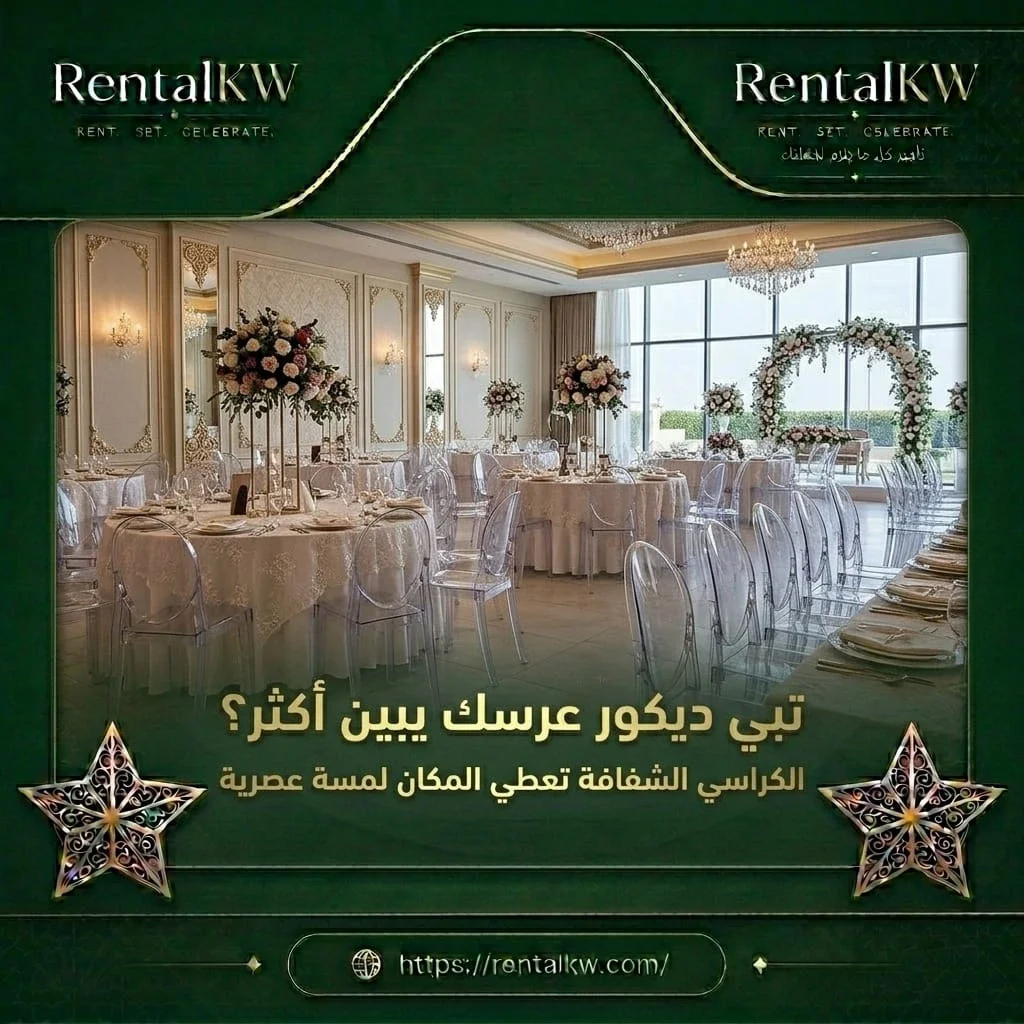
When asking how many clear chairs do I need for the event, the correct starting point is the number of guests who are genuinely expected to need seats rather than the number of invitation cards that were sent. If you have 100 invitations, this does not automatically mean you need 100 chairs because some invitations may represent families or multiple people, while some invited guests may decline. The invitation list should therefore be converted into an expected number of individuals and then updated as the event approaches based on attendance confirmations.
Even after determining the final number of guests, the calculation is not complete. You need to know whether the event requires full seating throughout the celebration or whether there are other areas such as side lounges, photography zones, or reception spaces where some guests may remain standing for certain periods. At dinner-based events with organized table seating, providing a seat for every confirmed guest should be the basic requirement because leaving some guests without assigned seats and hoping to find empty chairs at other tables can create confusion when seating begins.
From practical experience, it is better to include a limited reserve instead of ordering exactly the same number of chairs as confirmed guests. If 80 guests have confirmed, for example, preparing only 80 chairs provides no flexibility if an additional guest arrives, one table requires another seat, or a chair needs to be replaced because of an issue during transportation or use. On the other hand, adding dozens of unnecessary chairs increases the rental cost, requires additional storage space, and may make the overall arrangement look less organized.
The type and size of tables must also be known before the chair quantity is finalized because distributing 80 chairs across ten tables is completely different from arranging the same number around tables with varying capacities. The final chair quantity should correspond to the actual seating plan rather than the guest number alone.
To calculate the quantity practically, consider:
• Converting the invitation list into the actual number of individuals expected to attend instead of assuming that every invitation represents only one person
• Updating the confirmed attendance figure before the event because cancellations and additional guests can noticeably change the number of chairs required
• Providing a seat for every confirmed guest at events based on dinner service or organized seating rather than depending on chairs being moved between tables during the celebration
• Adding a limited and carefully calculated reserve that can accommodate small increases in attendance or replace a chair when necessary without renting an excessive quantity
• Determining the number and capacity of tables before confirming the final chair quantity so every chair has a defined location within the seating plan
• Reviewing the available venue space after distributing the required quantity because being able to rent enough chairs does not necessarily mean the venue can accommodate them comfortably
Number of Clear Chairs Based on Guest Count
Determining the number of clear chairs based on guest count requires distinguishing between three different figures: the number of invited guests, the number of confirmed guests, and the number of seats that will actually be prepared. These figures may be similar at a small celebration but can differ significantly at larger events. If the invitation list includes 150 people while only 120 have confirmed attendance, preparing the event according to the first figure could result in renting thirty additional chairs that are never actually used.
From a practical perspective, confirmed attendance should form the basis of the calculation, while guests who have not confirmed should be considered separately. If there is a realistic possibility that some of them will attend, reserve chairs can be kept available rather than automatically adding every unconfirmed guest to the main seating arrangement. This keeps the tables visually balanced and prevents photographs from showing numerous empty seats that may give the impression that many invited guests did not attend.
Children must also be considered carefully when calculating the quantity. A child who requires a standard chair should be included in the total, while children who will use dedicated child seating should not be counted within the same quantity of clear chairs. These details may seem minor but can noticeably affect the final number at large family celebrations.
The seating plan also influences the requirement. You may have 96 guests while the selected tables comfortably accommodate eight people each. In that situation, planning 12 tables with 8 seats each is more useful than attempting to distribute 96 chairs randomly after the furniture has already arrived.
Reserve chairs should also not be placed around the tables from the beginning. It is better to keep them in an organized service area so unnecessary empty seats do not appear throughout the venue.
When determining the number according to guest count, review:
• Separating the total number of invited people from the number who have confirmed attendance because the actual setup should be based on the figure closest to reality
• Counting children who require standard chairs separately from children who will be provided with dedicated child seating
• Connecting the number of guests with table capacities so the guest list becomes a practical seating plan rather than remaining only a total figure
• Keeping reserve chairs outside the main arrangement so large numbers of empty seats do not appear around the tables from the beginning of the event
• Reviewing the quantity again before delivery if cancellations or additions occur during the final days instead of relying on an outdated guest list
• Confirming that the number of chairs recorded in the rental booking matches the seating plan plus only the agreed reserve quantity
Clear Chairs for 50 People
Preparing clear chairs for 50 people may appear straightforward because the number is relatively limited, but smaller celebrations often require particularly careful distribution because every additional or missing chair becomes more noticeable in a compact venue. If all fifty guests are confirmed and will be seated at tables, the starting point is fifty main chairs followed by a limited reserve based on the nature of the event and the realistic possibility of additional guests.
From practical experience preparing smaller celebrations, the number of tables determines the appearance and distribution of those fifty chairs more than many people expect. If each table comfortably accommodates ten guests, the plan may be based on five seating groups. If smaller tables are being used, the same number of chairs will require more groups and different circulation routes. Chairs should therefore not be booked first with the table arrangement considered only afterward.
Events for around fifty people are also frequently held in homes, gardens, or private venues that are smaller than large wedding halls. In these settings, every meter becomes important, and chairs should not be positioned too close to walls, the buffet, photography area, or other active parts of the venue.
A common mistake is placing reserve chairs directly around the tables. If a table is designed for eight guests but ten chairs are positioned around it simply as a precaution, both comfort and visual balance are affected even if the two additional seats remain empty. Reserve chairs should instead be stored away from the main seating arrangement and added only when needed.
When preparing fifty clear chairs, consider:
• Confirming how many guests genuinely require seats before approving fifty chairs as the final main quantity
• Choosing the number and capacity of tables first so the chairs can be divided into balanced groups that do not appear overcrowded or incomplete
• Maintaining enough space for guest movement between tables instead of using every available area to add seating
• Keeping reserve chairs in a separate location away from the main visual setting so they do not affect table styling or event photographs
• Considering the space required for the buffet photography area stage and entrances at home celebrations because these elements compete with seating for the same available space
• Inspecting clear chairs under the actual venue lighting before arranging them because scratches and signs of previous use are more visible on transparent acrylic surfaces
Clear Chairs for 100 People
Preparing clear chairs for 100 people requires moving beyond simply counting seats and developing a complete seating plan because mistakes at an event of this size quickly become visible in table distribution, guest circulation, and the overall appearance of the celebration. If all one hundred guests are confirmed and each requires an individual seat, one hundred chairs represent the main quantity but not necessarily the final number that should be booked. A limited reserve is useful for an unexpected additional guest or for replacing a chair without placing these extra seats around the tables from the beginning.
The next and more important question is how those one hundred chairs will be distributed. If the selected tables comfortably accommodate ten people each, one possible arrangement would be ten tables with ten chairs each. However, this should not be treated as a fixed rule because some tables may be assigned to families or smaller groups. One table may therefore have eight guests while another has ten. The objective is for the total number of actual seats to correspond with the guest plan rather than making every table numerically identical at the expense of comfort.
From practical setup experience, another common problem occurs when one hundred chairs are confirmed before checking whether the venue can accommodate both the tables and the necessary circulation space. A venue that appears spacious while empty can feel completely different after the wedding stage, buffet, photography area, and guest tables have been installed. The complete layout should therefore be approved before the chair quantity and distribution are finalized.
In terms of cost, increasing the reserve quantity without a genuine reason raises the rental and transportation expense and may also require additional storage space. A better rental service helps determine a realistic quantity rather than simply encouraging the customer to order the largest possible number.
When preparing one hundred clear chairs, consider:
• Converting the list of one hundred guests into an actual table plan so the location of every group is known before the chairs arrive at the venue
• Determining the capacity of each table according to its actual dimensions and avoiding additional seats simply to reach the total of one hundred if doing so would make guests uncomfortable
• Maintaining clear routes between table groups that allow guests and hospitality staff to move even after chairs have been pulled backward during seating
• Keeping a limited number of reserve chairs in an organized side area instead of placing them around tables and creating unnecessary empty seats
• Reviewing the seating plan after final cancellations or additions because even a small change in attendance may allow an entire table to be removed or require certain groups to be redistributed
• Comparing the required chair quantity with the remaining space after the stage buffet photography zone and service areas have been installed because the space left for seating determines whether the plan can actually be executed
Calculating Wedding Chairs by Guest Count
Calculating wedding chairs by guest count involves more than matching one chair with every name on the invitation list because a wedding usually contains several types of seating and multiple elements that occupy venue space. There are the main guest chairs, and there may also be chairs for the couple's table, side seating areas, or separate reception zones. The function of every seating group should therefore be determined before the final quantity is sent to the rental provider.
The practical method begins with an updated attendance list and then divides guests into groups assigned to specific tables. The main number of seats is calculated next, followed by a separately defined reserve quantity. This method is more accurate than ordering an approximate number of chairs and then trying to build the seating plan around whatever quantity was booked.
It is also important to distinguish between a table's maximum physical capacity and its comfortable seating capacity. It may technically be possible to place ten chairs around a certain table, but once dinnerware, hospitality items, and decorations are added, eight or nine seats may provide a more comfortable arrangement depending on the table size and styling.
This becomes particularly important at weddings with extensive decoration because floral arrangements and decorative structures may influence the usable space around the tables and circulation areas.
To calculate wedding chairs accurately:
• Prepare an approximate final count of adults and children who will use clear chairs rather than combining every invited person into one figure
• Convert the attendance list into table groups before determining the chair quantity so the number is connected to a real and executable seating plan
• Distinguish between the maximum capacity of a table and its comfortable capacity after dinnerware decorations and surrounding styling elements are added
• Calculate any chairs required outside the main guest tables separately so seats do not need to be taken from the primary seating arrangement during the event
• Treat reserve chairs as a separate quantity used when necessary rather than part of the number that must be displayed around the tables
• Conduct a final review after the decoration and venue layout have been confirmed so the chair quantity does not conflict with the space that is actually available
Acrylic Chairs Based on the Number of Guests
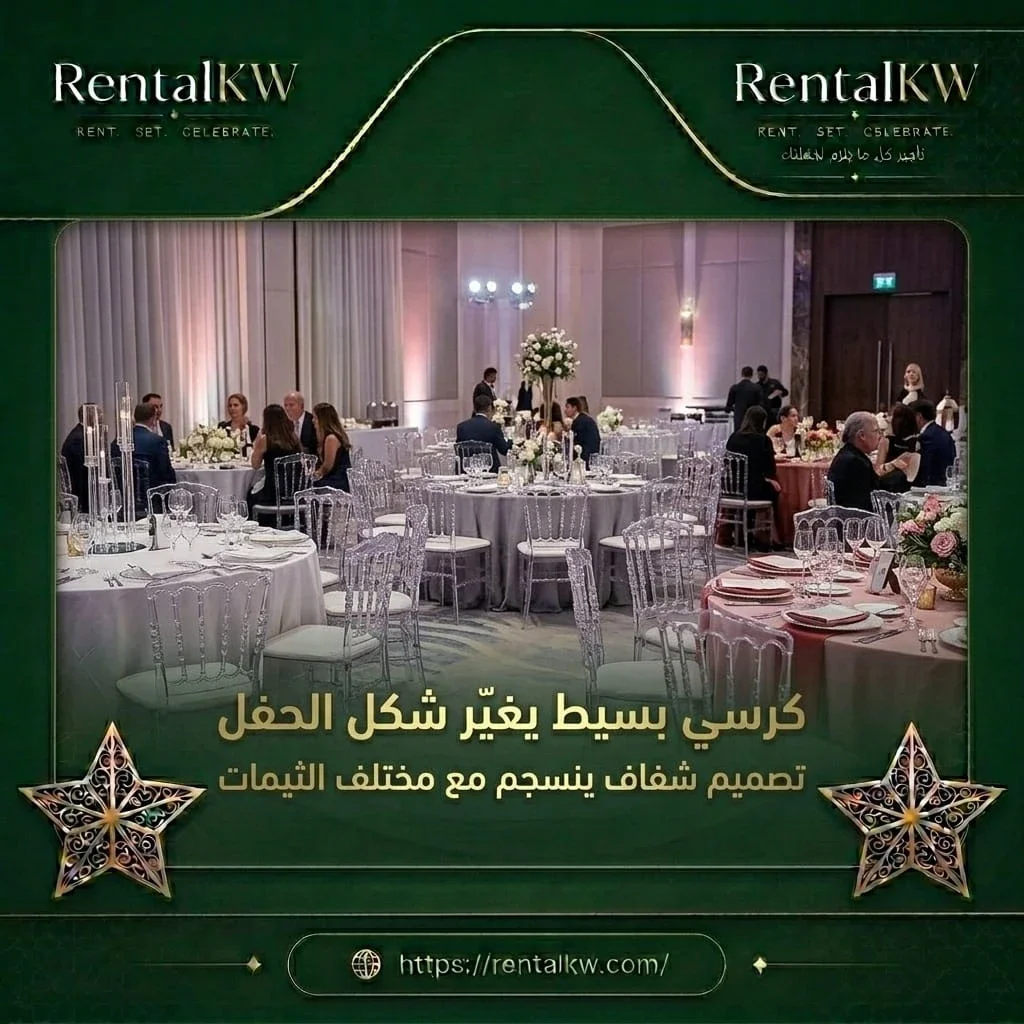
When selecting acrylic chairs based on the number of guests, quantity should not be the only consideration because chair condition, model consistency, and transparency become particularly important at events where this type of furniture is a major visual feature. Acrylic chairs reveal differences in condition more clearly than many fabric-covered chairs because light passes through them and scratches or inconsistencies can become visible, especially under wedding lighting and photography.
If 80 chairs are required, for example, it is better to ensure that the entire group is similar in design and condition rather than combining different models simply to reach the required quantity. Small differences may not attract attention in storage, but they become much more obvious when the chairs are positioned side by side around event tables.
The final number should also be determined after considering the type of guests attending. If children will use dedicated child seats, they should be excluded from the acrylic chair quantity, while every person requiring a standard individual chair should be included.
When selecting acrylic chairs according to the number of guests, review:
• Matching the main chair quantity with the number of people who will specifically use this type of seating
• Maintaining consistency in chair design and model because mixing different styles may weaken the visual unity of the event even when the total quantity is correct
• Checking the condition and cleanliness of transparent surfaces before delivery because strong lighting and photography can make signs of use easier to notice
• Separating children who require dedicated seating from the total number of acrylic chairs
• Confirming the stability of every chair before distributing the pieces around tables rather than judging them only by their appearance
• Agreeing on suitable replacement chairs in advance if a piece needs to be changed during setup instead of discovering at the last moment that no matching reserve is available
Distributing Clear Chairs Around Tables
Distributing clear chairs around tables is one of the most important stages in determining the overall appearance of an event because incorrect distribution can make a large table appear overcrowded or leave another table with visually unbalanced gaps. There is no single rule for the number of chairs around every table because the correct quantity depends on the table shape, diameter or length, the amount of tableware, and the type of decoration being used.
With round tables, chairs should be distributed evenly around the circumference so seats do not become concentrated on one side. Rectangular tables require additional attention to chairs positioned at the ends and to the distance between the back of each chair and the neighboring table.
From practical experience, distances should be evaluated with chairs positioned as they will actually be used rather than pushed completely under the tables. Guests pull their chairs backward when sitting down, which means the real width of the walkways decreases after the venue becomes occupied.
When distributing chairs around tables, consider:
• Determining the appropriate number for each table according to its dimensions and shape rather than simply dividing the total number of guests equally
• Leaving enough space for each guest to pull the chair backward sit down and stand up without colliding with the chair positioned at the table behind them
• Considering the route used by waiters or hospitality staff after guests are seated because a walkway that appears wide before the event may become narrow once chairs are moved
• Distributing chairs evenly around round tables so the arrangement remains visually balanced in photographs and from different areas of the venue
• Avoiding forcing a table to accommodate more than its comfortable capacity simply to avoid adding another table when doing so would reduce guest comfort
• Testing an actual arrangement with several tables and chairs before completing the entire venue when the available space is limited or the layout has not been used before
Number of Clear Napoleon Chairs for an Event
The number of clear Napoleon chairs for an event is based on the same seating plan used for the rest of the guest chairs, but this model requires particular attention to visual consistency because the distinctive Napoleon-style back is a noticeable part of the event decor. Using different chair models to make up for a shortage may therefore be considerably more visible than preparing a complete matching set from the beginning.
If clear Napoleon chairs have been selected as the main seating style, the quantity should ideally be calculated after the table plan is finalized. If there are 12 tables with eight guests at each table, for example, the main quantity is directly connected to that arrangement. Any additional seating requirements and the reserve quantity can then be calculated separately.
It is also important to confirm that all selected chairs have the same style and dimensions because variations between different batches can affect the visual consistency of the rows around the tables.
When determining the number of Napoleon chairs, consider:
• Connecting the final quantity to the actual seats shown in the table plan instead of relying on a general estimate of event attendance
• Confirming that the reserved collection is consistent in back design transparency and dimensions so the furniture appears as one coordinated part of the event decor
• Calculating chairs required in any other event area separately if clear Napoleon chairs will also be used outside the main dining tables
• Keeping suitable replacement chairs of the same model available so the setup team does not need to introduce a different design if a shortage occurs
• Checking the spacing between chairs because the distinctive Napoleon back requires regular alignment for the table arrangement to appear balanced
• Confirming that the complete reserved quantity will be available at the same time rather than depending on additional chairs from a different batch on the event day
Preparing Guest Seating with Clear Chairs
Preparing guest seating with clear chairs requires viewing each chair as part of a complete setting that includes the table, linens, flowers, lighting, and walkways rather than as an independent piece of furniture. One advantage of clear chairs is that they reduce visual heaviness within the venue and allow decorative details behind them to remain visible. This makes them particularly suitable when the objective is to highlight tables, floral arrangements, or event lighting.
However, this visual advantage also makes cleanliness and alignment more important. A clear chair that is poorly positioned or has visible marks can attract attention quickly, especially in close-up photographs. The setup process should therefore include inspecting the chairs after they have been placed in their final positions rather than only when they are first received.
The direction of the chairs in relation to the tables should also be standardized before guests arrive because small differences in angle become noticeable in wide photographs of the venue.
To prepare guest seating in a coordinated way, consider:
• Integrating the chair arrangement with the decoration plan from the beginning instead of treating seating as the final stage after the venue space has already been filled
• Cleaning and inspecting transparent surfaces after installation is complete because transportation and arrangement can leave marks even on chairs that arrived clean
• Aligning the direction of chairs around every table to create an organized appearance in photographs before guests begin using the seating
• Checking the relationship between chair height table height and table styling so the arrangement is comfortable as well as visually attractive
• Keeping main walkways free from additional chairs so the venue layout does not become disrupted if attendance increases
• Conducting a final review from the guest's eye level and from common photography angles because some distribution problems may not be visible when viewing the layout only from above
Booking Clear Chairs by Quantity
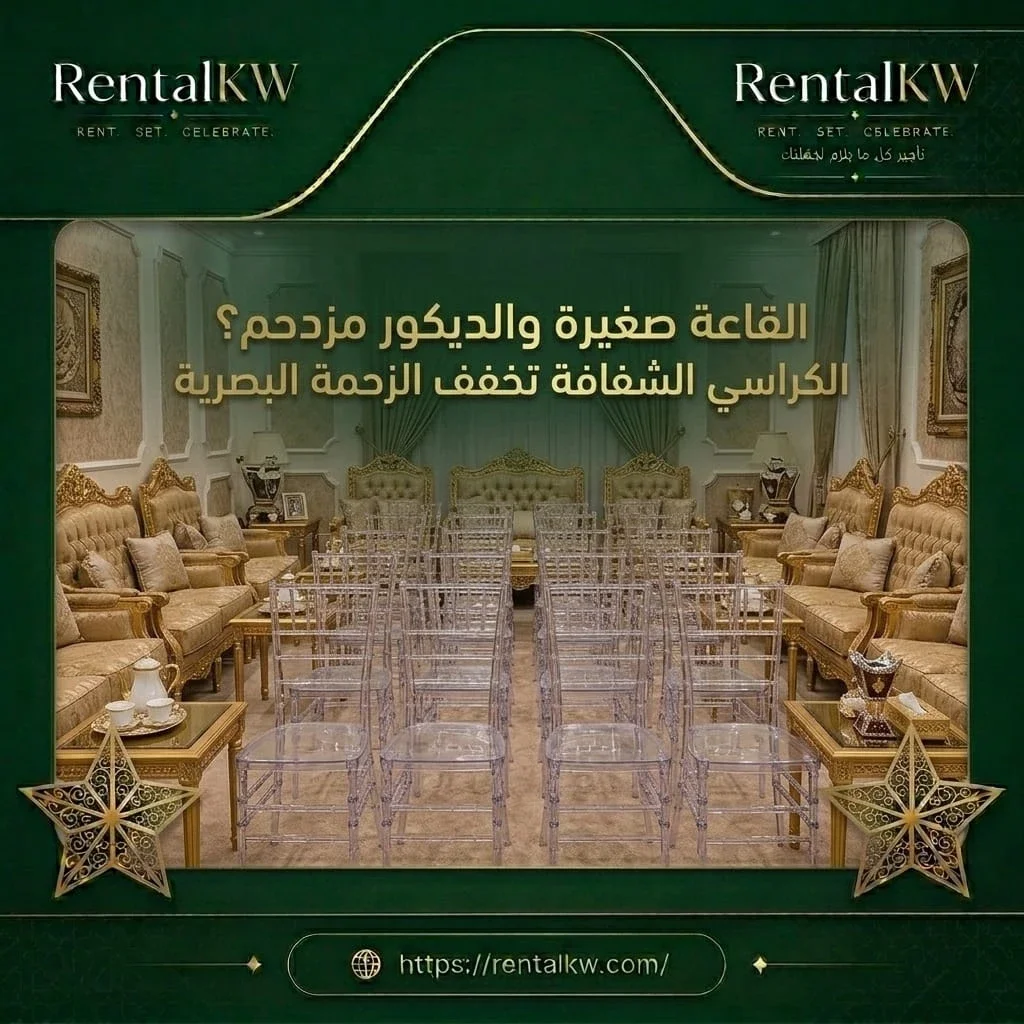
Booking clear chairs by quantity becomes more accurate when the reservation is made after preparing an initial seating plan rather than using an approximate number that is disconnected from the details of the event. If 120 people have been invited but only 95 have confirmed, for example, it is not automatically necessary to book and distribute 120 chairs. The main quantity can be based on expected attendance with a suitable reserve, and the figure can then be updated before the event according to the rental provider's policy and whether quantity adjustments are permitted.
When comparing prices, it is important not to focus only on the rental price per chair. The final cost may include transportation, setup or distribution, collection, and rental duration. It may also vary according to the chair model, condition, and required quantity. The cheapest individual chair rate is therefore not necessarily the lowest overall cost.
It is also advisable to confirm how many matching chairs of the selected model are actually available before finalizing the reservation, particularly during busy event seasons. A provider having 100 clear chairs in total does not necessarily mean that all one hundred are the same model or in comparable condition.
Before confirming the booking, review:
• The number of confirmed guests and the required reserve quantity separately so it is clear which chairs will be used for the main seating and which will remain available for unexpected needs
• The exact chair model instead of accepting only the description of clear chairs when the design is an important element of the event decor
• The total cost after transportation distribution collection and any other services have been included instead of comparing the individual rental price alone
• The final deadline for changing the quantity if the guest count changes so you do not pay for seats that are no longer required
• The number of matching pieces actually available on the event date rather than relying on the company's total inventory under normal circumstances
• Delivery inspection and replacement arrangements so there is a clear procedure for handling any unsuitable chair before guests arrive
Conclusion
The answer to how many clear chairs are needed based on the number of guests begins with the invitation list but does not end there. The correct quantity comes from connecting confirmed attendance with the number of tables, the comfortable capacity of each table, the available event space, the seating arrangement, and the reserve quantity required.
At an event for 50 people, the main challenge may be making efficient use of limited space without overcrowding the seating area, while an event for 100 guests requires a more detailed table plan and clearly defined circulation and service routes. For this reason, the same calculation should not be applied automatically to every celebration.
Choosing clear chairs also introduces an important visual consideration into the calculation. The rented quantity should be consistent in model, condition, and cleanliness because differences between individual pieces become much more noticeable when they are positioned together under event lighting.
The way chairs are distributed around the tables remains more important than simply reaching the correct final number. You may have exactly the right quantity and still create an unsuccessful seating arrangement if one table is overcrowded or the space behind the chairs does not allow guests to move comfortably.
Reserve seating should also be calculated rather than added randomly. A limited number of extra chairs provides flexibility when attendance changes, but these chairs do not need to appear within the main event setting or occupy space required for circulation.
Ultimately, the best booking is one that converts the guest list into a clear seating plan and then determines the required chair quantity accordingly. This approach provides a more suitable number of chairs, a more accurate rental cost, balanced tables, and an elegant layout that remains practical even after the venue is fully occupied.
Frequently Asked Questions
Do I need a clear chair for every person invited?
Not necessarily for every name on the invitation list. The main requirement is to provide a seat for every confirmed guest who needs one while adding a suitable reserve based on the possibility of additional attendance and the nature of the event.
How many clear chairs do I need for 50 guests?
If all fifty guests are confirmed and will be seated at the same time, begin with fifty main chairs and then determine a limited reserve while ensuring that the quantity matches the capacity of the tables and the available venue space.
How should I distribute 100 clear chairs at an event?
Do not begin by dividing the quantity randomly. First determine the capacity of each table and organize guest groups, then distribute the one hundred chairs according to the seating plan while leaving enough space between tables for guest movement and hospitality service.
Should reserve chairs be placed around the tables?
It is generally better not to include reserve chairs within the main seating arrangement because unnecessary empty seats can overcrowd the tables and affect the visual appearance of the event. Reserve chairs can be kept in an organized side area and introduced when needed.
What is the difference between guest count and chair count?
The guest count includes everyone invited, while the required chair quantity depends on expected actual attendance, children who need standard chairs, the table plan, and any additional seats required outside the main guest seating areas.
How do I determine the number of chairs around each table?
The number should be determined according to the table's shape, dimensions, comfortable seating capacity, decoration size, and hospitality setup while maintaining enough space for guests to pull their chairs backward and move behind them after sitting down.
Are clear Napoleon chairs calculated differently?
The basic quantity is still calculated according to guest numbers and the table plan, just like other event chairs. However, it is particularly important to confirm that enough chairs of the same Napoleon model are available so different designs do not need to be mixed within the event.
What affects the cost of renting clear chairs?
The cost is generally influenced by the number of chairs, selected model, rental duration, transportation, distribution, collection, and any additional services. It is therefore better to compare the total service cost rather than evaluating the price per chair alone.