
How Many Heaters Does Your Tent Need

In this article
- How Many Heaters Does a Tent Need?
- Number of Heaters Based on Tent Size
- Calculating Heaters for Events
- Heaters for a 50-Square-Meter Tent
- Heaters for Large Tents
- Faisaliah Heaters for Tents
- Gas Heaters for Outdoor Events
- Electric Heaters for Events
- Distributing Heaters Inside the Tent
- Choosing Heater Quantity Based on Guest Numbers
- Conclusion
- Frequently Asked Questions
Determining how many heaters an event needs should not be based on tent size alone. A fully enclosed tent on a cold night behaves very differently from a tent that is open on several sides even when both have exactly the same floor area. The number of guests, heater type, and placement also change the actual heating requirement. From practical event setup experience, one of the most common mistakes is booking an estimated number of heaters and then placing them randomly around the venue without considering airflow or seating locations. The result can be areas that feel excessively warm while other sections remain cold. A more accurate calculation starts with the size of the space, followed by how enclosed it is, the outdoor weather, the heating source, and the distribution plan before the final quantity is confirmed.
How Many Heaters Does a Tent Need?
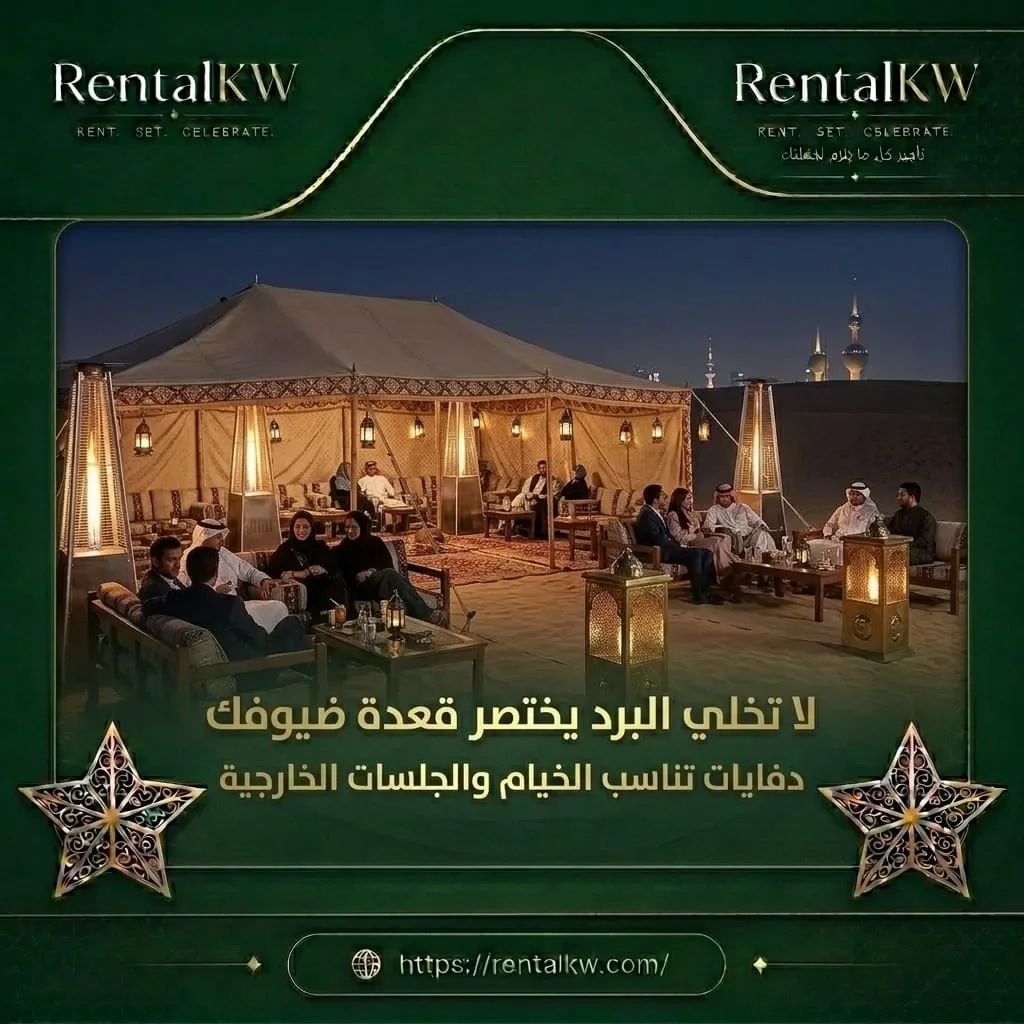
The question how many heaters does a tent need cannot be answered accurately with one number before the space is properly understood. Area is important, but it is not the only factor. A 100-square-meter tent that is fully enclosed will generally retain heat better than a tent of the same size that is open on two sides or directly exposed to wind. The number of heaters required may therefore differ significantly between the two situations.
From a practical perspective, the tent should be treated as a space that needs balanced thermal coverage rather than simply a certain number of heating units. Heater type, output, and the way heat is transferred from the unit all affect the result. Some heaters mainly warm the surrounding air, while others are more effective at delivering warmth to people who are positioned nearby. For that reason, the number of units alone does not provide a complete answer unless the type and capacity of the heaters are also known.
Tent height also affects the heating experience. In taller tents, part of the warm air may rise and collect above the occupied zone while the seating level remains cooler when distribution is poor. Frequently opened entrances can also increase heat loss, particularly during events where guests are entering and leaving throughout the evening.
From practical tent setup experience, it is usually better to divide the venue into functional zones. A main seating area filled with guests requires different coverage from a side walkway or service section where people do not remain for long periods. This approach places the heaters where they provide real value instead of distributing them evenly only for visual symmetry.
To estimate the heating requirement more accurately:
• Measure the actual internal area used by guests rather than relying on the tent’s external dimensions or including areas occupied by service equipment and other setup elements
• Determine whether the tent is fully enclosed or includes open sides because cold-air infiltration increases heating demand and changes the way heaters should be positioned
• Identify the type and capacity of each heater before deciding on quantity because two different heater models should not be assumed to provide the same level of coverage
• Review the height of the tent and entrance locations so most heaters are not concentrated in areas where warmth escapes quickly while the main seating remains cooler
• Focus heating on areas where guests remain for extended periods rather than using part of the available quantity in walkways or sections that do not require the same comfort level
• Run the heaters and test the actual warmth inside the tent before guests arrive whenever possible because real-world testing reveals distribution problems more quickly than theoretical calculations alone
Number of Heaters Based on Tent Size
Using the number of heaters based on tent size is a useful starting point rather than a fixed formula that applies to every event. There is no universal rule stating that every specific number of square meters always requires exactly one heater because the result depends on heater output, outdoor temperature, venue height, insulation, and how many sides of the tent are open.
If the tent is small and well enclosed, a limited number of heaters may work effectively when the selected units have appropriate output and are positioned correctly. A larger space with entrances that remain open frequently may require more units or stronger coverage. The important point is to match the space with the specifications of the actual heaters instead of using floor area alone.
It is equally important to avoid excessive quantities. Adding more heaters without calculation does not automatically improve comfort. It may create overly hot areas while reducing clear walking space because of equipment, cables, or fuel cylinders depending on the heater type. The objective should therefore be to balance warmth, safety, and circulation.
For larger events, the tent can be divided into separate thermal zones. If one section is dedicated to seating, another to a buffet, and another to the entrance, it is reasonable for these areas to require different heating levels. This method helps use the available equipment more efficiently.
When relating heater quantity to tent area, consider:
• Use the net guest area rather than the full tent floor area when parts of the venue are occupied by a stage buffet storage or service equipment
• Match the space with the capacity of the selected heater type instead of applying a general number that ignores differences between units
• Divide large tents into thermal zones so the main seating areas receive priority while less heating is used in sections with limited occupancy
• Reassess the quantity when the tent includes large openings or frequently used doors because heat loss near the edges may be greater than in the center
• Avoid placing excessive numbers of heaters in a small space simply to warm it more quickly because comfort depends on even distribution rather than concentrated heat
• Review the heater quantity after checking the expected weather and outdoor temperature during the event because the same tent may need a different setup on a mild night compared with a much colder one
Calculating Heaters for Events
Calculating heaters for events requires combining several factors instead of evaluating each element separately. The process begins with the size of the venue and whether it is a fully enclosed tent, an outdoor area, or a partially open majlis. The expected number of guests, available heater types, output of each unit, and seating arrangement should then be considered.
A common mistake is using guest count alone as the basis for the calculation. Having 100 guests in a relatively compact space is different from having the same number spread across a very large venue. People themselves generate some heat in an enclosed space, but that does not remove the importance of floor area or outdoor weather conditions. Guest count should therefore support the calculation rather than replace the space assessment.
The duration of the event should also be considered. A gathering that lasts for two hours early in the evening may experience different conditions from an event that continues late into the night when temperatures drop further. For longer events, heating should ideally be planned around the coldest expected period rather than the temperature at the beginning of setup.
The energy source is another important factor. Electric heaters require confirmation that the electrical supply and circuits can safely support the required load. Gas heaters require greater attention to location, ventilation, and safe clearances according to the manufacturer’s instructions and the service provider’s requirements.
To calculate event heating requirements more practically:
• Identify the actual guest area and describe how enclosed it is together with its height and number of entrances rather than providing the service provider with the area figure alone
• Confirm the start and end times of the event so heating can be planned for the part of the evening when outdoor temperatures are likely to be lowest
• Compare the number of guests with the size of the seating area because placing 150 people inside a compact tent differs greatly from spreading them across a large outdoor venue
• Determine the heater type before confirming the final quantity because heating method output and power source directly affect the required coverage
• Review the electrical infrastructure or gas-use conditions at the site before booking so equipment is not selected that cannot be operated safely in the available location
• Prepare a basic heater distribution plan before delivery so the quantity is based on real coverage zones rather than an overall number with no connection to the event layout
Heaters for a 50-Square-Meter Tent
Preparing heaters for a 50-square-meter tent requires understanding the tent before converting the 50-square-meter figure into a fixed number of units. This size may appear relatively modest, but it can behave very differently depending on ceiling height, enclosure, number of doors, side panels, and direct exposure to wind. Giving a ready-made heater quantity without knowing the equipment specifications and weather conditions could therefore result in either insufficient heating or unnecessary cost and congestion.
A well-enclosed 50-square-meter tent generally retains warmth better than a tent with one open side or a wide entrance that is continuously used. In the first situation, a smaller quantity may work when the heaters have suitable output. In the second, it may be more important to deal with the main sources of heat loss rather than simply adding extra units in the center.
The shape of the 50-square-meter space also matters. A long narrow tent requires a different heater layout from a square tent with exactly the same floor area because the distance between seating zones and heat sources changes. The heaters may need to be distributed along the seating rather than grouped at two opposing points.
Guest numbers and furniture should also be considered. A tent filled with tables and chairs has different airflow and available heater positions from a more open tent with simple seating. Safe clearances around the equipment must also be preserved according to the heater type and the instructions of the manufacturer and service provider.
When preparing a 50-square-meter tent, consider:
• Confirm the actual heater output before deciding on quantity because the term one heater does not represent the same level of coverage across different models
• Identify the shape and dimensions of the tent rather than relying only on the total area so heat sources can be distributed near the main seating locations
• Review the entrance and the sides where cold air enters because addressing heat loss may be more useful than adding another heater far away from the problem area
• Calculate the space occupied by furniture and service equipment so heaters still have safe locations without reducing walkway width or sitting too close to heat-sensitive materials
• Run the system before guests arrive and test the warmth at seating level rather than only standing close to the heater
• Keep the layout flexible enough to adjust heater positions if wind direction changes or the temperature drops more than expected during the event
Heaters for Large Tents
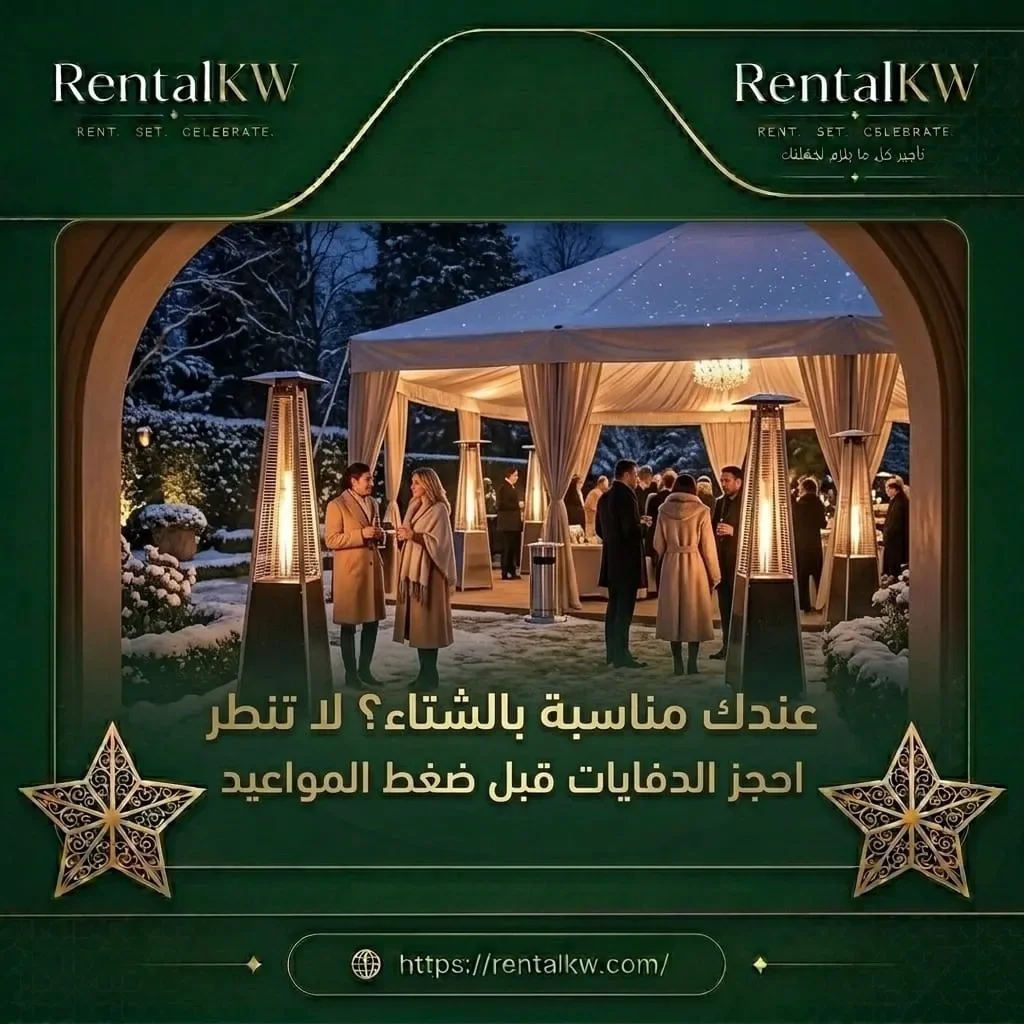
Using heaters for large tents requires zoning rather than simply placing a group of units at equal distances and assuming the whole venue will become uniformly warm. As tent size increases, differences between the center and perimeter become more noticeable, as do differences between areas near entrances and more protected sections. Dividing the venue into thermal zones therefore becomes an important planning step.
A large tent may include a reception area, dining tables, a buffet, a stage, or several seating sections. These areas do not necessarily need the same level of heating. Priority should be given to the zones where guests remain for longer periods, while walkways and service spaces may need less.
Using one heater type everywhere is also not always the ideal solution if the zones have different requirements. However, any combination of heater types should be planned according to their suitability, power source, and intended use rather than simply increasing the number of units.
One mistake that can appear in larger tents is positioning every heater along the perimeter. This may work for certain layouts but can leave the center cooler if the distances are too great. The opposite can happen as well if all units are grouped in the center while guests seated near colder sides receive inadequate coverage.
To heat large tents effectively:
• Divide the tent into zones according to use and the number of guests expected in each section instead of distributing heaters evenly across areas with very different needs
• Give priority to main seating zones and areas where guests remain for long periods rather than using a large share of the available units in temporary circulation spaces
• Identify heat-loss areas around entrances and open sides and include them in the distribution strategy instead of heating only the central part of the tent
• Review table positions and walkways before fixing heater locations because repositioning equipment becomes more difficult after the venue is fully occupied
• Select suitable heater output instead of randomly increasing the number of smaller units and creating excessive equipment density inside the tent
• Test comfort levels at several locations before the event begins because the temperature or sensation in one part of a large tent does not represent the entire venue
Faisaliah Heaters for Tents
Faisaliah heaters for tents are used at some events as visible heating units that also become part of the seating environment. They should be selected according to the specifications of the actual model rather than assuming that all heaters with a similar Faisaliah-style appearance provide identical performance or operate in the same way. Output, fuel or power source, and heat distribution can differ from one model to another.
Inside a tent, this type should not be selected only for appearance. The required safe clearance from furniture, tent fabric, and walkways must be checked according to the manufacturer’s instructions. A position that looks visually ideal may be unsuitable if the heater sits too close to sofas or guest circulation.
The placement of Faisaliah heaters should also follow the seating zones rather than treating the units as decorative objects. A heater positioned behind an entire row of guests may not produce the same practical effect as one placed where its heat reaches the occupied area more effectively.
From a cost perspective, the rental should be compared according to the actual unit, its condition, and the included delivery, setup, and collection services rather than comparing prices by heater name alone.
When selecting this heater type:
• Check the specifications and actual output of the exact model instead of assuming that all heaters with a similar appearance provide the same heating performance
• Determine the required clearances from tent fabric sofas and tables according to the equipment instructions so visual design does not result in unsafe placement
• Choose positions where warmth reaches seated guests instead of placing the heaters in distant corners only to create a symmetrical appearance
• Review heater stability and placement in busy areas so the risk of accidental contact is reduced during guest movement
• Confirm the fuel or power source and all operating requirements before booking so the equipment does not arrive at a venue that is not prepared to use it
• Compare price based on the unit itself its condition and the complete delivery setup and collection service rather than relying only on the heater category name
Gas Heaters for Outdoor Events
Gas heaters for outdoor events are used in some open or semi-open venues, but their use requires closer attention to safety, ventilation, manufacturer instructions, and applicable local requirements. They should not be treated like equipment that can simply be placed in any available corner because gas combustion requires an appropriate environment, sufficient ventilation, and safe separation from combustible materials.
In outdoor venues, wind becomes an important factor. When a heater is placed directly in a strong air current, heating effectiveness can decrease and warmth may become uneven. Adjusting the seating position or using an appropriate wind barrier may sometimes be more useful than simply increasing the number of units.
Gas cylinders and fuel components must also be organized according to operating instructions and kept away from guest circulation and other ignition sources. Equipment should be operated and monitored by people who understand how to use it correctly.
A particularly important mistake is using a gas heater designed only for outdoor use inside an enclosed tent without first confirming that the manufacturer permits that application and that it meets the relevant safety conditions. The type of venue should determine whether the heater is suitable before the number of units is even discussed.
When using gas heaters:
• Confirm that the equipment is designed for the intended type of location and follow the manufacturer’s ventilation and safe-clearance instructions explicitly
• Review wind direction at outdoor events because strong air currents can reduce heating effectiveness and change the best locations for the units
• Keep gas cylinders and operating components away from guest walkways and other heat sources according to applicable safety requirements
• Never use equipment inside an enclosed area when its specifications restrict it to outdoor use or do not clearly permit indoor operation
• Assign a responsible person to operation and monitoring rather than allowing guests or untrained staff to adjust the equipment randomly
• Stop using the heater immediately if an unusual smell or operating problem appears and follow the service provider’s or appropriate safety guidance instead of attempting an improvised repair during the event
Electric Heaters for Events
Electric heaters for events are convenient in many venues, but the electrical load should be calculated before the quantity is finalized. A common mistake is looking at the number of available sockets and assuming that each socket can safely support a separate heater. The actual capacity of the electrical circuit and the power requirement of each unit are what determine safe operation.
If the event also includes strong lighting, sound equipment, electrical buffet appliances, or other systems, the electrical supply may already be carrying significant loads. Adding several high-consumption heaters without reviewing the available capacity can cause circuit breakers to trip, cables to overheat, or part of the event equipment to lose power.
The power rating listed on every heater should therefore be checked, and the electrical circuits should be reviewed by a qualified electrician when necessary. Unsuitable extension cables or multiple high-load devices connected to one power strip should be avoided.
From a layout perspective, electric heaters can be practical when suitable power points are available near the seating areas without requiring cables to cross guest walkways.
When using electric heaters:
• Calculate the electrical load of the required heaters rather than using the number of available sockets as evidence of the network’s true capacity
• Review other equipment operating at the event because lighting sound systems and food-service appliances may share the same electrical supply
• Use extension cables sockets and equipment rated for the required load and avoid power strips or cables that are unsuitable for heater consumption
• Keep electrical cables away from guest walkways or secure them appropriately so heating equipment does not create a trip hazard
• Distribute loads across suitable circuits with professional assistance when necessary instead of operating every heater from one source
• Test the heaters while the rest of the event equipment is operating before guests arrive so electrical-load problems can be identified and corrected early
Distributing Heaters Inside the Tent
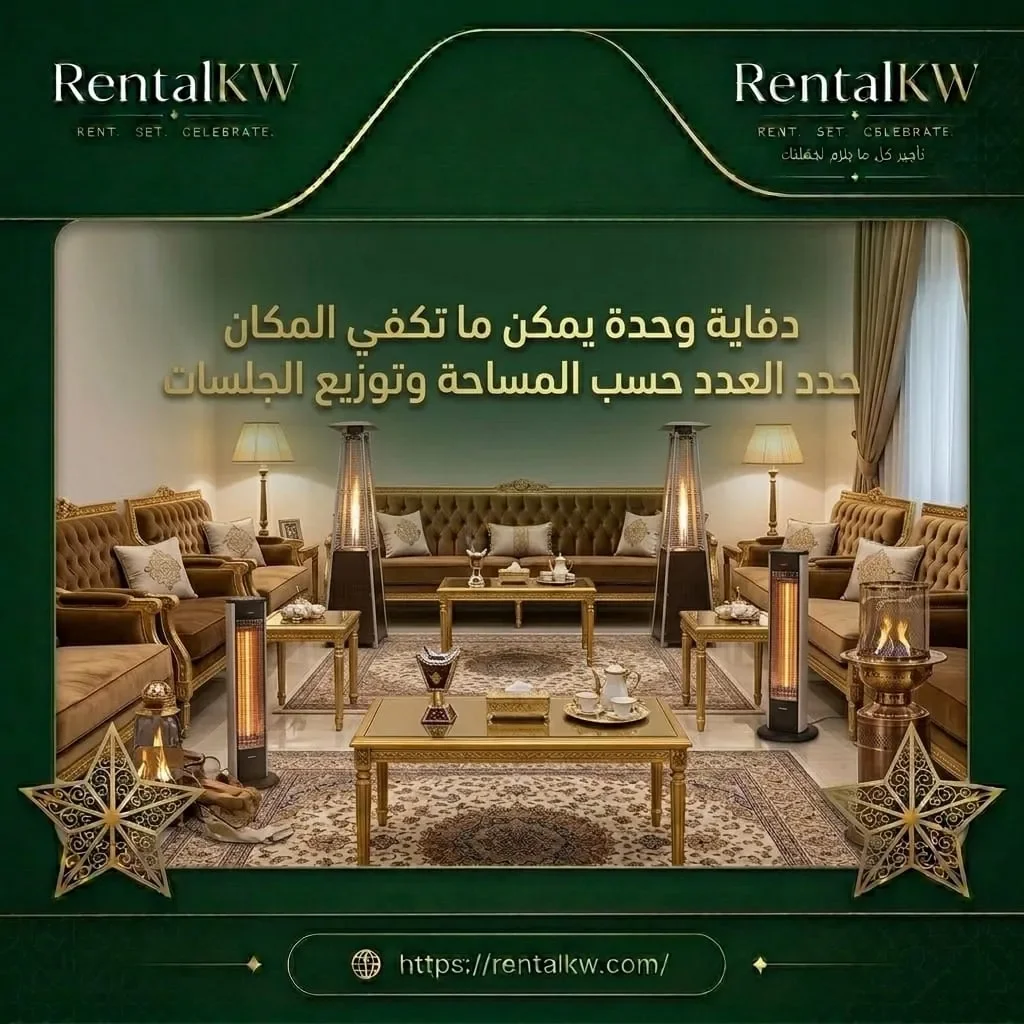
Distributing heaters inside the tent affects heating quality as much as the total number of units. A venue may theoretically have enough heaters and still feel uncomfortable if the devices are concentrated in one area or positioned away from the main seating.
A better layout begins with the guest plan. The locations of tables and main seating areas should be identified first, followed by suitable heater positions that respect required distances from furniture and circulation routes. A heater should not be placed where it obstructs guest movement even when that location appears ideal for thermal coverage.
Two heaters should also not be placed very close together in one zone if they create excessive warmth while another part of the tent remains cold. The objective is not to maintain equal spacing between devices but to create the most even comfort level possible.
In tents with several entrances, areas near doors may require particular attention because they experience repeated cold-air entry. However, the heater itself should not be placed directly in the path of arriving guests.
When distributing heaters:
• Base the layout on the actual seating locations rather than on the shape of the tent alone so warmth reaches the people who need it
• Maintain the required safe clearances around each device according to its type and specifications instead of moving heaters closer to furniture simply to increase warmth
• Arrange the equipment so one part of the seating area does not become excessively hot while another remains noticeably cold
• Keep circulation routes and exits completely free of heaters electrical cables or fuel components that could interfere with movement
• Review areas near entrances because they lose heat more quickly while avoiding placing equipment directly in the guest entry path
• Test the warmth from the actual seats after the heaters are operating because standing beside the device does not provide an accurate measure of guest comfort
Choosing Heater Quantity Based on Guest Numbers
Choosing heater quantity based on guest numbers can improve the calculation, but guest count should not be used as the only basis for determining the final quantity. The number of attendees helps show where comfort is needed most, but it does not explain the size of the venue, the amount of heat loss, or the output of the equipment.
For example, 80 guests may be seated inside a relatively small enclosed tent while another group of 80 guests is spread across a wide outdoor area. The guest count is identical, but the heating conditions are completely different. Attendance should therefore be combined with venue size, venue type, and weather conditions.
The seating arrangement also matters. When guests sit in compact groups, heaters can be focused on those areas more effectively than at an event where attendees are spread across a much larger space.
It is also useful to consider groups that may need greater thermal comfort, such as elderly guests or children, without making the entire venue excessively hot. This can often be handled by better seating and heater distribution rather than by increasing the overall quantity.
When using guest numbers as part of the calculation:
• Use attendance figures to identify seating density and occupied zones rather than converting every group of people into a fixed heater number
• Compare guest numbers with available floor area because occupancy density changes the way heating should be distributed throughout the venue
• Identify areas where elderly guests or families are likely to sit if they require greater comfort while avoiding positioning heaters uncomfortably close
• Determine whether guests will remain seated for most of the event or move between several zones because this affects where heating should be concentrated
• Reposition some heaters if actual attendance differs from the forecast instead of keeping the original layout simply because it was approved earlier
• Treat guest numbers as one element in a broader calculation that includes area weather enclosure and heater type so the final decision reflects real operating conditions
Conclusion
The accurate answer to how many heaters does your tent or event venue need does not come from applying one fixed number to every situation. Area is only the starting point. The level of enclosure, outdoor temperature, wind, tent height, heater type and capacity, and guest locations all influence the final requirement.
A small enclosed tent behaves very differently from an open outdoor venue even when the number of guests is identical. Large tents usually benefit from being divided into functional heating zones rather than being treated as one uniform space. This approach uses equipment more efficiently and reduces unnecessary heating in areas where guests spend little time.
The heater type should also be selected according to the venue. Gas heaters require strict compliance with ventilation, placement, and safety instructions, while electric heaters require careful review of electrical loads and wiring. Other heater styles should be evaluated according to their actual output and operating specifications rather than their appearance or category name alone.
Distribution is a major part of successful heating. The correct number of heaters with poor placement may produce a worse result than a smaller number positioned intelligently around the occupied seating areas.
More equipment is not always the answer either. Excessive heating can reduce guest comfort, occupy valuable space, and increase electrical loads or safety requirements depending on the type of heater being used.
The best decision therefore comes from accurately assessing the venue, selecting appropriate equipment, planning the locations, and testing the system before guests arrive. Following these steps creates more even warmth, keeps the cost closer to the real requirement, and provides a more comfortable and safer experience throughout the event.
Frequently Asked Questions
Can the number of heaters be determined by tent size alone?
No. Floor area alone does not show how enclosed the tent is, the outdoor temperature, heater output, or venue height. Tent size should be used as a starting point together with the other operating conditions.
How many heaters does a 50-square-meter tent need?
There is no fixed number that applies to every 50-square-meter tent because the requirement changes according to heater output, enclosure, weather, tent shape, and the number of entrances. These details should be matched with the specifications of the actual heaters being used.
Do larger tents always need more heaters?
Heating demand generally increases with venue size, but the final quantity does not depend on floor area alone. Tent zoning, heater type, level of enclosure, and weather conditions can significantly change the number of units required.
Are gas heaters suitable inside tents?
It depends on the equipment specifications, manufacturer instructions, and ventilation and safety requirements. A heater designed only for outdoor use should not be operated inside an enclosed tent unless that use is explicitly permitted.
Can several electric heaters run from one power strip?
It should not be assumed that this is safe. Heater output, power-strip rating, circuit capacity, and other electrical loads must be reviewed, and a qualified electrician should be consulted when significant loads are involved.
Where should heaters be positioned inside a tent?
They should be placed according to seating areas and heat-loss zones while maintaining safe clearances, keeping entrances and walkways open, and avoiding concentrating all heaters in one section.
Does guest count determine the required number of heaters?
Guest numbers help identify occupied areas and seating density, but they are not sufficient on their own. They should be considered together with venue size, weather, enclosure, and heater output.
When should the heaters be tested before the event?
They should ideally be tested after the final distribution is completed and early enough before guest arrival to check comfort in several areas, review the electrical or fuel supply, and adjust equipment positions if some zones are too cold or too warm.