Outdoor Exhibition Tents in Kuwait
In this article
- An exhibition tent is a temporary venue, not simply a canopy
- Translate the event objective into a site plan
- Design aisles around real visitor behavior
- Make registration easy to understand
- Select a structure for the location and season
- Coordinate cooling, ventilation and power
- Use exhibition lighting to guide attention
- Separate conferences from noisy exhibit areas
- Remember storage and operational support
- Integrate branding without overloading the frame
- Build the installation schedule backward
- Clarify permits and emergency responsibilities
- Compare proposals using identical specifications
- Send a detailed brief to RentalKW
- Complete a visitor walkthrough before opening
- Exhibitor briefing and change management
- A practical next step
- The difference between a booth map and an operating map
- Weather decisions should have named owners
- Plan the exit as carefully as the entrance
- Questions to ask during a technical site walk
- Protect the experience for exhibitors and guests
- Frequently asked questions
https://rentalkw.com/en/blog/outdoor-exhibition-tents-kuwait
Outdoor exhibition tents in Kuwait must work as temporary commercial venues, not merely weather shelters. The organizer needs to think about visitors, exhibitors, registration, accessibility, power, climate control and safe circulation. This guide explains how to plan those functions before asking RentalKW about tent availability. It deliberately addresses exhibition operations rather than repeating the general tent rental service description.
An exhibition tent is a temporary venue, not simply a canopy

An outdoor trade exhibition brings together visitors, exhibitors, contractors and event staff, each with different movement patterns. A good tent plan separates public entrances from deliveries, places registration before the exhibition floor, and leaves adequate room around interactive booths. The useful area is the space remaining after columns, technical equipment, service zones and circulation routes have been accounted for. Ask for confirmed internal dimensions rather than choosing solely from a headline tent size.
Translate the event objective into a site plan
A product launch may need a central presentation area and a controlled audience approach. A multi-brand fair needs discoverable booths and a route that encourages exploration. A corporate open day may require distinct employee, visitor and hospitality zones. Draw the property boundary, pedestrian entrances, vehicle access and utility points before deciding where the structure will stand. Confirm permission to use the location and check overhead obstructions, surface slopes and drainage.
Design aisles around real visitor behavior
People do not walk through an exhibition at a constant speed. They stop to watch demonstrations, compare products and speak with representatives. An aisle that looks generous on paper may become congested when two popular booths face each other. Provide waiting pockets near interactive displays and avoid creating dead ends. Booth signs and promotional stands must not obscure exits. Walk the proposed route from the perspective of someone unfamiliar with the event.
Make registration easy to understand
The reception zone creates the first impression of the entire event. Keep inquiries separate from ticket or badge processing where practical, and allow a queue to form without blocking the main entrance. Consider a clear path for visitors who have already registered. Test whether signage can be read at a distance and whether a guest with limited mobility can enter and reach the reception desk without crossing cables or uneven flooring.
Select a structure for the location and season
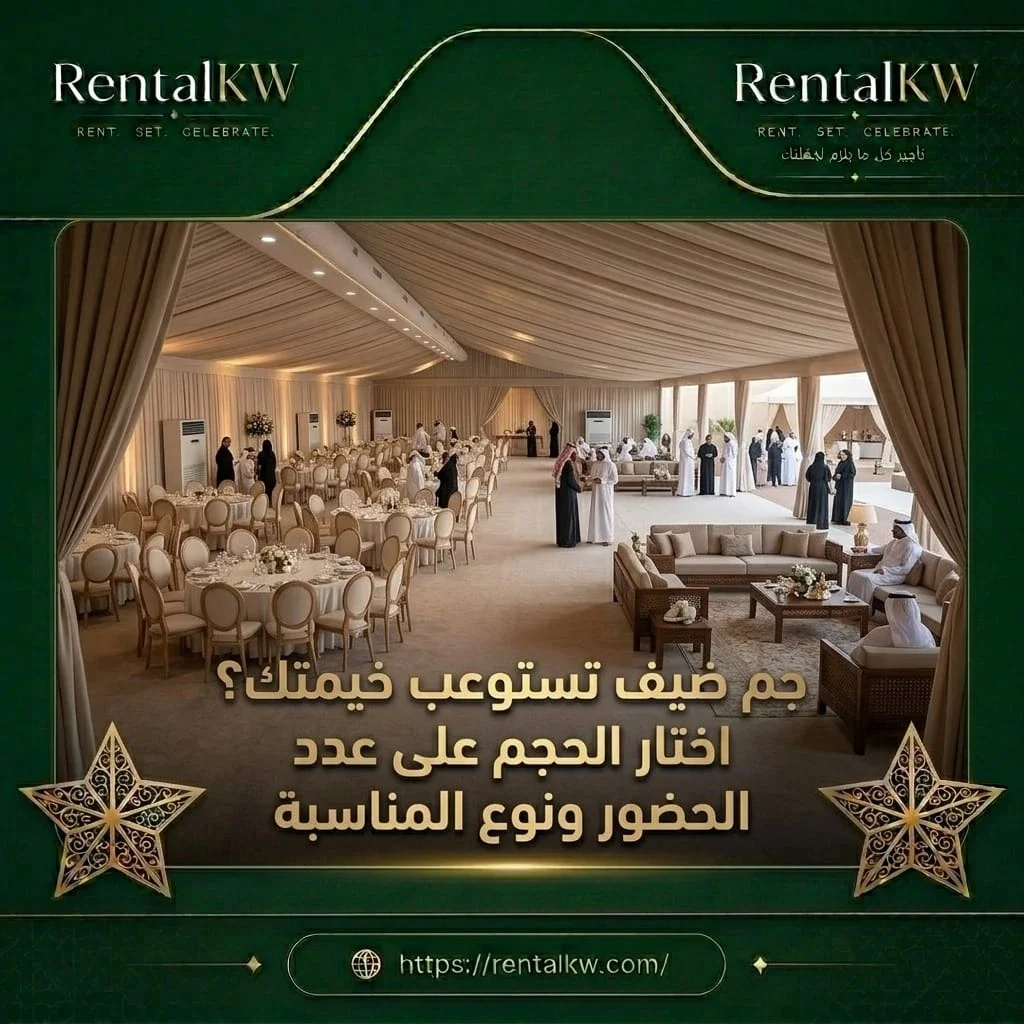
Outdoor event tents in Kuwait face very different conditions across the year, including heat, wind and occasional rain. The appropriate structure depends on the actual location, anchoring method and supplier specifications. Never assume a temporary tent is safe under all weather conditions. Ask who assesses anchoring, what operating limitations apply and who has authority to stop the event if conditions become unsafe. A contingency plan matters as much as appearance.
Coordinate cooling, ventilation and power
A tent with air conditioning and lighting needs more planning than simply adding equipment to an order. Heat load changes with occupancy, door openings, sunlight and electrical displays. Cooling units should be positioned to avoid uncomfortable drafts while covering the entire occupied area. Confirm the available power supply, cable protection and technical responsibility for distribution. RentalKW also lists separate air-conditioning and heater services; suitability and availability must be checked.
Use exhibition lighting to guide attention
General lighting should make walkways, entrances and service areas safe. Display lighting should help visitors examine products without producing glare on screens or reflective surfaces. For evening events, test the lighting at the actual operating hour. Ask who installs and inspects fixtures, and never suspend signs or lamps from a tent frame without technical approval. An attractive visual treatment is not a substitute for a safe electrical installation.
Separate conferences from noisy exhibit areas
A conference audience needs clear sightlines, intelligible audio and seating oriented toward a speaker or screen. Exhibition visitors need freedom to circulate and talk. When both functions share a venue, separate them spatially or schedule distinct periods for presentations and booth visits. Account for movement between the two areas, including accessible routes and exits. Additional chairs must not be placed in emergency aisles simply to increase attendance.
Remember storage and operational support
Exhibitors often arrive with cartons, spare brochures and equipment cases. Without a designated back-of-house area, these items end up in public aisles or behind attractive display counters. Allocate room for temporary storage, staff breaks, waste handling and event management. Review nearby restroom access, deliveries and parking. Some of these functions may be outside the tent rental agreement, but they remain essential to a successful visitor experience.
Integrate branding without overloading the frame
A coherent exhibition identity can rely on a clear entrance sign, numbered stands and consistent directional graphics. More banners do not necessarily improve navigation. Make text readable under the planned lighting and keep exits visible. Screens and hanging signs introduce weight and fixing requirements that must be reviewed with the tent provider. When overhead attachment is not approved, independently supported display systems may be more appropriate if safely installed.
Build the installation schedule backward
Start with the opening time and work backward through exhibitor setup, electrical testing, cooling checks, cleaning and structure installation. Leave a practical inspection window rather than scheduling completion moments before visitors arrive. Delivery access may differ from public access, and large equipment can require additional coordination. Confirm dismantling arrangements so contractors do not begin removing equipment while visitors are still leaving.
Clarify permits and emergency responsibilities
The organizer should establish which approvals apply to the event, property, temporary structure, electrical installation and signage. Requirements depend on the location and event format; a rental booking does not automatically provide permission to operate. Confirm who owns each approval and who checks emergency exits. Event staff should understand the response to severe weather, power problems or overcrowding, with decisions guided by relevant authorities and site rules.
Compare proposals using identical specifications
A useful comparison lists usable tent dimensions, wall and roof specifications, flooring if required, delivery access, installation, removal and every optional technical element. Two offers labelled exhibition tent may cover very different work. Request drawings or photographs of the available models and confirm the exact scope. The general tent rental service is the appropriate internal service page; this guide instead focuses on exhibition operations.
Send a detailed brief to RentalKW
When contacting RentalKW, describe the event purpose, proposed location, expected booth count, dates and opening hours. Attach site measurements and identify whether registration, presentations, hospitality, lighting or climate control are required. Ask for the available tent specifications and the boundaries of installation responsibility. Clear information helps avoid misunderstandings about what will be delivered and what the organizer must arrange separately.
Complete a visitor walkthrough before opening
Follow the route a first-time guest would take: arrival, registration, first booth, central aisle, facilities and exit. Check whether signs are understandable and whether crowds could form at demonstrations. Then ask the relevant teams to inspect electrical connections, structural stability and access routes. A short rehearsal can reveal issues that are difficult to spot in a floor plan and gives the team time to correct them before doors open.
Exhibitor briefing and change management
Once the plan is agreed, circulate a concise exhibitor guide covering arrival windows, booth boundaries, power requests and waste disposal. Last-minute requests for additional screens or display furniture can change electrical loads and obstruct aisles. Establish a single point of contact to approve changes. If a booth needs more space, check the overall visitor route before agreeing. A controlled change process protects both the exhibitor experience and the safety of the temporary venue.
A practical next step
For a more useful enquiry, send RentalKW the event date, location, venue measurements, expected users and the exact function of the requested equipment through https://rentalkw.com. Ask for confirmed models and dimensions, delivery and installation responsibilities, and any additional services that must be arranged separately. A written scope prevents the common mistake of assuming that every accessory or operational task is automatically included.
The difference between a booth map and an operating map
A booth map shows exhibitors where they will stand; an operating map explains how the venue will function. The second map should identify staff access, waste collection, storage, emergency exits and equipment routes. Keep these documents consistent, but do not expect the visitor-facing diagram to carry every technical detail. Sharing the operating map with suppliers before installation can prevent competing teams from trying to use the same narrow access point.
Weather decisions should have named owners
A forecast is useful only if the team knows what action to take when conditions change. Identify who checks conditions, who communicates with exhibitors and who can delay opening or suspend the event. Agree on these responsibilities before installation. Temporary structures must be used within their documented limits, and the organizer should consult the relevant authorities or qualified professionals when necessary.
Plan the exit as carefully as the entrance
Many organizers spend hours perfecting registration but give little thought to visitors leaving at the same time. Consider the end of a keynote session, the closing of an exhibition and the movement toward parking. Avoid directing every departing guest through a merchandise or registration bottleneck. Clear exit signs, accessible routes and staff guidance can make the final experience calmer and safer.
Questions to ask during a technical site walk
Ask where equipment vehicles can stop, whether the surface permits the proposed anchoring method, where power can be safely distributed and how water drains after rain. Confirm whether there are buried services or overhead lines. Note the position of nearby buildings that may channel wind or restrict access. Record unresolved questions and assign an owner for each; unanswered technical questions should not be hidden inside a visually attractive proposal.
Protect the experience for exhibitors and guests
A well-run exhibition allows exhibitors to focus on conversations and visitors to discover products without constant interruptions. Give exhibitors practical arrival instructions, identify a help desk and provide a way to report technical problems. Ensure service staff know how to reach the relevant contractor. Small operational decisions such as these often matter more to satisfaction than elaborate entrance decoration.
Frequently asked questions
What information is needed for an exhibition tent enquiry?
Share the site location, date, usable area, expected exhibitor count, operating hours and any reception, power, lighting or climate-control needs.
Can an exhibition tent include cooling and lighting?
Ask whether these services can be supplied and confirm technical suitability, electrical capacity and responsibilities before booking.
How should I calculate the exhibition area?
Include stands, queues, circulation, registration, storage, services and emergency access rather than counting only the display footprint.
Does tent rental automatically include permits?
No assumption should be made. The organizer must identify required permissions and confirm who is responsible for obtaining them.
Where can I find the general tent service?
Use the dedicated tent rental page on RentalKW, then submit the detailed exhibition requirements.