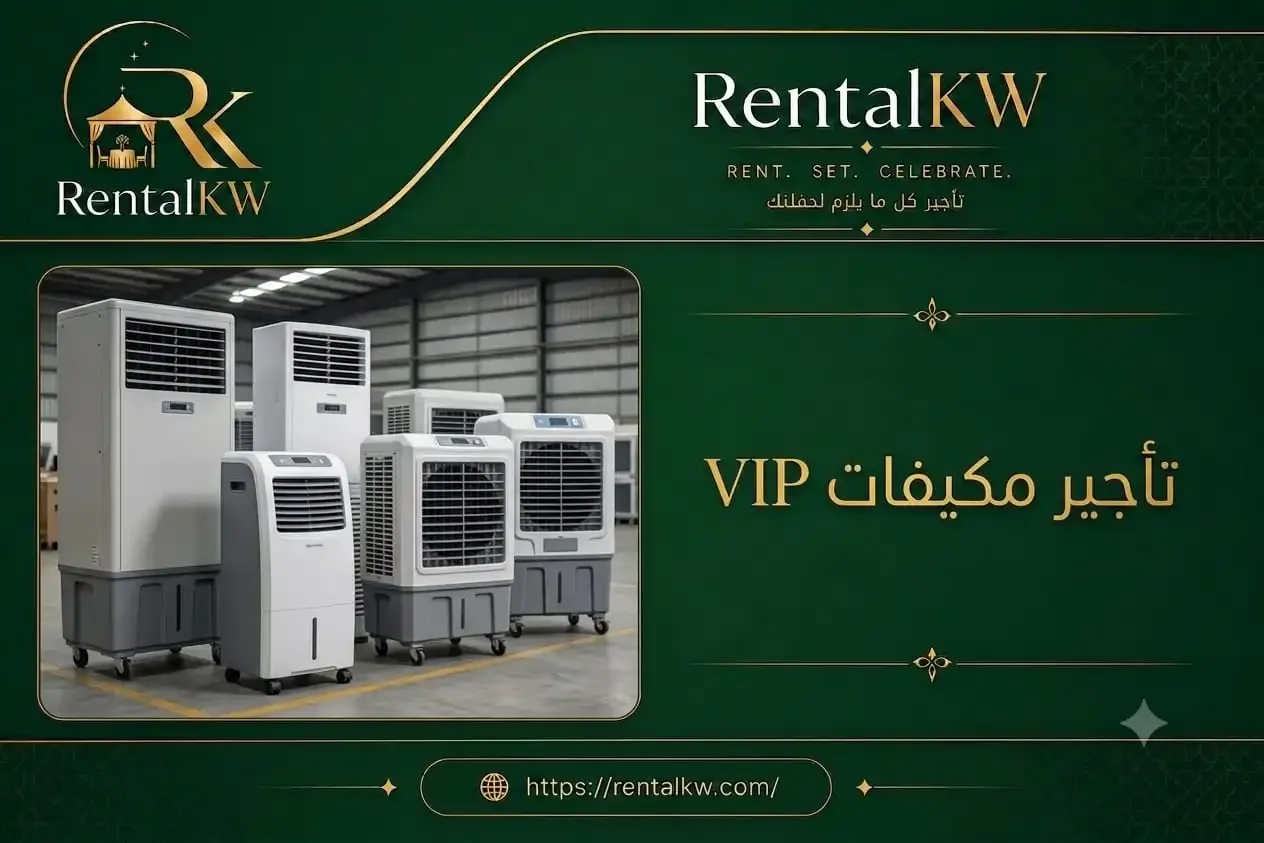
Portable AC Rental for Tents and Events
In this article
- Portable AC Rental in Kuwait
- Portable Evaporative Cooler for Tents
- Portable Vertical Air Conditioners for Events
- Portable Central AC for Events
- Portable Cooling for Outdoor Events
- Portable Cooling Units for Tents
- Portable Air Conditioners for Gardens
- Cooling Wedding Tents in Kuwait
- Daily Portable AC Rental
- Booking Portable Air Conditioning Units
- Conclusion
- Frequently Asked Questions
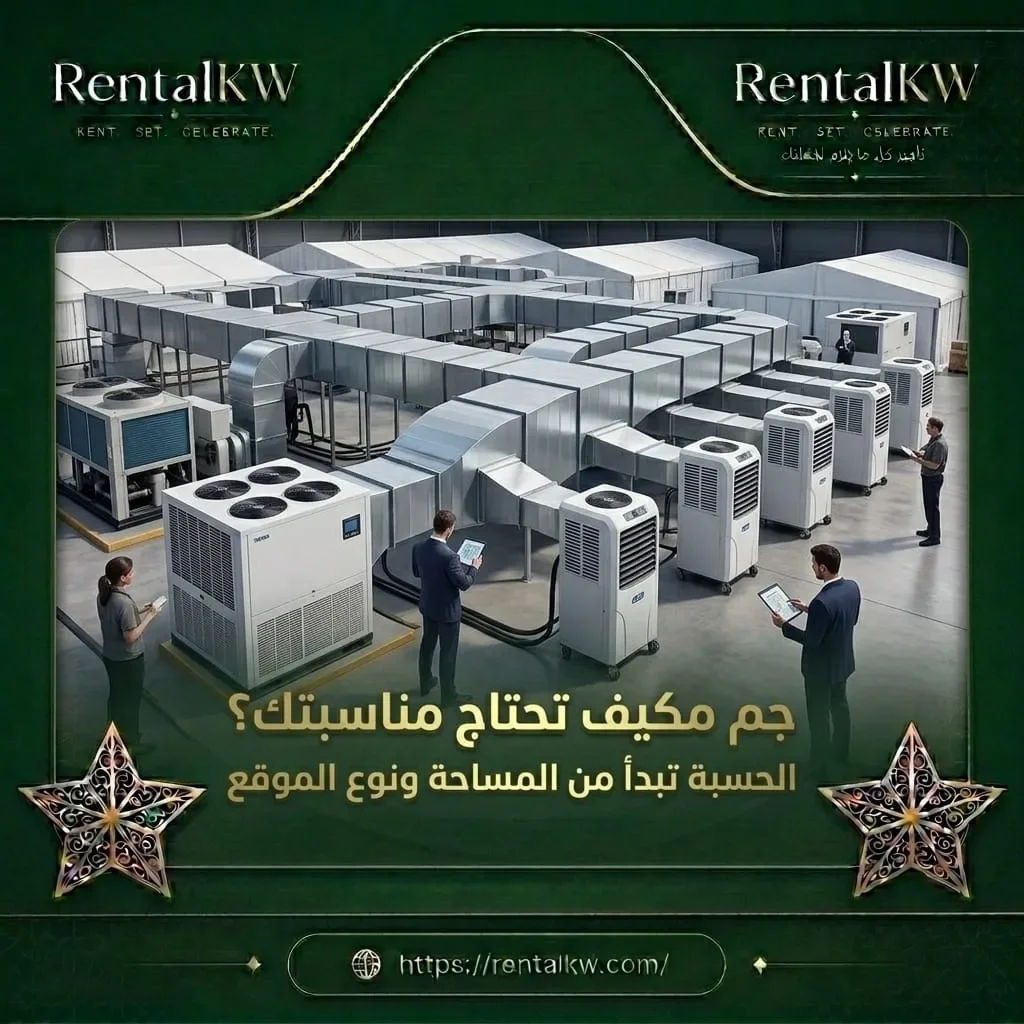
Portable AC rental for tents and events requires calculating the actual cooling demand before choosing equipment because tent size alone does not reveal the total heat load inside the venue. Guest numbers, event timing, direct sun exposure, ceiling height, frequently opened entrances, and lighting all increase cooling requirements. From practical experience with event setups, the costly mistake is not always choosing an undersized air conditioner. Powerful units can also perform poorly when they are distributed incorrectly, leaving one section uncomfortably cold while another remains warm. The correct process therefore begins by evaluating venue conditions, identifying the areas where guests will actually gather, then selecting the appropriate AC type, capacity, and airflow direction to create balanced cooling without disturbing guests or obstructing circulation and service routes.
Portable AC Rental in Kuwait
Portable AC rental in Kuwait depends on matching cooling capacity to the actual conditions of the venue rather than simply asking about the size of the tent or hall. In hot weather, two tents with identical floor areas can have completely different cooling requirements. One may be shaded, relatively enclosed, and used during the evening, while another may be exposed to direct sunlight during the day, have entrances that remain open frequently, and accommodate a much larger number of guests. Selecting the same cooling capacity for both locations simply because their dimensions match can result in poor performance.
From practical experience with event cooling, the effect of people inside the venue must also be included in the calculation. As guest numbers increase, the internal heat load rises, particularly when seating arrangements are dense. Lighting, buffet equipment, and other electrical installations can create additional sources of heat that may appear minor individually but become significant when combined inside an enclosed tent.
Unit distribution should also be planned before actual operation begins. Placing one powerful air conditioner at one end does not mean that cool air will reach the opposite end evenly. Seats directly facing the unit may become excessively cold while distant seating areas remain uncomfortable. Airflow direction, distance, and internal obstacles must therefore be evaluated carefully.
When renting portable air conditioners, review:
• Venue size ceiling height and level of enclosure instead of relying only on tent length and width
• Event timing and the amount of direct sunlight reaching the location before and during guest attendance
• Expected guest numbers and the effect of seating density on the internal heat load
• Additional heat sources such as lighting buffet equipment and electrical installations
• Air conditioner positions and airflow direction in relation to tables and seating areas
• Electrical delivery installation operating and collection requirements before confirming the booking
Portable Evaporative Cooler for Tents

Choosing a portable evaporative cooler for tents requires understanding how evaporative cooling works because this equipment does not perform in the same way as a conventional air conditioner. An evaporative cooler passes air through a wet medium to reduce its temperature, so its effectiveness depends on outdoor temperature, humidity, and the ventilation available in the location. It should therefore not be treated as a direct substitute for compressor-based air conditioning in every tent or climate condition.
From a practical perspective, this type of cooler is more closely suited to adequately ventilated environments because operating it in a completely enclosed space can gradually increase humidity and reduce comfort. Evaporative cooling also generally becomes less effective as outdoor humidity rises. Weather conditions expected during the event should therefore be evaluated rather than selecting the equipment only because it is easy to move or appears convenient.
Air distribution requires particular attention as well. An evaporative cooler performs more effectively when cooled air moves toward the occupied area while another route allows air to leave instead of remaining trapped. Long tents may require more than one airflow point to prevent distant sections from receiving little noticeable cooling.
Water requirements and continuous operation must also be considered so performance does not stop during the event because an operating requirement was overlooked.
When choosing an evaporative cooler, consider:
• Expected humidity levels because higher humidity reduces evaporative cooling effectiveness
• Suitable ventilation that allows air to move through the tent instead of remaining trapped inside
• Airflow direction in relation to the areas where guests will actually be seated
• Water requirements and how the necessary supply will be maintained throughout operation
• Tent length and whether more than one airflow point may be required
• Avoiding the assumption that evaporative cooling automatically replaces conventional air conditioning in every situation
Portable Vertical Air Conditioners for Events
Portable vertical air conditioners for events can provide greater flexibility than permanent air-conditioning systems in some temporary venues, but the word portable does not mean that every unit can simply be positioned anywhere and switched on. Cooling capacity, heat exhaust requirements, electrical demand, and the clear space needed around the equipment should all be understood before placement.
From practical experience, one common mistake is positioning vertical units extremely close to guests in an attempt to achieve faster cooling. This can create a strong and uncomfortable stream of cold air over one group of seats while other areas receive insufficient cooling. A better arrangement uses airflow direction to serve a wider section without continuously directing cold air onto individual guests.
Attention must also be given to how the equipment removes the heat extracted from the indoor air. If a unit requires hot-air exhaust and that heat is released back into the same space, cooling performance can be significantly reduced regardless of the unit's rated capacity.
The equipment also needs suitable electrical sources and a connection plan that keeps cables away from guest walkways and hospitality service areas.
When using portable vertical air conditioners, review:
• Cooling capacity and whether it matches the expected heat load
• The method used to exhaust hot air if required by the equipment design
• Cold-air direction so the seating area is covered without continuously blowing directly onto guests
• Clear space around the unit and avoiding curtains or decorative elements that restrict airflow
• Electrical sources and the operating requirements of the units being used
• Actual temperature distribution after operation instead of checking only whether cold air is leaving the unit
Portable Central AC for Events
A portable central AC for events can be suitable when a large tent or spacious venue needs a more organized cooling solution than several small units positioned without a coordinated distribution plan. The objective is not simply to use larger equipment but to establish a controlled path that delivers cooled air to the required areas according to the shape and use of the event space.
From a practical perspective, the external unit location and air distribution route should be determined before the final furniture layout is completed. Delaying this decision may create conflicts between air ducts, entrances, service areas, or decorative installations. Cooling should also not be concentrated in one section while tables and seating farther from the distribution points receive insufficient airflow.
The heat load must still be calculated according to event conditions because selecting an unnecessarily oversized system is not a substitute for proper planning. The goal is appropriate capacity, effective distribution, and stable operation rather than simply choosing the highest available cooling capacity.
When selecting portable central air conditioning, consider:
• The actual size of the area requiring cooling and the expected number of guests
• Equipment location so operation does not interfere with entrances or service routes
• Air distribution points planned before tables and final decorations are installed
• Reducing cooling losses caused by frequently opened entrances
• Electrical and installation requirements for the selected system
• Completing a sufficient operating test before guests arrive to confirm that cooling reaches all intended areas
Portable Cooling for Outdoor Events
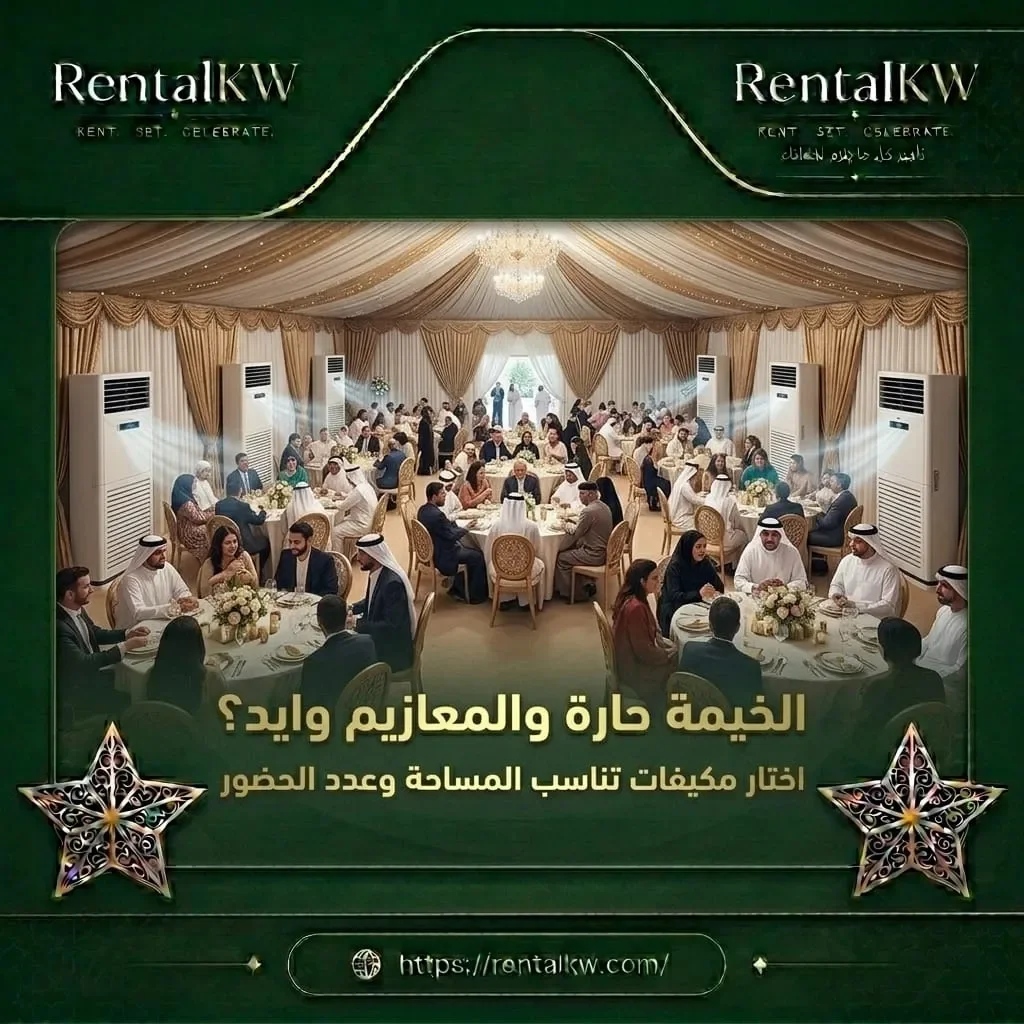
Portable cooling for outdoor events differs significantly from cooling an enclosed tent because cold air disperses quickly in an open environment and cannot be retained in the same way as it can inside a space surrounded by walls or tent panels. The first step is therefore determining whether the objective is to cool a semi-enclosed venue or simply improve comfort within a specific seating zone.
In completely open seating areas, using conventional air conditioning exactly as it would be used inside an enclosed tent may not be efficient because the equipment is attempting to cool air that is continuously replaced by outdoor air. If the seating area has a roof and suitable side barriers, cooling losses may be reduced and performance can improve depending on the system being used.
From practical experience, fixed temperature promises should be avoided in exposed outdoor venues because airflow, sunlight, and humidity can change throughout the event. A professional assessment should explain what the selected cooling solution can realistically achieve before booking instead of creating expectations that do not match the location.
When planning portable cooling for an outdoor event, consider:
• How open the seating area is and whether it includes a roof or side barriers
• Event timing and whether direct sunlight reaches the guest area
• Outdoor airflow and its effect on the dispersal of cooled air
• The specific occupied area where comfort needs to be improved rather than attempting to cool the entire venue
• The cooling system most appropriate for the surrounding environment
• Realistic expectations regarding the comfort level achievable in an open location
Portable Cooling Units for Tents
Portable cooling units for tents make it possible to create a flexible system that can be adjusted according to venue shape and the number of occupied areas, but success depends on distributing the cooling load between the units. Every machine does not need to perform exactly the same role. Each unit should serve the section that requires it without leaving warm zones between coverage areas.
From a practical perspective, dividing the tent into functional sections can improve planning. The buffet area may experience additional heat from equipment and staff movement, while the main seating area is more affected by guest numbers and entrances. The reception section may require a different cooling approach because its doors are opened frequently. Treating these areas separately makes equipment selection more accurate.
Using several units can also provide greater operational flexibility than relying on one cooling point in certain setups because distribution can be modified if the event layout changes.
When distributing portable cooling units, consider:
• Dividing the tent into zones according to use and the heat load generated within each section
• Preventing competing airflow patterns that may create discomfort for guests
• Supporting areas close to entrances or additional heat sources when required
• Keeping air intake and discharge openings free from obstructions
• Maintaining access to equipment if inspection becomes necessary during setup
• Operating the equipment as one complete system and evaluating the result inside the tent before the event begins
Portable Air Conditioners for Gardens
Using portable air conditioners for gardens requires a realistic evaluation of the environment because an open garden cannot retain cooled air easily. The solution is generally more practical when the garden contains a covered or semi-enclosed seating area where airflow can be directed rather than attempting to lower the temperature of the entire outdoor space.
The ground surface also affects equipment placement. Uneven surfaces or grass may require a stable base depending on the equipment design, while electrical connections must be protected from guest movement and water sources used around the garden. Cooling equipment should never become an obstacle between tables or near areas where children are expected to move.
From a practical perspective, shade can significantly reduce the heat load. Combining a shaded seating location with an appropriate cooling system is usually more sensible than placing equipment in direct sunlight and attempting to compensate by increasing cooling capacity.
When preparing garden cooling, consider:
• Positioning seating in areas with less direct sunlight whenever possible
• Providing a stable and suitable surface for cooling equipment
• Protecting electrical connections from walkways and nearby water sources
• Directing cooled air toward areas that are actually occupied
• Avoiding equipment placement that interferes with guest or service movement
• Evaluating whether air conditioning is practical according to how open the garden is before deciding on the number of units
Cooling Wedding Tents in Kuwait
Cooling wedding tents in Kuwait requires an appropriate cooling margin because a wedding tent combines a large number of guests with lighting, decoration, food service, and continuous movement through entrances at the same time. These factors create a heat load that can be significantly different from an empty tent with exactly the same dimensions.
From practical experience, cooling should begin sufficiently early before guests arrive rather than waiting for the tent to fill and then attempting to reduce the temperature. Tent surfaces, furniture, and internal air may have absorbed considerable heat during the day, and the cooling system needs time to bring the environment toward more stable conditions.
Air distribution around the couple's platform and guest tables should also be planned without creating uncomfortable drafts that interfere with comfort or decoration. Buffet areas and entrances need separate attention because of additional heat sources and air leakage.
When cooling a wedding tent, review:
• Heat accumulated inside the tent before the event and the need for advance cooling
• Maximum expected attendance rather than only the average number of guests
• The effect of lighting buffet equipment and other installations on the internal heat load
• Air distribution around tables the main platform and reception areas
• Reducing unnecessary entrance opening without interfering with guest movement
• Monitoring comfort after the event begins and making operational adjustments when required
Daily Portable AC Rental
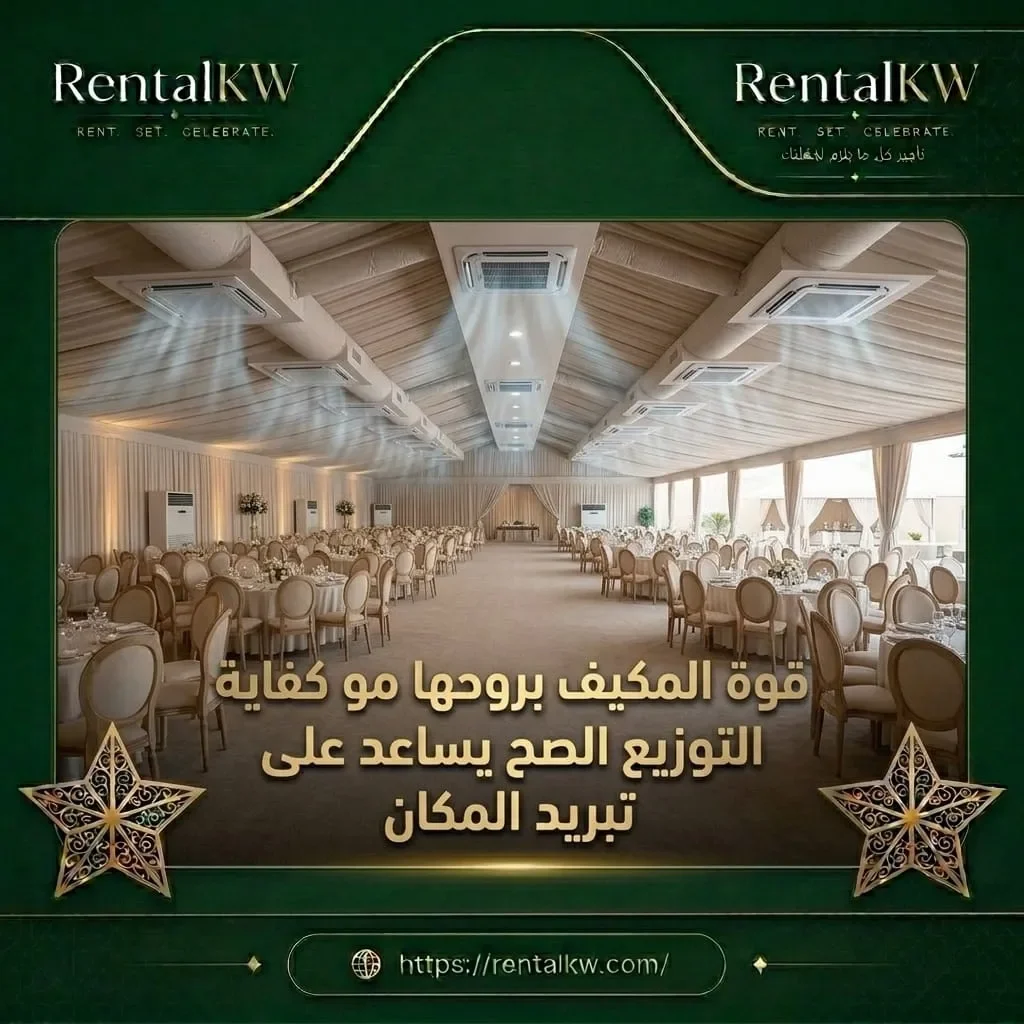
Daily portable AC rental can be suitable for short events or temporary cooling requirements when purchasing equipment or installing a permanent system would not be practical. However, daily rental should be evaluated according to the actual operating period and the delivery and setup requirements rather than the equipment price alone.
Cooling may need to begin several hours before the event for pre-cooling and may continue until the occasion ends and the equipment is ready for collection. The booking period should therefore be clear, along with whether transportation, installation, testing, and collection are included.
Responsibility for operating and monitoring the equipment during the agreed period should also be established. Some locations may need only installation and an initial operating test, while larger setups may require more organized operational attention.
When arranging daily rental, confirm:
• Unit arrival time in relation to the scheduled beginning of the event
• The amount of pre-cooling time required before guests arrive
• The actual number of operating hours required by the venue
• Services included in the daily rental price
• Any additional transportation or installation costs if applicable
• Equipment collection timing after use without disrupting the venue
Booking Portable Air Conditioning Units
Booking portable air conditioning units should begin by providing accurate information about the venue instead of simply requesting a predetermined number of machines. Tent dimensions, height, covering material, guest numbers, event timing, entrance conditions, and available electrical sources all influence equipment selection.
From a practical perspective, photographs, floor plans, and accurate measurements can be particularly useful when evaluating large or unusual venues because they help identify obstacles that may affect equipment locations or air distribution routes. When the setup is complex, evaluating the location before the event can reduce unexpected changes during installation.
The agreement should also clearly identify the unit types, cooling capacities, included services, delivery schedule, and collection arrangements. The lowest price is not necessarily the best booking if the equipment capacity is unsuitable or the quotation excludes essential operating requirements.
When completing the booking, review:
• Venue dimensions ceiling height and the type of covering or enclosure used
• Guest numbers event timing and required operating duration
• Air-conditioning unit types capacities and operating requirements
• Available electrical sources and any installation requirements at the location
• Delivery installation testing dismantling and collection within the service scope
• The airflow distribution plan before other event elements are fixed in their final positions
Conclusion
Successful portable AC rental for tents and events does not begin with the number of machines. It begins with understanding the heat load that the cooling system must handle. Venue size is part of the calculation, but it is not the only factor because guest numbers, sunlight, entrances, lighting, and enclosure characteristics can all significantly change the actual cooling requirement.
Selecting the correct cooling technology comes next. Evaporative coolers operate according to a different principle from conventional air conditioners, while portable vertical units have different applications and installation requirements from portable central systems. The technology should therefore match actual venue conditions rather than being selected according to equipment appearance or name.
Air distribution is what converts cooling capacity into genuine comfort. If cooled air does not reach occupied seating zones evenly, simply increasing capacity may not solve the problem. Airflow direction, internal obstacles, entrances, and heat sources should all be evaluated before equipment positions are finalized.
Outdoor events also require realistic expectations. Cooling a relatively enclosed tent is fundamentally different from attempting to air-condition an exposed garden because cooled air disperses rapidly in open environments. Defining what the cooling system can realistically achieve is therefore part of professional planning rather than simply choosing equipment.
Ultimately, the most reliable booking connects the required capacity to actual venue conditions and includes airflow planning, electrical requirements, delivery, installation, and testing before guests arrive. This turns portable air conditioners from separate machines positioned around a tent into a coordinated cooling system designed to support the event effectively.
Frequently Asked Questions
How is the required air-conditioning capacity for a tent determined?
Capacity should be determined according to tent area, ceiling height, enclosure level, guest numbers, sun exposure, event timing, lighting, and other heat sources. Floor area alone is therefore not sufficient for making an accurate cooling decision.
Is an evaporative cooler suitable for every event tent?
No. Its effectiveness depends on humidity, ventilation, and temperature because it uses evaporative cooling. Actual conditions should be evaluated before selection, and it should not automatically be treated as a direct replacement for conventional air conditioning.
What is the difference between vertical and portable central AC systems?
Portable vertical units can be distributed at several points according to their design and operating requirements, while a portable central system is generally used to supply a larger space through a more organized air distribution arrangement. The correct choice depends on venue size, heat load, and setup design.
Can an event in an open garden be cooled?
Comfort can be improved in certain seating zones, but air-conditioning effectiveness decreases in exposed spaces because cooled air disperses quickly. Results are generally better in shaded or semi-enclosed seating areas where airflow can be controlled more effectively.
Why should air conditioning start before wedding guests arrive?
The tent, furniture, and indoor air may have accumulated significant heat before the event. Pre-cooling gives the system time to reduce this initial heat load and create more comfortable conditions before additional heat is generated by arriving guests.
Does adding more air conditioners always solve poor cooling?
No. The problem may result from poor airflow distribution, open entrances, inadequate heat exhaust, or an equipment type that does not suit the location. The cause should be identified before adding more units so costs do not increase without a meaningful improvement in comfort.
What does daily portable AC rental include?
The exact service scope varies by provider, so the booking should clearly confirm the equipment, operating period, delivery, installation, testing, dismantling, collection, and any additional operating requirements instead of assuming that every service is automatically included.
What information is needed before booking portable AC units?
It is useful to provide venue dimensions, ceiling height, guest numbers, event date and duration, the type of tent or seating area, available electrical sources, entrance locations, and any additional heat sources so the cooling system can be selected according to actual requirements.