
Wedding Tent Rental for Weddings and Celebrations

In this article
- Wedding Tent Rental in Kuwait
- European Wedding Tents
- German Tents for Wedding Celebrations
- Air-Conditioned Wedding Tents
- Complete Wedding Tent Setup
- Wedding Tents for Villas and Gardens
- Wedding Tent with Chairs and Tables
- Wedding Tent Lighting
- Wedding Tents Based on Guest Count
- Booking a Wedding Tent in Kuwait
- Conclusion
- Frequently Asked Questions
A wedding tent today is a complete celebration space rather than simply a covered structure, which means wedding tent rental for weddings and celebrations requires careful planning around the number of guests, venue conditions, table and chair distribution, air conditioning, lighting, and circulation routes. From practical experience preparing weddings in Kuwait, choosing the right tent begins with understanding the structure of the celebration itself before selecting the size or type. A tent installed in a villa garden has different requirements from a large wedding tent that needs a reception area, service routes, hospitality zones, and organized guest seating. The earlier these details are planned, the easier it becomes to control the budget and create a comfortable, elegant environment that gives guests a smoother experience while reducing last-minute changes before the event.
Wedding Tent Rental in Kuwait
The service of wedding tent rental in Kuwait requires more than choosing a tent that seems large enough for the expected number of guests. The installation site, ground conditions, number of entrances, seating layout, buffet area, and bride and groom platform all help determine whether the selected tent will actually work properly on the wedding day or create congestion and movement problems.
From practical wedding preparation experience, one of the most common mistakes is calculating tent size according to chair quantity alone. One hundred guests do not simply require one hundred chairs. They also need tables, room to pull chairs back, service aisles, a reception area, and potentially a platform, buffet, or photography section. If these elements are excluded from the calculation, the tent may look adequate on paper but become overcrowded once the actual setup begins.
Tent type also influences comfort and appearance. Some weddings focus on a luxurious visual style and require a structured tent that allows lighting and decoration to be arranged clearly, while other occasions may need a simpler solution inside a garden or villa. There is therefore no single tent type that suits every wedding.
When selecting a wedding tent, review:
• The actual available site area after excluding walls trees walkways and permanent features that cannot be used for installation
• The number of guests expected to attend simultaneously and the seating style planned for the celebration
• Additional areas required for reception buffet service the couple’s platform and staff circulation
• The level of cooling and lighting required according to the season and timing of the event
• The tent style and whether it suits the event design rather than only the guest count
• Transportation installation and dismantling services so the booking scope is clear from the beginning
European Wedding Tents
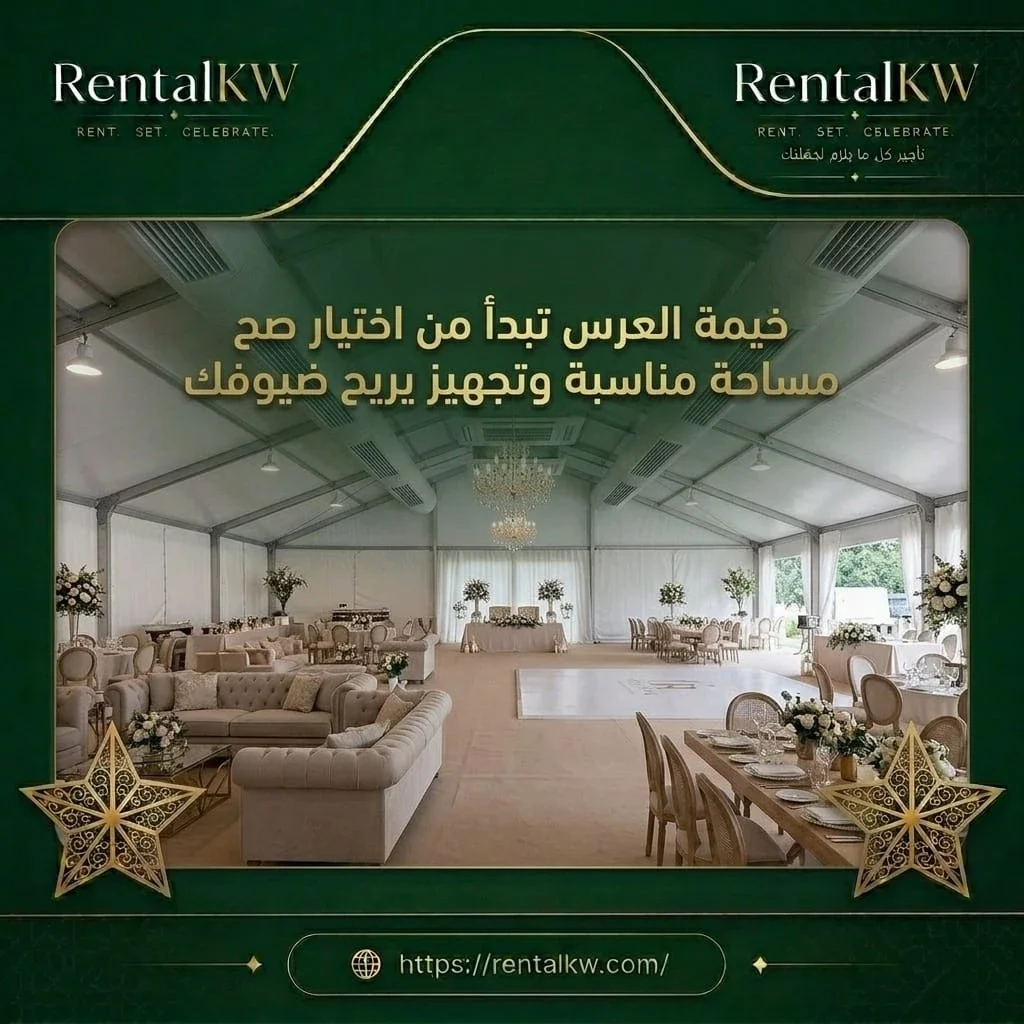
European wedding tents are often selected when the event requires an organized space that can be divided effectively for tables, seating, decoration, and circulation. These tents can offer useful flexibility in planning the interior, making them suitable for weddings that need a clear visual structure and several functional areas inside the same temporary venue.
From a practical perspective, the greatest advantage of a European tent is not only its appearance but also the ability to organize the interior carefully. The space can be divided into a main guest area, clear circulation routes, a reception section, and a platform while maintaining a consistent overall design. This matters because weddings require a higher level of organization than simply providing enough space for chairs.
However, choosing a European tent does not automatically mean it is the best option for every site. A small garden or irregularly shaped plot may require an adjusted size or a simpler setup. Accurate site measurements should therefore be completed before booking so a tent larger than the location can accommodate is not selected.
When evaluating European wedding tents, consider:
• Tent width and length and whether they match the shape of the available installation area
• Structure height and whether it can support the required lighting and decorative elements
• The number of seating groups and tables that can fit without restricting circulation routes
• The possibility of creating separate reception photography or service areas inside the tent
• The level of insulation and cooling required during the celebration
• The time needed for installation and preparation before furniture and decorations are brought inside
German Tents for Wedding Celebrations
German tents for wedding celebrations are often chosen when the event requires an organized and stable structure capable of supporting a large guest environment. This type should be treated as a structural system that requires accurate dimensions and planning rather than as a label that guarantees a successful event by itself.
From practical wedding preparation experience, the success of a German tent depends on how effectively its internal space is used. A strong structure cannot compensate for poorly arranged tables, narrow aisles, or a congested entrance. The seating plan should therefore be part of the decision when selecting the required tent dimensions before confirming the booking.
Site conditions also affect how easily the tent can be installed. Some villas and gardens allow structural components and equipment to be brought in easily, while others require more planning because of narrow entrances, trees, or long internal carrying distances. These details should be identified in advance because they influence execution time and the way the site must be prepared.
When choosing German tents for a wedding, consider:
• The net installation area and whether the ground is suitable and sufficiently level for the structure
• The required dimensions according to tables and seating groups rather than the guest count alone
• Entry and exit points and whether they can handle guest movement comfortably
• Cooling system locations and how cooled air will be distributed throughout the tent
• Lighting and decoration attachment methods and whether they suit the structure
• The available installation period and the time required for final inspection before the celebration
Air-Conditioned Wedding Tents
Air-conditioned wedding tents become essential when the celebration takes place in conditions that require continuous cooling, particularly because the tent may be filled with guests, lighting, service activity, and external warm air entering through frequently used entrances. Cooling capacity should therefore be calculated according to the actual internal heat load rather than tent dimensions alone.
From practical experience, cooling distribution is often more important than simply increasing the number of air-conditioning units. If powerful units are concentrated on one side of the tent, nearby seating may become too cold while areas farther away remain warm. A better approach is to distribute cooled-air delivery according to seating areas, circulation routes, and furniture placement.
The cooling system should also begin operating sufficiently before guests arrive so the event starts in comfortable conditions. Waiting until the tent is fully occupied before beginning serious cooling makes it more difficult to reduce the temperature and places greater demand on the equipment.
When preparing an air-conditioned wedding tent, review:
• The internal air volume and tent height rather than floor area alone
• The number of guests expected during peak attendance
• The number of entrances and how frequently they are likely to open
• Air-conditioning unit locations and cooled-air distribution points
• The electrical capacity required to operate the complete system throughout the event
• Operating duration before the wedding during the celebration and until guest reception ends
Complete Wedding Tent Setup

A complete wedding tent setup means transforming the structure into a venue that is fully ready to receive guests rather than simply installing an empty tent. The preparation process can include furniture distribution, lighting, cooling, circulation routes, reception areas, and additional elements according to the nature of the wedding.
From a practical perspective, preparation should begin with a clear venue plan. If tables are brought in before service routes or cooling locations are determined, sections may need to be rearranged later. The order in which preparation is completed is therefore just as important as the equipment itself.
Priorities should also reflect the type of wedding. Some celebrations need generous photography and reception areas, while others place more emphasis on guest tables and seating. There is no single complete setup package that works equally well for every wedding.
When preparing the entire wedding tent, determine:
• The required number of tables and chairs and their final distribution
• The location of the couple’s platform and photography areas when applicable
• Guest entrance exit and service circulation routes
• The cooling and lighting plan before decorations are installed
• Buffet or hospitality areas and how they affect guest movement
• The sequence of preparation work so different setup teams do not interfere with one another
Wedding Tents for Villas and Gardens
Wedding tents for villas and gardens require more detailed site assessment because residential gardens often contain trees, walkways, swimming pools, walls, and permanent features that affect the available installation area. The tent should therefore be selected according to the net usable space rather than the total size of the garden.
From practical experience preparing villa weddings, one of the most common problems comes from trying to install an oversized tent in a limited site. The idea may appear suitable when considering guest capacity, but the result can eliminate circulation routes, narrow the entrance, or prevent effective use of important garden areas. In many situations, a slightly smaller tent with a smarter layout works better than choosing the largest possible size.
Guest movement between the villa and the tent should also be considered. If the main entrance passes through a narrow area, enough clearance must be preserved and tables or equipment should not be positioned within that route.
When preparing a wedding tent in a villa or garden, review:
• The net available area after excluding trees pools walls and walkways
• The closest point that transportation vehicles and preparation equipment can reach
• The direction guests will move from the entrance toward the tent
• The location of electrical sources and their distance from cooling and lighting systems
• Ground level and whether additional flooring or surface preparation is required
• Whether the site can accommodate the tent and furniture without becoming overcrowded
Wedding Tent with Chairs and Tables
A wedding tent with chairs and tables should be planned according to the seating style rather than the guest count alone. Round tables require a different amount of space from rectangular tables, while the number of chairs around each table directly affects aisles and comfort.
From a practical perspective, enough room must be left for chairs to be pulled back and for guests and service staff to move between seating groups. Placing too many chairs around tables may reduce the number of tables required but can create congestion and make guest service more difficult. The better layout balances capacity and comfort.
Main table locations and circulation routes should also be finalized before other equipment is positioned. A clear furniture plan helps determine more suitable cooling and lighting locations and reduces the need to move furniture repeatedly during preparation.
When setting up the tent with chairs and tables, consider:
• Table type and the realistic number of guests that can sit comfortably around each table
• The distance between seating groups and the required circulation aisles
• Table locations in relation to the couple’s platform and service areas
• Space for chairs to move without colliding with neighboring seating groups
• A reasonable reserve quantity of chairs without unnecessarily increasing the furniture order
• Coordination between the furniture the tent structure and the overall wedding design
Wedding Tent Lighting
Wedding tent lighting is a fundamental part of the celebration because it affects visibility, atmosphere, and photography at the same time. The lighting plan should therefore combine practical illumination that supports safe movement with decorative lighting that highlights the wedding design without flooding the tent with excessive brightness.
From practical experience, distributing lighting across several levels usually produces a more balanced result than depending on one powerful source. General overhead lighting can support visibility while additional lighting is used around seating areas, the entrance, and the couple’s platform. This creates a more layered visual environment and makes important sections easier to distinguish.
Lighting should also be tested after decorations are installed because flowers, fabrics, and colors may react differently to light than expected. A final test allows glare to be reduced and directions or intensity to be adjusted before guests arrive.
When preparing wedding tent lighting, review:
• The general lighting level required for visibility and guest movement
• Decorative lighting locations around the couple’s platform and entrance
• Tent height and how easily lighting units can be installed
• Electrical source locations and cable routes
• The effect of lighting on photography and video
• The time required for testing and final adjustment before the celebration
Wedding Tents Based on Guest Count

Wedding tents based on guest count should be selected only after understanding how the available space will be used rather than simply converting the number of invitees into a standard tent size. A wedding with large tables and generous seating arrangements requires more room than an event with denser seating even when the guest count is identical.
From a practical perspective, the number of invitations should be distinguished from the expected actual attendance. It is also important to estimate how many guests will be inside the tent at the same time. These figures help determine a more realistic tent size and reduce the risk of renting a large unused space or selecting an undersized tent that becomes overcrowded.
Other wedding elements also affect the required dimensions, including the buffet, platform, photography areas, and reception sections. Calculating the tent according to chair quantity alone is therefore incomplete.
When selecting a tent according to guest numbers, review:
• The number of people expected inside the tent during peak attendance
• The seating style and number of chairs around each table
• The space required for circulation and service routes
• The area needed for the platform photography and reception sections
• A reasonable allowance for additional attendance without unnecessarily increasing the overall tent size
• The actual ability of the site to accommodate the selected tent dimensions
Booking a Wedding Tent in Kuwait
Booking a wedding tent in Kuwait becomes more accurate when the essential information is available before contacting the rental provider. The wedding date, location, expected guest count, installation area, tent type, cooling, and furniture requirements should be defined as clearly as possible so the quotation reflects the real execution needs.
From practical wedding preparation experience, early booking does more than improve the likelihood that the preferred tent will be available. It also provides enough time to review dimensions and coordinate the remaining services around the tent. Cooling, lighting, tables, and decorations all depend on the tent size and position, so delaying the decision can result in repeated changes to the rest of the event plan.
The booking quotation should also state clearly what is included. Customers need to know whether the price covers transportation, installation, and dismantling only or whether cooling, flooring, furniture, and other preparation services are also included. Clarifying these details prevents misunderstandings before the celebration.
When booking a wedding tent, confirm:
• The installation and dismantling dates and times
• The tent dimensions type and exact installation location
• Included equipment and optional additions
• The possibility of modifying the size or quantity if event details change
• The cooling lighting and furniture plan before the wedding day
• The final price after all required services have been included
Conclusion
Successful wedding tent rental for weddings and celebrations begins by treating the tent as a temporary event venue that requires integrated planning rather than simply as a structure installed at the location. Guest numbers, seating style, available land, tent type, cooling, lighting, furniture, and circulation routes are interconnected and collectively determine the quality of the celebration from guest arrival until the end of the event.
The best choice does not always mean selecting the largest available tent. The right tent should accommodate guests and equipment while preserving comfortable space for movement and service. Oversizing increases costs and can make cooling and decoration more difficult, while choosing a tent that is too small can create congestion and reduce guest comfort.
Tent type should also suit the location. European and German tents can provide strong solutions for many weddings, but their success depends on the available space, installation conditions, and internal distribution. This is particularly important in villas and gardens where trees, walkways, and permanent features should be calculated before approving the final size.
Internal planning remains one of the most important factors. Tables, chairs, cooling units, lighting, and the couple’s platform should be planned within one coordinated layout so the different elements do not conflict during installation. Every decision affects the next one, which means organized preparation reduces changes and creates a more balanced result.
Ultimately, a good booking clearly defines the tent, dimensions, included equipment, services, and total cost from the beginning. This gives the couple a venue that genuinely suits the celebration and makes it easier to manage the remaining wedding details with greater confidence and organization while reducing last-minute surprises.
Frequently Asked Questions
How do I choose the right wedding tent size?
Begin with the number of guests expected to be present at the same time, then determine the table type, seating layout, required aisles, platform area, buffet, and reception sections. The final size should be based on how the space will actually be used rather than guest count alone.
What is the difference between European and German wedding tents?
The differences depend on the structural system, dimensions, and available preparation options. The most important factor is choosing the tent structure that suits the site, wedding layout, and required decorative level rather than relying only on the label as a measure of quality.
Does a wedding tent always need air conditioning?
That depends on event timing, weather conditions, venue characteristics, and how enclosed the tent is. In hot conditions, cooling becomes important for guest comfort and should be calculated according to the tent area, height, guest count, and entrance activity.
Can a wedding tent be installed in a villa garden?
Yes, when there is sufficient net installation space and permanent features such as trees, pools, walkways, walls, and access routes have been considered. Measuring the site before choosing the final tent size is therefore highly useful.
Does wedding tent rental include chairs tables and lighting?
That depends on the quotation. Some bookings cover the tent structure and installation only, while others provide complete preparation including furniture, cooling, and lighting. The exact contents of the package should be confirmed before booking.
How is tent size calculated according to the number of guests?
The guest count alone is not enough. Seating arrangement, circulation space, reception area, buffet, platform, and any other event elements should be included because these features determine the actual area required by the wedding.
When should a wedding tent be booked?
It is preferable to confirm the tent once the event date, location, and approximate guest count are reasonably clear because cooling, lighting, furniture, and other preparations depend on the tent dimensions and internal distribution.
What is the most important thing to confirm before the tent is installed?
Confirm the tent dimensions, net installation area, entrance locations, ground conditions, electrical sources, service routes, and furniture layout. Reviewing these details before installation reduces the risk of significant changes on the wedding day.