Event Tent Types and How to Choose the Right Size
In this article
- What You Should Know Before Booking
- Types of Event Tents
- Open and Closed Event Tents
- Royal Tents and Traditional Tents
- Tents for Courtyards and Gardens
- Measuring the Ground Before Choosing a Frame
- Gross Area vs. Net Area
- Space for Row Seating
- Space for Round Tables
- Space per Person
- Estimated Event Tent Sizes
- Condolence Tents and Guest Flow
- Wedding Tents and Service Areas
- Effect of Aisles and Entrances
- Flooring, Anchoring and Wind
- AC and Lighting Placement
- Worked Layout Example
- Final Size Check Before Installation
- Event Tents by Season
- The Clear Tent: When to Choose It
- Fitting Out the Tent
- Event Tents Across Kuwait
- Factors That Affect the Cost
- Common Mistakes
- Practical Examples
- How to Choose the Best Offer from RentalKW
- Frequently Asked Questions
- Conclusion
Event tents are a core solution in Kuwait for any occasion bigger than a home or diwaniya can hold: weddings, milchas, condolences, large gatherings, corporate events and winter camps. A tent can be set up in the courtyard, garden or a nearby plot, fitted with cooling, lighting and furniture as needed, and dismantled after the event.
Two questions come up with every booking: which type of event tent should I choose, and what size fits my guests? The answer depends on the occasion, the number of guests, the seating style, the available ground and the season.
In this guide we explain the event tent types used in Kuwait, the difference between open and closed tents, how to calculate size by chairs, tables and lounges, and we give you ready tables and a worked layout example.
What You Should Know Before Booking
Prepare the type of occasion, guests at peak, seating style (tables and chairs, rows, Arabic majlis or sofas), ground dimensions in meters with photos, ground type (sand, tiles, grass, asphalt) and season (summer needs cooling, winter needs heating).
Types of Event Tents
|
Type |
Features |
Best for |
|---|---|---|
|
Royal tent |
Luxurious lining and decor, hall-like look |
Weddings, milchas, formal events |
|
Arabic (Sadu) tent |
Heritage style, floor seating or sofas |
Gatherings, diwaniyas, condolences, camps |
|
German frame tent |
Aluminum frame, wide spans with no inner poles |
Large weddings, exhibitions, events |
|
Pagoda tent |
Pointed roof, small sizes |
Entrances, buffets, reception corners |
|
Clear tent |
Transparent roof and walls |
Night parties in gardens and winter |
|
Canopies |
Quick setup, shade only |
Daytime events and open seating |
Open and Closed Event Tents
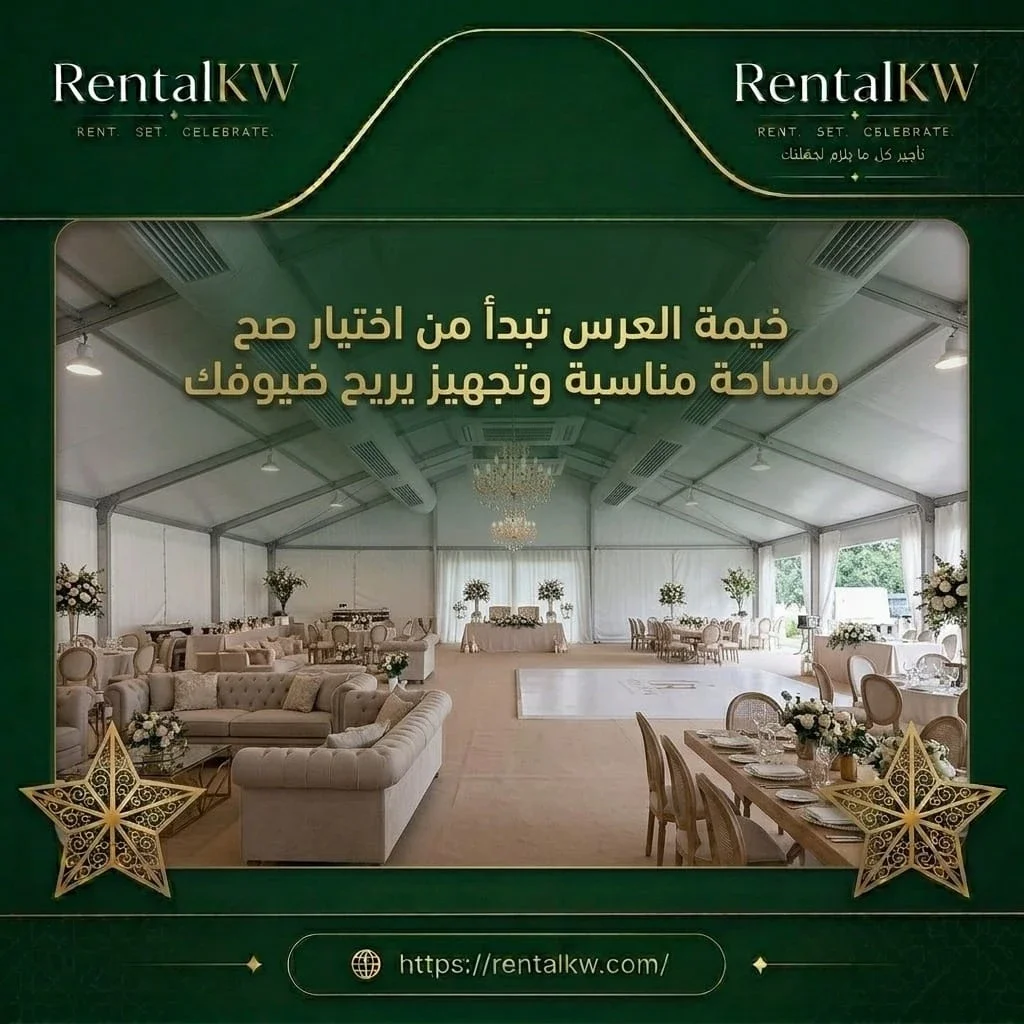
A closed tent has fully enclosed sides and works as an independent hall. It is the only option in summer when cooling is needed, in winter when heating is needed, or when privacy matters, as at women’s events.
An open tent is a roof without sides or with raised sides, giving ventilation and a view of the garden. It suits spring, autumn and mild evenings, and daytime events that only need shade. Many event tents come with removable sidewalls that can be opened or closed according to the weather on the day.
Royal Tents and Traditional Tents
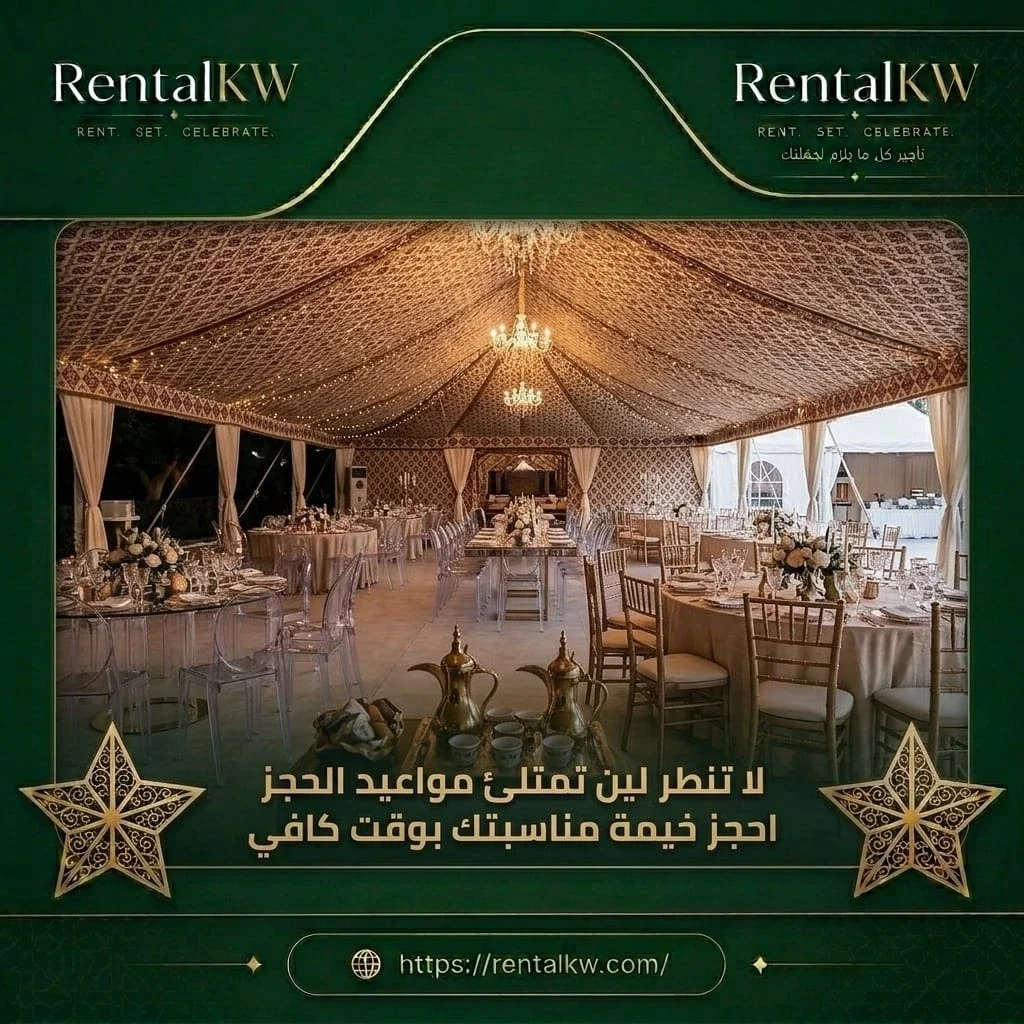
A royal tent looks like a wedding hall inside: light fabric lining, chandeliers, curtains and finished flooring. It is chosen for large weddings and milchas when the family wants the luxury of a hall in their courtyard.
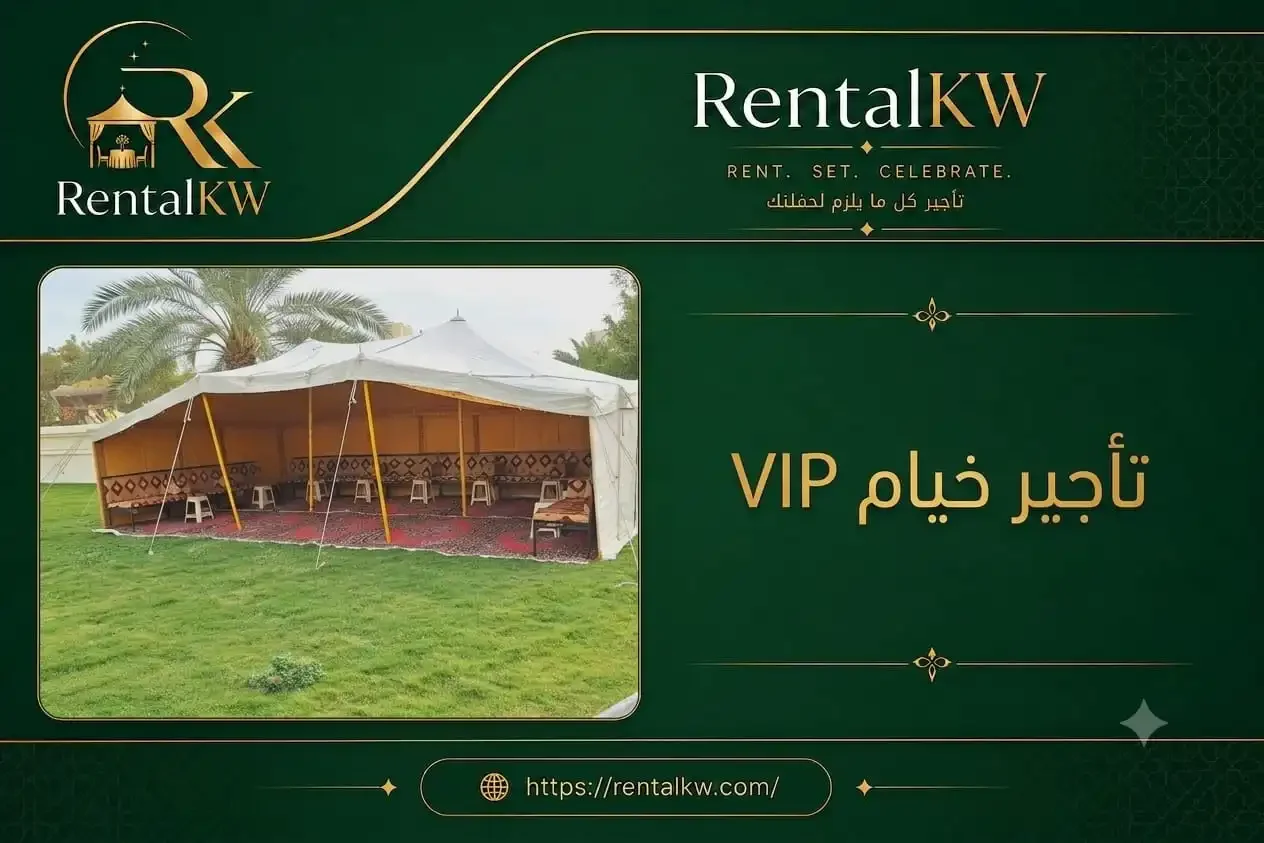
A traditional Arabic tent carries the Sadu and Kuwaiti heritage look, suiting gatherings, diwaniyas, condolences and camps. Sofas or floor seating line the sides, leaving the center for movement and hospitality.
Tents for Courtyards and Gardens
The home courtyard is the most common place for event tents in Kuwait. Measure precisely and leave at least a meter on every side, watch for trees, windows, AC outlets and meters, decide the entry from the house and from the street, and plan the generator away from neighbors and guests. Gardens need level ground, because uneven grass tilts tables and chairs.
Measuring the Ground Before Choosing a Frame
Many bookings fail because the tent does not fit. Measure full length and width, subtract a meter on each side for anchoring and movement, note obstacles (trees, light poles, slopes, outbuildings), photograph the ground from several angles, and confirm the ground type since it determines anchoring. If the tent is on public land or a plot, check whether a permit from the relevant authority is needed.
Gross Area vs. Net Area
Gross area is length × width. Net area is what remains for guests after deducting the buffet (30 - 50 m²), the kosha or stage (20 - 40 m²), main aisles and service doors, the coffee corner and spaces for AC units or heaters. Net area is usually 70 - 80% of gross, so never calculate guests on the full area.
Space for Row Seating
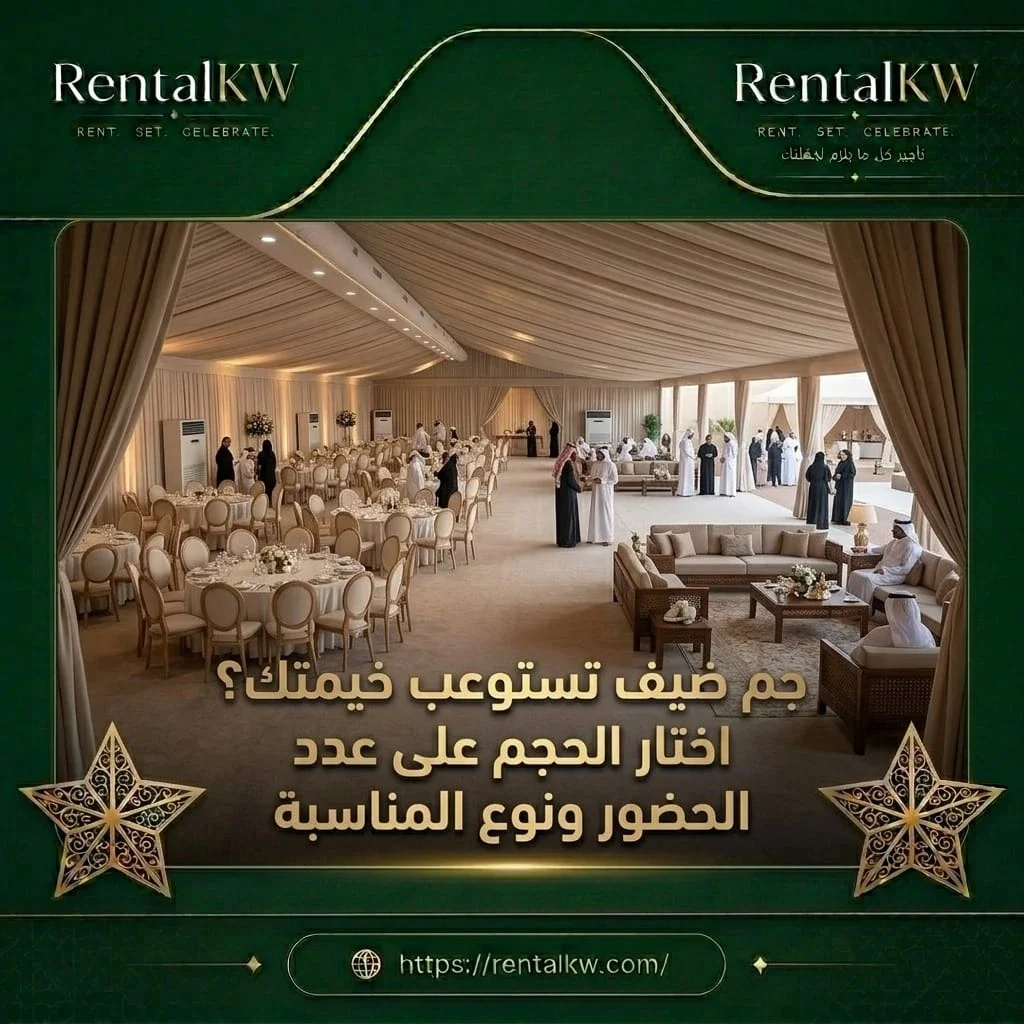
Row seating (for lectures or condolences) needs about 0.8 - 1 m² per person including aisles. A 10 × 20 m tent with 160 m² net holds about 160 chairs in rows. Leave a 1.5 m central aisle and 1 m side aisles.
Space for Round Tables
A 150 cm round table with 8 - 10 chairs needs about 12 - 15 m² including movement around it, or 1.5 - 2 m² per person. For table shapes and sizes, see table and chair rental.
Space per Person
|
Seating style |
Approx. space per person |
|---|---|
|
Standing (quick reception) |
0.8 - 1 m² |
|
Rows of chairs |
0.8 - 1 m² |
|
Arabic majlis or sofas on the sides |
1.2 - 1.5 m² |
|
Round tables with chairs |
1.5 - 2 m² |
Estimated Event Tent Sizes
|
Tent size |
Area |
At tables |
Arabic majlis |
Rows of chairs |
|---|---|---|---|---|
|
6 × 6 m |
36 m² |
15 - 18 |
20 - 25 |
25 - 30 |
|
10 × 10 m |
100 m² |
45 - 55 |
60 - 70 |
75 - 80 |
|
10 × 20 m |
200 m² |
90 - 100 |
120 - 130 |
150 - 160 |
|
15 × 30 m |
450 m² |
200 - 230 |
250 - 280 |
340 - 360 |
|
20 × 40 m |
800 m² |
380 - 420 |
450 - 500 |
600 - 640 |
These figures allow roughly for a buffet and aisles, and drop if you add a large kosha or stage.
Condolence Tents and Guest Flow
A condolence tent has continuous coming and going for three days, seating along the sides, and a place near the entrance for the family to receive mourners. Make the entrance wide (separate entry and exit if possible), line seating on the sides with the center free, place a coffee corner near the entrance for the qahwajis, and calculate condolence chairs or sofas on the post-maghrib peak.
Wedding Tents and Service Areas
A wedding tent needs clear zones: guest seating, the kosha or stage (usually opposite the entrance), a buffet reachable without crossing the kosha, a service area behind the tent or in a small annex tent, and a photo area with good lighting. Without a separate service area, staff will walk between guests.
Effect of Aisles and Entrances
Aisles take more space than most people expect. The main aisle needs at least 1.5 m and aisles between tables 1 - 1.5 m. Entrances should be away from the kosha and quiet seating, and well lit.
Flooring, Anchoring and Wind
On sand, frames are anchored with long stakes and covered with flooring or carpet. On tiles and asphalt, heavy weights replace stakes so tiles are not drilled. Uneven grass needs raised wooden flooring. Properly anchored tents withstand normal Kuwaiti winds, but on dust-storm days anchoring should be checked and sides closed.
AC and Lighting Placement
Place AC units before arranging furniture: on the sides, away from the kosha and buffet. To calculate cooling, see AC rental. Hang lighting from the frame, not the fabric, and add chandeliers or decorative lights to match the theme.
Worked Layout Example
A women’s wedding for 150 guests at round tables: guests 150 × 1.7 m² ≈ 255 m²; kosha and photo area 35 m²; buffet 40 m²; aisles and entrance 50 m²; total about 380 m². Suitable size: 15 × 25 m (375 m²) or 15 × 30 m (450 m²) for more comfort, with a small service tent attached.
Final Size Check Before Installation
-
☐ Tent size vs. ground size after clearances
-
☐ Entrance and exit positions
-
☐ AC and generator positions
-
☐ Kosha, buffet and service area positions
-
☐ Number of tables and chairs or sofas
-
☐ Installation and dismantling dates
Event Tents by Season
|
Season |
Suitable tent |
Essential setup |
|---|---|---|
|
Summer (May - Sep) |
Closed, white roof, lined |
Package AC and generator |
|
Autumn (Oct - Nov) |
Closed or with opening sides |
Fewer AC units or fans |
|
Winter (Dec - Feb) |
Closed, or clear for night parties |
Heaters and windward sides closed |
|
Spring (Mar - Apr) |
Open or semi-open |
Prepared for changeable wind and dust |
The Clear Tent: When to Choose It
A clear tent is one of the most beautiful event tents for night parties in winter and spring, letting guests see the sky, garden and outdoor lighting. It does not suit summer daytime, as the sun heats it like a greenhouse. Choose it for night events in winter or spring, a beautifully lit garden, small to medium guest counts and distinctive photos against the sky and trees.
Fitting Out the Tent
A tent alone is an empty frame. Fit-out turns it into a hall: flooring (carpet, raised wood or artificial grass), inner lining, lighting, cooling or heating, furniture (tables and chairs, American sofas or Arabic seating), a kosha or stage, and curtains and decor. Book these with the tent so installation is coordinated.
Event Tents Across Kuwait
-
Capital: condolence and gathering tents next to homes and diwaniyas, often in limited space.
-
Hawalli: tight spaces, so medium tents with careful planning.
-
Farwaniya: wedding and condolence tents in nearby plots.
-
Ahmadi: large courtyards, farms and chalets allowing big tents.
-
Jahra: large wedding tents and winter desert camps.
-
Mubarak Al-Kabeer: courtyard tents for milchas and family gatherings.
Factors That Affect the Cost
Size and type, rental period, add-ons (cooling, flooring, lighting, furniture), ground conditions and season.
Common Mistakes
-
Calculating guests on gross rather than net area.
-
Not measuring the ground and leaving anchoring clearance.
-
Forgetting the service and preparation area.
-
Choosing an open tent for a summer event that needs cooling.
-
Booking late in wedding season.
-
Not planning the generator position.
Practical Examples
A three-day condolence with a peak of 150: a 10 × 20 m Arabic tent with sofas on the sides and some row seating, a wide entrance and a coffee corner, cooled according to season.
A courtyard milcha for 100: a 10 × 20 m royal tent with white lining and chandeliers, 10 - 11 round tables, a kosha, a side buffet and a small pagoda at the entrance.
A corporate event for 300: a 20 × 30 m German frame tent with rows, a stage and screens, plus an annex tent for registration and hospitality.
How to Choose the Best Offer from RentalKW
Ask for an offer stating tent type and size, whether lining, flooring, lighting and cooling are included, and installation and dismantling dates. You can combine the tent with sofas, tables and hospitality in one booking.
Frequently Asked Questions
Are all event tent types suitable for every occasion?
Each occasion has a better fit: royal tents for weddings, Arabic tents for gatherings and condolences, frame tents for large events and clear tents for night parties.
How do I determine the size I need?
Multiply guests by space per person for your seating style, add buffet, kosha and aisles, and use the size table above.
What information should I prepare?
Occasion, guest count, seating style, ground size and photos, ground type and date.
Can the tent be combined with other setups?
Yes, with cooling or heaters, flooring, lighting, furniture and hospitality in one booking.
How do I make sure it is ready?
Install a day or two ahead and check sizes, entrances, cooling and lighting before guests arrive.
What size tent fits 100 guests?
About 10 × 20 m at round tables, or 10 × 15 m may suffice with an Arabic majlis on the sides.
Can a tent be installed on courtyard tiles without drilling?
Yes, using heavy weights instead of stakes.
Can the German frame tent withstand wind?
It is designed to withstand normal winds when anchored correctly. Ask how it will be anchored on your type of ground, and close the sides on dust-storm days.
How long does it take to install a large tent?
Small tents go up in hours, while large tents with cooling and flooring may need one to two days before the event.
Are cooling and flooring included in the tent price?
It depends on the agreement. Ask for an offer that lists each item separately so you can compare clearly.
Do I need a separate service tent?
For weddings and large gatherings, yes. A small annex for preparation keeps staff and equipment out of the guest area and keeps aisles clear.
Conclusion
Choosing event tents starts with the occasion and seating style, then net space per guest, accurate ground measurement, and planning service areas, aisles and cooling. The result is a comfortable tent that feels like a real hall.
Book your tent now: Tent rental page
To book or inquire: use the contact numbers listed on rentalkw.com