
Funeral Chair Rental with Seating Setup
In this article
- Funeral Chair Rental with Arrangement
- Preparing Seating Areas for Mourners
- Arranging Funeral Chair Rows
- Preparing Funeral Gathering Walkways
- Funeral Chairs with Hospitality Tables
- Distributing Funeral Chairs Based on Space
- Complete Funeral Gathering Setup
- Funeral Reception Chairs in Kuwait
- Funeral Chair Delivery and Arrangement
- Booking Funeral Chairs with Gathering Setup
Funeral chair rental with seating arrangement and setup requires calm and practical planning because the goal is not to place the largest possible number of chairs inside the venue but to prepare a gathering area where mourners can be received seated and guided through the space without unnecessary congestion. The arrangement begins by understanding the size and shape of the location together with entrances walkways and hospitality areas before deciding the number of chairs and how the rows should be distributed. Attendance at a condolence gathering can also change throughout the day so the layout should accommodate continuous arrival and departure. The most suitable service treats the gathering as a complete reception space and balances seating capacity comfortable movement accessibility and overall organization.
Funeral Chair Rental with Arrangement
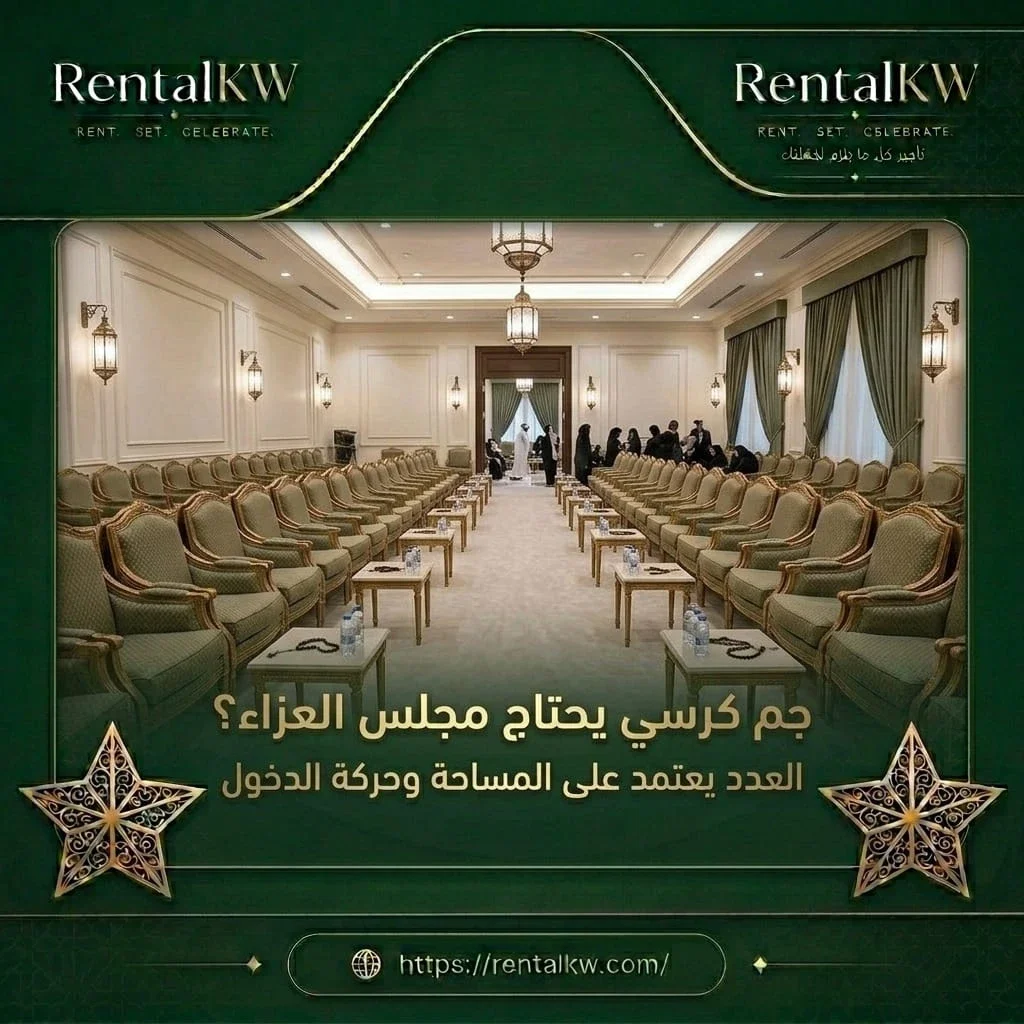
Funeral chair rental with arrangement differs from ordering chairs alone because an important part of the service is turning the available area into an organized gathering space that can be used practically. A customer may have enough chairs but an unsuitable layout can block entrances restrict movement or leave some parts of the venue underused while too many seats are concentrated in another area.
Planning starts by understanding the shape of the location before deciding how the rows will run. A rectangular gathering area should not automatically be arranged in the same way as a spacious home courtyard a diwaniya or a temporary space inside a tent. Doors columns hospitality areas and routes required by the family or service team can all influence the direction of the chairs and the number of rows that can realistically be used.
The nature of attendance should also be considered. Funeral gatherings do not operate like celebrations where most guests arrive at approximately the same time and remain seated for a predictable period. Mourners may arrive and leave continuously so available seats should be easy to reach without requiring many seated people to move every time someone enters or leaves.
A higher chair count is not always the better choice either. Adding too many rows to a limited space may increase theoretical capacity while making the gathering more difficult to use. A practical layout balances the use of available space with sufficient room for movement according to the conditions of the location.
When arranging funeral chair rental with setup it is preferable to:
• Inspect the shape of the venue or provide clear information about its dimensions entrances and existing obstacles before confirming the final quantity so the booking is based on usable space rather than total area alone
• Identify where mourners will enter and leave before arranging the chairs so that a row does not end directly in front of a doorway and the main route does not become too narrow once the gathering is full
• Choose the direction of the rows according to the shape of the location and guest movement rather than repeating one fixed layout for every gathering because an arrangement that works in a courtyard may not work inside a diwaniya or tent
• Maintain suitable circulation areas between seating zones according to site conditions so mourners can reach available chairs without struggling through tightly packed rows
• Agree clearly on whether the service includes delivery arrangement and collection or chair rental only so the customer understands the actual scope of preparation included in the booking
• Avoid ordering an excessive quantity before studying the available space because the success of the gathering depends on organized reception and movement rather than the number of chairs that can physically be placed inside the venue
Preparing Seating Areas for Mourners
Preparing seating areas for mourners depends on understanding how people will move through the gathering before furniture is placed. The main question is not simply where there is an empty space for another chair but how a person enters where they naturally move how they reach a seat and how they later leave without unnecessarily disturbing other attendees.
The venue can therefore be considered as several functional zones. There may be an initial reception area followed by the main seating section together with a hospitality area or a route used by serving staff in addition to the entrance and exit paths. When these functions are forced into the same limited space congestion can develop even when the total number of chairs is appropriate.
A practical mistake is filling every area close to the entrance with seating. This may create a few additional seats but it can also cause arriving mourners to stop directly in front of seated attendees and increase congestion when several people enter together. Leaving a suitable transition area near the entrance can therefore be more valuable than adding a small number of extra chairs.
Seats that are difficult to reach should also be considered. An empty chair in the middle of a very long row is not particularly useful if reaching it requires disturbing everyone already seated. Walkways should therefore support the actual seating arrangement rather than existing only as narrow visual gaps between chair groups.
When preparing seating areas for mourners it is preferable to:
• Plan the entrance seating and exit route before filling the venue with chairs so that the different areas of the gathering work together rather than having arriving and departing guests interfere with one another
• Leave an appropriate transition area near the entrance according to the size of the location so arriving mourners can enter and understand where to go without immediately stopping among the seating rows
• Divide chairs into groups that can be reached comfortably instead of creating excessively long rows that make central seats difficult to use when the gathering becomes busy
• Separate hospitality service movement from the main mourner route as much as the location reasonably allows so serving staff do not constantly cross paths with arriving and departing attendees
• Use the edges of the venue thoughtfully while accounting for doors columns existing equipment and other fixed features instead of treating every visible empty area as automatically suitable for additional seating
• Review the arrangement after the chairs have been placed and before mourners begin arriving because a layout may appear suitable in theory while the actual setup reveals a narrow point or a row that is difficult to access
Arranging Funeral Chair Rows
Arranging funeral chair rows directly affects both the practical capacity of the gathering and how easily people can use the space. Rows should therefore not be treated as identical straight lines that must simply be repeated until the venue is full. A better arrangement adapts to the shape of the location and divides seating in a way that keeps access clear even when attendance increases.
If the venue is long it may seem efficient to create one extended row that holds the maximum number of chairs. The problem appears when someone needs to reach a seat in the middle or when a seated person wants to leave. Dividing chairs into shorter groups with suitable access routes may slightly reduce the theoretical number of seats but can make the actual gathering considerably easier to use.
Row alignment also matters. Chairs that are poorly organized or gradually move into the walkway can make the available circulation space narrower as the gathering continues. A clear arrangement should therefore be established from the beginning and maintained during use instead of adding chairs wherever an empty space appears whenever attendance rises.
There is no single spacing measurement that can be applied to every funeral gathering without considering chair type venue shape and actual circulation requirements. Fixed numbers should therefore not be presented as universal rules. The practical test is whether people can move and reach seats appropriately within the specific location.
When arranging funeral chair rows it is preferable to:
• Divide rows according to the width and length of the venue and available access points instead of creating extended rows simply to increase capacity because the ability to reach a seat is an essential part of its practical usefulness
• Maintain walkways that serve clearly defined seating groups so arriving mourners can quickly understand where to go without searching between rows or passing in front of a large number of seated people
• Keep chairs aligned and prevent rows from gradually expanding into circulation areas during use because moving several seats randomly can reduce walkway space over time
• Keep additional chairs in an organized area where they can be introduced when needed instead of placing every available chair from the beginning when the venue cannot accommodate them without affecting movement
• Test movement between the rows after the final arrangement is completed rather than judging the layout only by appearance because usability becomes clearer when someone actually walks between the seats and pathways
• Change the direction of some seating groups when the shape of the venue requires it instead of forcing visual symmetry that makes the gathering less practical because the function of the condolence space should take priority over geometric appearance
Preparing Funeral Gathering Walkways
Preparing funeral gathering walkways is a fundamental part of seating design because a walkway should not be treated as leftover space after all the chairs have been positioned. It should be planned before the seating arrangement is completed. Mourners may continue arriving throughout the condolence period so the venue needs clear movement routes that help newcomers reach available seating while allowing others to leave without disrupting entire rows.
Walkway planning begins at the actual entrance rather than in the middle of the gathering. The natural direction taken by mourners after entering should be understood first and then routes can be created to connect the entrance with different seating groups. If the venue has more than one entrance or reception point this should also influence furniture placement so that movement is not unnecessarily concentrated in one location.
The hospitality area may require its own service route as well. If water coffee or other refreshments are being served as part of the agreed arrangement the service team needs to reach seated mourners without repeatedly using the same route as arriving and departing attendees. Complete separation is not possible in every venue but the layout can reduce unnecessary crossing.
A walkway that appears sufficient when the venue is empty can also become less practical after the seats are occupied. Testing actual movement after the furniture has been arranged is therefore important before mourners begin arriving.
When preparing funeral gathering walkways it is preferable to:
• Define the main route from the entrance to the seating areas before completing chair placement so it is not discovered later that furniture has blocked the natural path required by arriving mourners
• Create secondary walkways serving specific seating groups when needed rather than depending on one long route that makes some areas of the gathering more difficult to reach as attendance increases
• Consider hospitality staff movement when planning circulation so the beverage service point does not become part of the primary entrance and exit route and create continuous interference
• Keep doors entrances and circulation areas required by the venue free from chairs and tables instead of using these locations for extra seating simply to increase capacity
• Test the ability to enter reach more than one seating group and leave after setup has been completed so any narrow point can be identified before mourners arrive
• Maintain the walkways throughout the gathering and avoid placing spare chairs in them randomly because the original planning loses its value if circulation boundaries change after the gathering begins
Funeral Chairs with Hospitality Tables
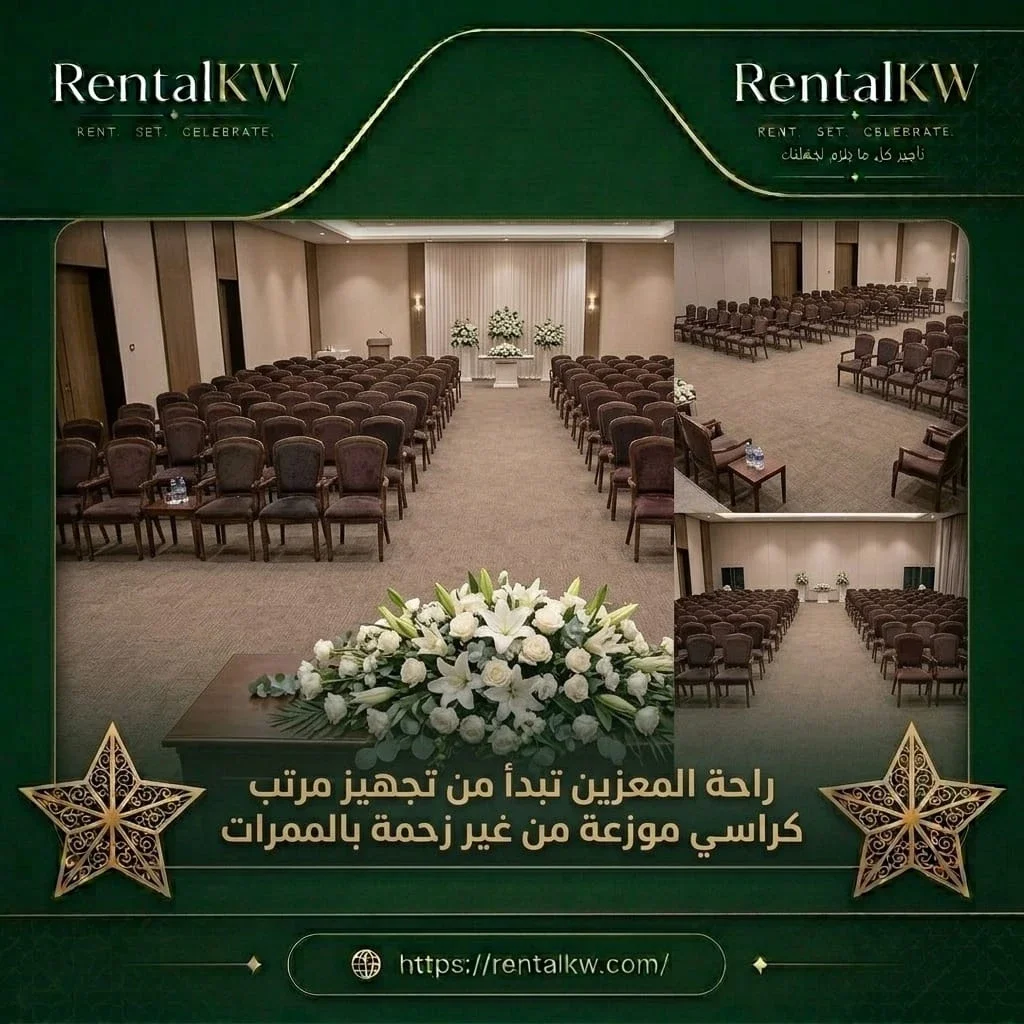
Booking funeral chairs with hospitality tables requires treating the two furniture types as separate functional elements within the gathering. Chairs provide organized seating for mourners while tables serve the hospitality arrangement according to the agreed requirements. Tables should therefore not simply be placed in any available space if their location will interfere with guest movement.
The appropriate location for a hospitality table depends on how the gathering is being used. Some venues may require an organized service point that staff can access easily while placing the table near the entrance in another venue could create congestion for arriving mourners. There is therefore no single table position that works for every gathering.
The number and dimensions of the tables should also reflect the actual available equipment and what will be placed on them. Using a table that is larger than necessary consumes space that could otherwise support circulation while distributing several small tables without a clear plan can fragment the venue and make service routes more complicated.
Renting chairs and tables also does not automatically mean that hospitality supplies staff or other elements are included. The actual quotation should specify what is being provided so furniture rental is not confused with additional services that were never agreed upon.
When choosing funeral chairs with hospitality tables it is preferable to:
• Define the function of every table before placing it inside the gathering so the space it occupies serves an actual hospitality requirement instead of reducing circulation without a clear purpose
• Position hospitality tables where service staff can reach them without repeatedly crossing the main mourner route whenever the venue layout allows so movement remains calmer and more organized
• Select the number and size of tables according to actual use and available equipment rather than distributing many tables simply because empty space is visible during the initial setup
• Maintain practical working space around the hospitality area according to venue conditions so staff can use it without operating directly against seating rows in a disruptive way
• Confirm which items are included in the booking and do not treat serving equipment or hospitality services as automatic parts of table rental unless they are specifically included in the agreement
• Coordinate table locations with chair rows and walkways from the beginning of the planning process instead of adding them after the seating arrangement is finished because late additions may require substantial changes to the gathering layout
Distributing Funeral Chairs Based on Space
Distributing funeral chairs based on space should be based on usable area rather than the venue's total dimensions alone. A location may appear spacious but parts of it may contain the main entrance columns doors fixed equipment or hospitality areas which reduce the area that can realistically be allocated to seating.
There is therefore no precise formula that can determine the correct number of chairs from floor area alone. The dimensions of the actual chair the way rows are arranged the number of walkways the shape of the venue and the entrance and exit points all influence practical seating capacity.
A better method is to identify areas where chairs should not be placed first and then use the remaining space to build seating groups. This is more realistic than filling the venue with chairs and attempting to create walkways afterward.
The venue may also need flexibility to handle changes in attendance throughout the day. When space is limited it can be better to begin with a practical number of chairs and maintain a plan for additional seating when needed rather than making the gathering overcrowded from the start.
When distributing funeral chairs based on space it is preferable to:
• Calculate the usable part of the venue after excluding entrances doors hospitality zones and fixed obstacles rather than treating the entire floor area as available for seating
• Confirm the dimensions of the actual chair type before estimating capacity because differences in chair size and arrangement can change the number of seats that can be used comfortably
• Define primary and secondary walkways before calculating the final chair quantity so the planned number does not later prove impossible once circulation requirements are considered
• Divide seating into groups that suit the venue shape rather than forcing the same number of chairs into every row when columns or doorways make some parts of the location different from others
• Prepare a flexible plan for additional chairs when expected attendance is uncertain instead of filling every available area from the beginning with seats that may never be used
• Review the arrangement physically after setup because measurements support planning while actual movement shows whether people can comfortably reach and move between the seating areas
Complete Funeral Gathering Setup
The concept of a complete funeral gathering setup does not necessarily mean adding the largest possible number of elements. It means coordinating the required elements so they work together from the moment mourners arrive until they leave. The scope of preparation can vary from one gathering to another according to the venue requirements and agreed services so the meaning of complete should be defined before booking.
In the context of seating and chairs integration begins by selecting the appropriate quantity then arranging the seats defining walkways establishing reception points and locating any required tables. If the booking includes additional elements they should be integrated into the plan from the beginning rather than being added after the venue has already become crowded.
Setting priorities is also important. Seating movement and accessibility come before decorative details because the gathering must continue to function calmly as attendance changes. Any item that does not support this purpose or interferes with circulation should have its position reconsidered.
It should also not be assumed that the phrase complete funeral setup represents a fixed list of services offered by every provider. The customer needs to understand exactly what will be supplied and what remains outside the agreement.
When preparing a complete funeral gathering it is preferable to:
• Define a clear list of required elements before booking such as chairs tables and any other available equipment so the meaning of complete setup is connected to the actual needs of the gathering
• Begin by planning seating circulation and reception zones before adding secondary elements because these functions determine whether the venue can be used in an organized manner
• Coordinate the locations of all required elements within one plan instead of arranging the chairs first and then searching for space for other equipment after the venue is already full
• Clearly define the scope of delivery arrangement collection and any other services so the customer does not rely on a general interpretation of complete setup that differs from the actual quotation
• Choose equipment according to the venue and expected attendance rather than copying the layout of another gathering that may have completely different dimensions entrances or usage patterns
• Review the entire gathering before reception begins from the perspective of mourner movement seating and hospitality so any detail that interferes with practical use can be adjusted even if it appears visually acceptable
Funeral Reception Chairs in Kuwait
Choosing funeral reception chairs in Kuwait requires focusing on function quantity and organization more than decorative details. A suitable chair is one that can be integrated into a clear seating arrangement that fits the available space and supports the repeated seating patterns common during condolence gatherings.
The actual chair type available from the rental provider should be confirmed instead of planning around an image or model that has not been verified. If a consistent seating appearance is important it is useful to confirm whether the required quantity can be supplied in the same type before finalizing the rest of the arrangement.
The number of chairs is connected to expected attendance but does not necessarily need to match the total number of people expected throughout the entire day. Mourners arrive and leave continuously and attendance density can change from one period to another. Chair quantity should therefore be considered together with venue capacity and the expected turnover of seating rather than ordering a number that cannot be practically arranged.
Being in Kuwait also does not remove the importance of specific access information. The location entrance conditions and required setup time all help organize delivery and should be communicated during booking.
When choosing funeral reception chairs in Kuwait it is preferable to:
• Confirm the available chair type and the quantity that can actually be supplied before finalizing the gathering layout when visual consistency is an important part of the required arrangement
• Estimate the quantity according to venue capacity and the expected flow of mourners throughout the day rather than matching the chair count to the total number of people expected to attend over the entire condolence period
• Provide clear information about the gathering location access conditions and required completion time so delivery and setup can be planned using practical details
• Choose an arrangement that makes empty seats visible and accessible when mourners enter instead of creating isolated sections where available seating is difficult to identify
• Keep any agreed spare chairs in an organized location and avoid distributing them from the beginning in walkways or areas that do not require additional seating
• Review booking details covering quantity type duration delivery arrangement and collection so the service is clearly defined rather than based on unwritten expectations
Funeral Chair Delivery and Arrangement
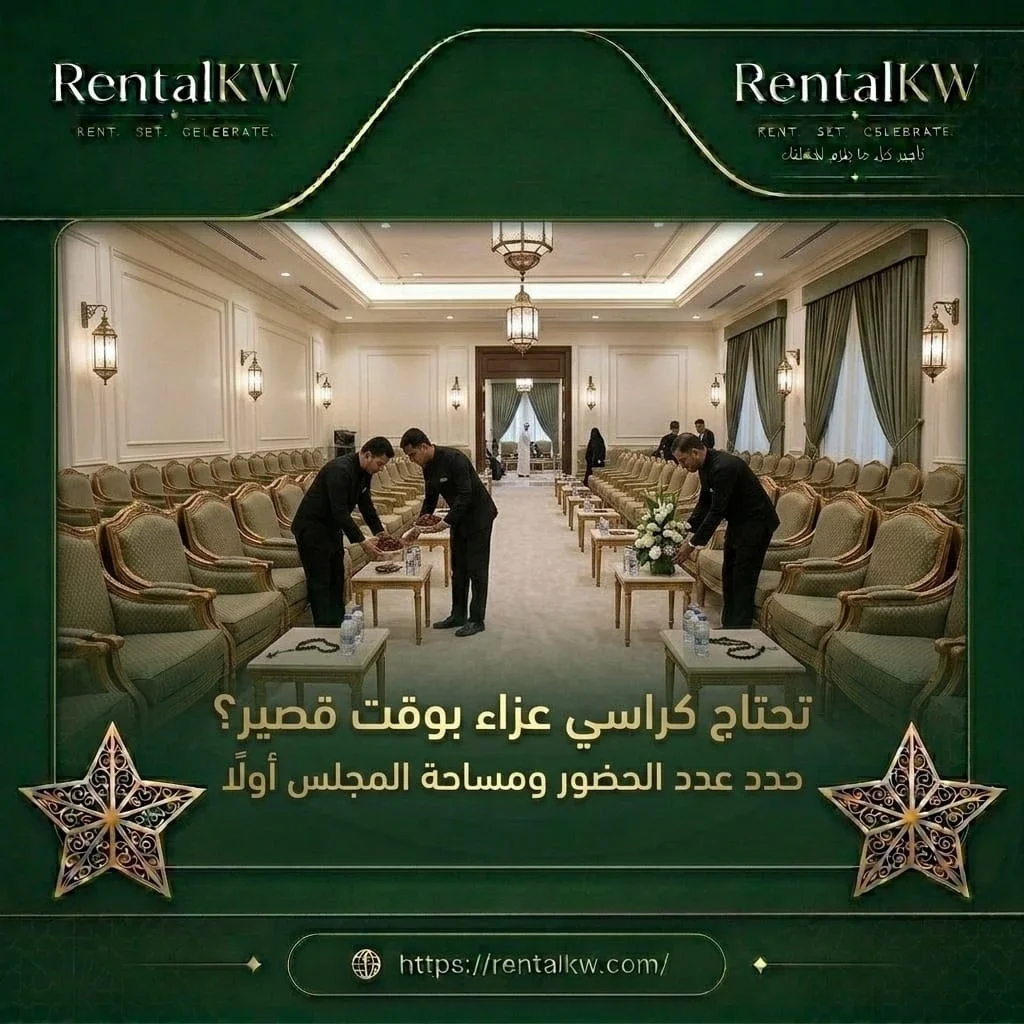
Funeral chair delivery and arrangement requires organized timing because the arrival of the chairs is not the end of preparation but the beginning of the actual seating setup. Delivery should therefore take place with enough time to arrange the chairs review the walkways and make any necessary adjustments before mourners begin arriving.
Accurate access information is important as well. A narrow entrance stairs or a significant distance between the transport vehicle and the actual gathering area can influence how the quantity is brought into the venue and should be considered during coordination.
After the chairs arrive they should be distributed according to a layout suitable for the venue rather than simply unloaded into the nearest available area. Attempting to arrange chairs while mourners are already arriving creates confusion and makes it more difficult to maintain organized rows and circulation routes.
Collection requires separate coordination as well. The time when the chairs are no longer needed should be agreed upon rather than assuming that collection will automatically occur at a particular time.
When requesting funeral chair delivery and arrangement it is preferable to:
• Specify the time by which the gathering must be fully ready rather than providing only the condolence start time so the delivery schedule allows sufficient time for setup and final review
• Explain the nature of the venue entrance and any conditions that may affect moving chairs into the location when booking so unexpected obstacles do not appear after the quantity arrives
• Complete the primary seating arrangement and walkways before mourners arrive whenever possible because attempting to build rows while attendees are present makes organization more difficult
• Review the quantity after delivery according to the agreed procedure and ensure that different chair types are placed in their intended locations if the booking includes more than one seating category
• Agree separately on the collection time and procedure so it is clear when the chairs need to be prepared for removal from the venue
• Keep access to the chairs available during collection and avoid placing other equipment in front of them in a way that makes removing the quantity from the gathering more complicated
Booking Funeral Chairs with Gathering Setup
Booking funeral chairs with gathering setup begins by collecting the correct information before choosing the quantity. It is better to identify the gathering location shape of the available space expected attendance required duration and required readiness time and then discuss available chair types setup options and the scope of arrangement services.
Expected attendance should be treated as an estimate that must be connected to venue capacity. If a large number of people are expected throughout the day this does not necessarily mean that a chair must be placed for every person at the same time because continuous arrival and departure influence the actual number of seats required.
Booking as early as reasonably possible can help clarify chair availability and delivery organization but it does not guarantee a particular type or quantity until those details have actually been confirmed with the provider. Important requirements should therefore be established in the agreement rather than relying only on general conversations or reference images.
When reviewing the price the complete service should be considered. If one quotation includes delivery arrangement and collection while another provides chairs only the two numbers do not represent equivalent services and should not be compared without accounting for those differences.
When booking funeral chairs with gathering setup it is preferable to:
• Provide the venue location rental duration required readiness time and expected attendance from the beginning so the booking is built around information specific to the actual gathering
• Specify whether the requirement is chair rental only or also includes delivery arrangement and preparation of seating areas so the price reflects the service actually needed
• Confirm the available chair type and quantity before approving the final layout and do not assume that every model shown in reference images is available in the required quantity on the booking date
• Connect the number of seats to venue capacity and expected mourner flow rather than selecting the quantity from total attendance throughout the day without considering arrivals and departures
• Review all elements included in the quotation before confirming the booking so available options can be compared according to the complete service rather than the price of each chair alone
• Confirm delivery readiness and collection times together with the person responsible for coordination at the venue so every stage remains clear from the arrival of the chairs until the booking ends
Conclusion
Successful funeral chair rental with seating arrangement and setup is not based only on providing a large number of seats. It depends on turning the available area into a gathering space that can be used calmly and easily. Row arrangement walkway planning hospitality table placement and organized entrance and exit routes all influence the mourner experience more than simply increasing chair quantity.
The most important step is understanding the venue before confirming the number of chairs. Usable space can be smaller than the total area because of entrances doors columns and service zones so there is no single formula that determines the correct seating capacity for every gathering.
When booking it is better to clarify the chair type quantity rental duration delivery arrangement and collection scope together with any other required equipment. The clearer these details are the easier it becomes to prepare the gathering practically and avoid congestion unsuitable quantities or different expectations about what the service actually includes.
Frequently Asked Questions
How do I determine the right number of funeral chairs?
The quantity should be estimated after considering usable space venue shape required walkways chair type and the expected flow of mourners. Relying only on total floor area or total attendance throughout the day can produce a quantity that does not fit the actual layout.
Is chair arrangement included with the rental service?
That depends on the agreed quotation. Some bookings may include delivery and arrangement while others may provide chairs only so the exact service scope should be confirmed before booking.
Is it better to place as many chairs as possible?
No. Increasing the number of seats at the expense of walkways can make the gathering less comfortable and more difficult to use. The better quantity balances seating and movement according to the available space.
Where should hospitality tables be placed?
Their location should be chosen according to the gathering layout circulation routes and hospitality service method. Ideally they should be accessible for service without blocking the entrance main walkway or seating area.
Can additional chairs be added during the condolence period?
This depends on the availability of additional chairs and whether they can be delivered and organized at the venue. If a significant increase in attendance is possible it is better to discuss a spare-chair plan before the gathering begins.
Can a funeral gathering be arranged in a small space?
A smaller area can often be organized more effectively by prioritizing essential functions reducing unnecessary elements and arranging seating while protecting circulation space. The actual chair count still depends on the venue shape dimensions and existing obstacles.
What information is needed when booking funeral chairs?
Useful information includes the location required readiness time booking duration approximate venue dimensions or layout expected attendance preferred chair type and required services such as delivery arrangement and collection.
What is the biggest mistake when arranging a funeral gathering?
One of the most significant mistakes is filling the space with chairs first and attempting to create walkways afterward. It is better to define entrances exits circulation and service areas first and then arrange the seating within the remaining usable space.