
Large-Quantity Condolence Chair Rental
In this article
- Large-Quantity Condolence Chair Rental
- Condolence Gathering Chairs in Kuwait
- Preparing a Condolence Gathering for Large Numbers
- Chairs for Receiving Condolence Visitors in Quantity
- Arranging Condolence Seating Rows
- Condolence Chairs for Halls and Tents
- Rental Service Tables for Condolence Gatherings
- Preparing a Large Condolence Gathering
- Delivering Condolence Chairs in Large Quantities
- Bulk Booking of Condolence Chairs
- Conclusion
- Frequently Asked Questions
When preparing a condolence gathering for a large number of attendees, the challenge is not simply providing enough chairs. It also involves determining the appropriate quantity, arranging seating rows correctly, maintaining clear entrance and exit routes, and supporting the movement of visitors throughout the gathering. This is why large-quantity condolence chair rental requires careful planning based on peak attendance, venue capacity, whether the gathering is held in a hall or tent, and the logistics of delivery and arrangement. From practical experience preparing large condolence gatherings, calculating requirements according to total visitors can lead to unnecessary quantities, while planning according to peak attendance produces a more accurate result. Organizing chairs into clearly defined rows and sections also helps preserve calm movement without overcrowding the venue or filling important circulation areas with unused seats.
Large-Quantity Condolence Chair Rental
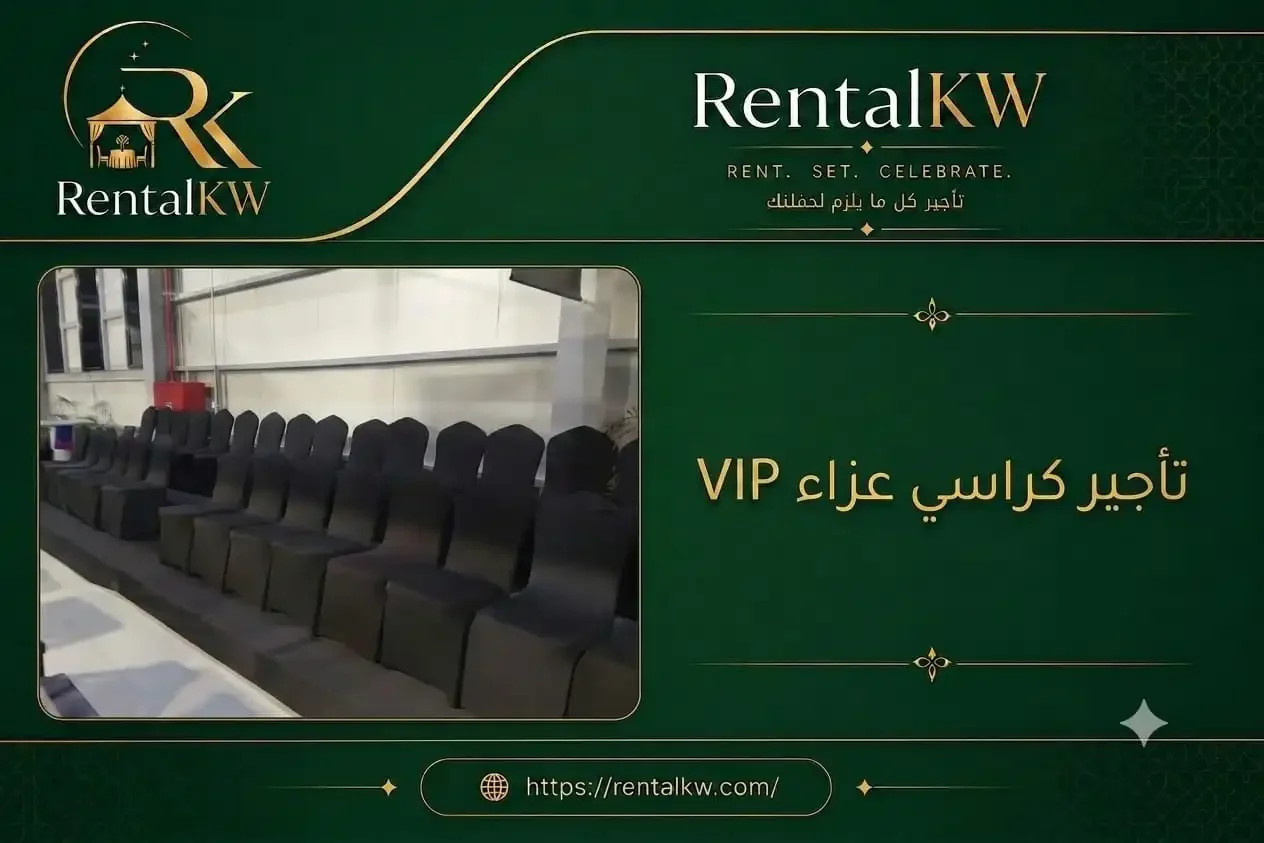
Large-quantity condolence chair rental requires a different approach from ordering several dozen seats for a small gathering because increasing the quantity directly affects transportation, unloading, arrangement, and the temporary storage space required before the chairs are used. When the requirement reaches hundreds of chairs, it becomes necessary to know where every group will be positioned, how the chairs will enter the venue, and when they will be arranged so that the quantity itself does not interfere with preparing the gathering. The first question should therefore not simply be how many chairs can be supplied, but how many chairs the venue can comfortably accommodate at one time.
From practical experience preparing large gatherings, one effective method is to divide the quantity into three clear levels. The first is the main number of chairs positioned before visitors arrive. The second is a nearby reserve quantity that can be added when attendance increases. The third is an additional quantity that should only be requested when attendance expectations genuinely indicate that it may be required. This approach prevents the venue from being filled with unused chairs and preserves circulation space while still allowing the arrangement to respond quickly if attendance rises.
The usable area must also be calculated rather than relying on the venue’s total dimensions. Part of a hall or tent will be needed for entrances, exits, service routes, and potentially service tables, meaning every available meter cannot be used for seating. Attempting to place the maximum possible quantity may appear to provide useful additional capacity, but it can make visitor movement significantly more difficult when the rows become occupied.
When ordering large quantities, review:
• The actual seating capacity after excluding entrances aisles and service areas from the space available for chairs
• Dividing the quantity into primary seating and reserve chairs that can be introduced gradually according to attendance levels
• Allocating a clear storage area for additional chairs where they remain accessible without interfering with visitor movement
• The time required for unloading and arrangement because preparing hundreds of chairs requires different logistics from smaller orders
• The consistency of chair style and condition so noticeable differences do not appear throughout long seating rows
• The collection process after use so the removal stage is organized as carefully as the original delivery
Condolence Gathering Chairs in Kuwait
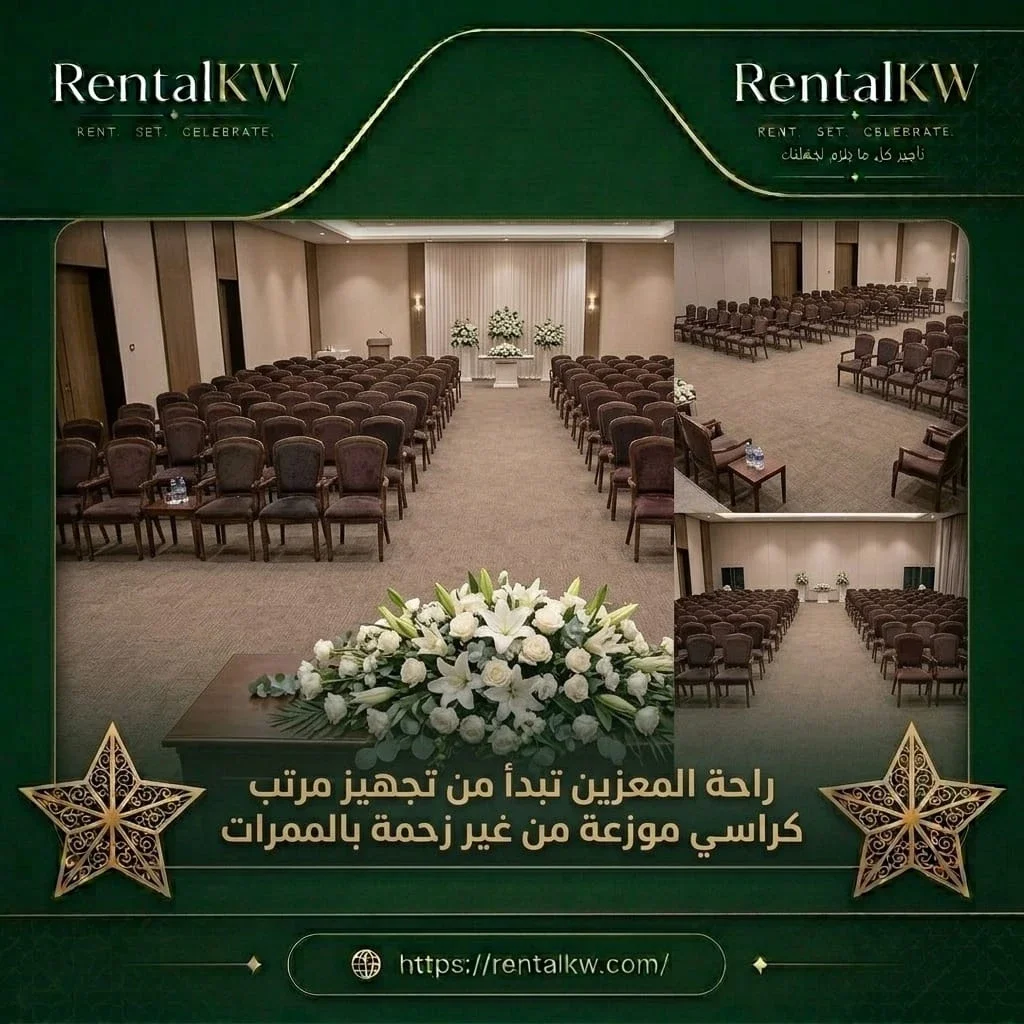
Choosing condolence gathering chairs in Kuwait should not depend on appearance alone because the seats may remain in continuous use for many hours and across several reception periods during the day. Chairs should therefore combine easy arrangement, consistent appearance, reliable stability, and reasonable comfort for visitors. These considerations become particularly important in large gatherings because even a small issue becomes significant when repeated across hundreds of seats.
From a practical perspective, the way rows will be formed should be considered before choosing the chair type. Some chairs can be positioned in organized rows while maintaining comfortable spacing, whereas other designs require more room around each seat. This difference directly affects the actual capacity of the gathering. Chairs should also be easy to move because the seating layout may need adjustments during the day when attendance rises or an additional circulation route needs to be opened.
Consistency becomes even more important when preparing a large gathering. If chairs have noticeably different shades, heights, or conditions, the seating rows can appear disorganized even when the required quantity has been supplied. Providing a matching collection is therefore generally better than combining several chair types simply to reach the required number.
When choosing chairs for a condolence gathering, consider:
• Chair stability and suitability for repeated use during long reception periods rather than evaluating appearance alone
• The ability to create straight consistent rows while maintaining comfortable spacing between seated visitors
• How easily chairs can be added to or removed from rows if attendance changes during the gathering
• The condition cleanliness and visual consistency of the chairs when the seating arrangement is viewed as one complete unit
• Chair dimensions and how they affect the total number of seats that can fit without overcrowding the venue
• The availability of matching reserve chairs so additional seating does not introduce noticeable differences
Preparing a Condolence Gathering for Large Numbers
Preparing a condolence gathering for large numbers requires as much attention to human movement as to the number of chairs because the main challenge in a large gathering often appears during entry, exit, and seat turnover rather than only when every chair is occupied. The seating plan should therefore be built around clear circulation routes that allow visitors to reach and leave seats without cutting through rows or creating congestion around doorways.
From practical experience preparing larger gatherings, dividing the venue into seating sections can significantly improve movement. Instead of creating one continuous block of chairs, seats can be arranged in groups separated by clear aisles. This makes internal rows easier to reach and allows chairs to be added or removed without rearranging the entire gathering. This flexibility becomes particularly useful when attendance changes rapidly between different periods.
Planning should also account for unexpected increases in attendance. Having reserve chairs alone is not enough if there is no defined area where they can be placed when required. A suitable expansion section can be prepared in advance and opened when attendance rises, then returned to its original function when numbers decrease. This makes flexibility part of the original setup rather than relying on improvised solutions during crowded periods.
When preparing a gathering for large numbers, determine:
• Entrance and exit routes before designing seating rows so chairs do not later become obstacles to movement
• Dividing the gathering into seating sections instead of creating one large block with difficult-to-reach internal rows
• Longitudinal and cross aisles that allow visitors to reach their seats without passing in front of large numbers of seated people
• An area that can be used for temporary expansion during peak attendance
• Reserve seating locations close enough to allow chairs to be added quickly without disrupting the gathering
• Reviewing the layout under realistic conditions after some rows are occupied rather than evaluating it only while the venue is empty
Chairs for Receiving Condolence Visitors in Quantity
Chairs for receiving condolence visitors in quantity require different planning from the seating inside the main gathering because reception areas experience continuous movement and visitors do not necessarily remain seated there for the same amount of time. The objective is therefore to provide enough seating near the entrance without turning the arrival area into a crowded section that obstructs people entering or leaving.
From practical experience preparing large condolence gatherings, a recurring mistake is placing too many chairs near the entrance simply to prepare for a possible increase in attendance. This can consume the most important circulation space. A better approach is to position a suitable primary quantity and keep additional chairs nearby so they can be introduced when genuinely required.
The direction of movement must also be considered. If visitors enter through one door and leave through another, seating can be arranged along one side or in areas that do not intersect with circulation. If the same entrance is used for both arrival and departure, preserving an open area immediately in front of the doorway becomes even more important.
When preparing reception chairs in quantity, review:
• The number of people expected to remain in the reception area simultaneously rather than the total number of visitors to the gathering
• The space that must remain clear in front of doors to maintain comfortable and organized movement
• Chair locations in relation to the direction in which visitors enter and leave
• A nearby reserve quantity that can be added if attendance increases without overcrowding the entrance from the beginning
• How easily chairs can be moved if circulation routes need to be adjusted during the gathering
• Keeping the reception seating area distinct from the main seating section so guest movement remains clear
Arranging Condolence Seating Rows
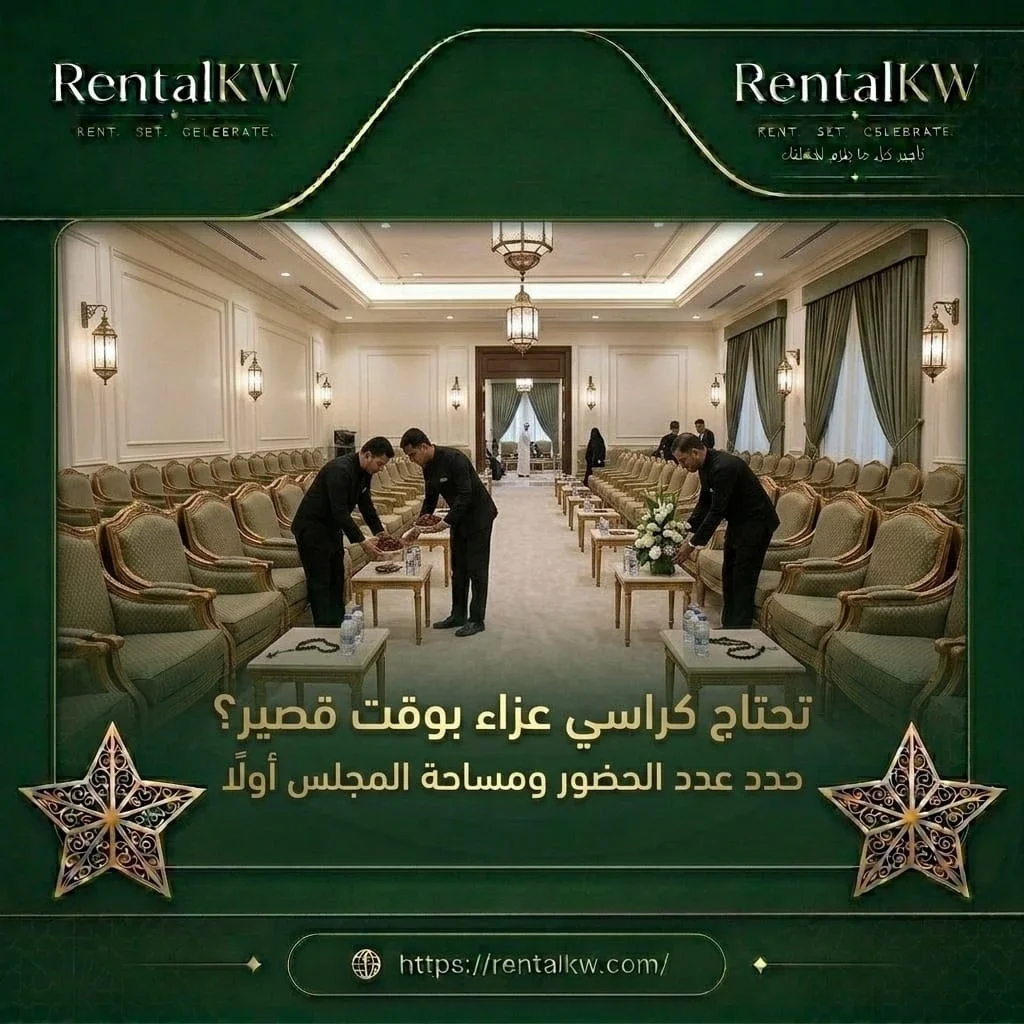
Arranging condolence seating rows requires greater precision than it may initially appear because one poorly aligned row can affect the neighboring aisle and change circulation space throughout the entire gathering. The direction, length, and spacing of the rows should therefore be determined before the chairs are placed in their final positions.
From practical experience, extremely long rows can be less comfortable than shorter groups separated by cross aisles. When someone seated in the middle of a long row needs to leave, many other people may need to move. Dividing rows reduces this disruption and makes internal seating easier to reach.
Visual alignment also matters because disorder becomes immediately noticeable in a large gathering. Parallel rows with consistent spacing create an organized appearance even when hundreds of chairs are present, while small variations in direction can make the venue appear less carefully prepared.
When arranging seating rows, consider:
• The length of each row and the number of chairs it can accommodate without making it difficult for someone in the middle to leave
• Cross aisles between groups of rows to improve circulation throughout the gathering
• The forward spacing between one row and the next to preserve comfortable seating
• Consistent chair direction and alignment with the main axes of the venue
• Clear passage points near doors and primary circulation routes
• A final review after arrangement to ensure later adjustments have not affected surrounding spaces
Condolence Chairs for Halls and Tents
Preparing condolence chairs for halls and tents requires different approaches because each type of venue creates its own seating conditions. A hall usually has fixed boundaries, doors, and established circulation routes, while a tent may offer greater flexibility in layout but requires consideration of structural supports, entrances, cooling equipment, and lighting positions.
From a practical perspective, halls require the seating arrangement to respect existing entrances and exits. Rows cannot simply be extended because an area appears empty if doing so interferes with circulation. A tent may allow seating sections to be distributed more flexibly, but structural elements and service areas must still be incorporated into the plan.
Temperature and ventilation can also influence seating positions inside tents. If certain areas are more exposed to airflow or located directly beside cooling equipment, those sections should not automatically be filled with the maximum possible number of chairs.
When preparing seating for halls and tents, review:
• The characteristics of the venue and whether its boundaries are fixed or allow flexible seating distribution
• Door structural support cooling equipment and lighting locations
• The actual seating capacity after preserving necessary circulation routes
• The ability to expand or reduce seating if attendance changes
• Chair distribution that maintains comfort in areas affected by airflow or temperature differences
• Whether the selected chair type is suitable for the flooring and available space
Rental Service Tables for Condolence Gatherings
Rental service tables for condolence gatherings are used for specific operational purposes such as holding hospitality supplies or organizing service points, which means their quantity should not be determined randomly. A table without a clear function occupies space that could otherwise support movement or seating.
From practical preparation experience, service tables usually work best when positioned close to staff circulation routes and away from the main entrance and visitor pathways. This reduces interference between hospitality service and guest movement while allowing staff to access supplies more efficiently.
Table dimensions should also reflect their intended use. A larger table is not automatically better when the venue has limited space. In some situations, two smaller tables positioned strategically can perform more effectively than one large table that consumes an important section of a circulation route.
When choosing service tables, review:
• The specific purpose of every table within the gathering
• Its location in relation to staff and visitor movement
• The dimensions required according to the items that will be placed on it
• The actual number of tables required without adding pieces that will remain unused
• Ease of access without crossing the primary seating areas
• The effect of each table on aisle width and the space available for chairs
Preparing a Large Condolence Gathering
Preparing a large condolence gathering requires more than increasing the number of chairs because a wide venue needs clear division to prevent seating from becoming scattered and movement from becoming disorganized. If chairs are distributed randomly, some areas may appear empty while others become overcrowded even when the overall number of seats is technically sufficient.
From practical experience, dividing a large gathering into primary and secondary areas helps control seating density. The main section can be filled first, while additional areas are opened gradually if attendance increases. This allows the venue to remain visually organized at every stage rather than requiring the entire available space to be occupied from the beginning.
The distance between service points and seating areas should also be considered. In a large gathering, operational movement becomes an important part of planning, so tables and circulation routes should be positioned to reduce unnecessary travel across the venue.
When preparing a large gathering, consider:
• Dividing the available area into sections that can be activated gradually according to attendance
• Establishing a clearly defined main seating area rather than spreading chairs throughout the venue from the beginning
• Creating circulation routes that connect different seating sections directly
• Positioning service points where they can support multiple areas without obstructing visitor movement
• Preserving an area that can accommodate additional seating when required
• Reviewing seating density within each section rather than evaluating only the total number of chairs
Delivering Condolence Chairs in Large Quantities
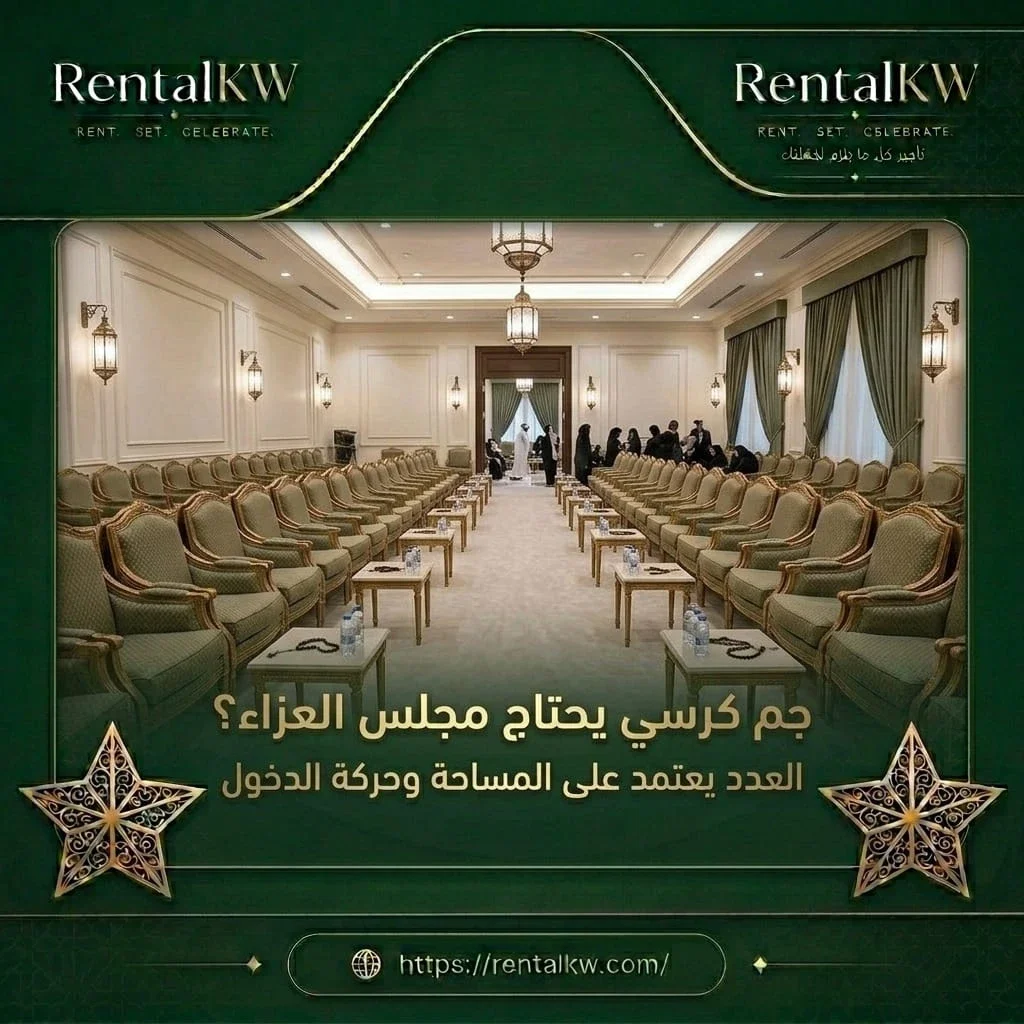
Delivering condolence chairs in large quantities requires logistical planning because transporting hundreds of chairs differs significantly from delivering a small order in terms of vehicle capacity, unloading time, distance to the gathering area, and the method used to move the chairs into the venue.
From a practical perspective, the transport vehicle’s stopping point and its distance from the seating area should be identified in advance. A location may appear easily accessible from outside while still requiring chairs to be carried over a long internal distance or through narrow doors. These conditions increase preparation time. Delivery should also be coordinated with the team responsible for arranging the chairs so large quantities do not accumulate around the entrance before distribution begins.
For larger venues, unloading can be divided according to seating sections. Bringing the entire quantity to one point and then redistributing it internally consumes additional time. Separating the load during unloading can make preparation faster and more organized.
When organizing delivery, review:
• The total quantity and transportation capacity required for the complete load
• The vehicle access point and distance from the actual seating area
• Whether chairs can pass comfortably through the available doors and corridors
• Delivery timing and whether it matches the planned preparation schedule
• Dividing the quantity according to seating sections to reduce unnecessary internal movement
• Collection and removal arrangements after the chairs are no longer required
Bulk Booking of Condolence Chairs
Bulk booking of condolence chairs requires an accurate estimate of the expected quantity while preserving reasonable flexibility. A large booking made too early without a clear venue plan may result in unnecessary chairs, while booking too late may reduce the availability of a matching quantity in the required style.
From practical experience, the better approach is to establish the main quantity according to expected peak attendance and then add a reasonable reserve instead of simply booking the largest possible number. The chairs should also be checked for consistency in style and condition because combining several visibly different collections can weaken the overall organization of the gathering.
The agreement should clearly explain delivery, arrangement, and collection responsibilities. A bulk booking does not automatically mean all these services are included, so the full scope and cost should be understood before confirmation.
When making a bulk booking, confirm:
• The primary seating quantity and reserve quantity as separate figures
• The availability of a consistent collection in the same chair type
• Delivery arrangement and collection dates and times
• Whether the quantity can be adjusted before execution under clearly defined conditions
• The services included in the agreed price and any services charged separately
• The process for handling an unexpected increase in the required number of chairs
Conclusion
Successful large-quantity condolence chair rental depends on accurately managing quantity, space, and movement rather than simply supplying hundreds of seats. A large quantity is useful only when the venue can genuinely accommodate it and when the chairs are distributed in a way that preserves circulation routes and allows visitors to enter and leave comfortably.
The most effective planning begins with peak attendance rather than the total number of visitors expected throughout the day. The chairs can then be divided into a primary quantity and a reserve quantity, while the gathering itself is divided into sections that can be opened according to actual demand. This approach provides greater flexibility and prevents the venue from being filled with unused seating.
Row arrangement also requires careful planning to reduce disruption during movement. Dividing excessively long rows and preserving longitudinal and cross aisles makes internal seats easier to reach and reduces the number of people who need to move when a visitor enters or leaves.
Delivery remains an essential part of successful preparation. Transporting large quantities requires advance coordination with the venue and the arrangement team so chairs do not accumulate at the entrance and the gathering can be prepared within the required timeframe.
Ultimately, the best booking balances expected attendance with the venue’s actual seating capacity while providing consistent chairs and clearly defined delivery and arrangement services. This creates a gathering that can receive large numbers in an organized and comfortable way without unnecessary congestion or excessive quantities.
Frequently Asked Questions
How do I determine the number of condolence chairs for a large gathering?
Begin by estimating the highest number of visitors expected to be present at the same time and then add a reasonable reserve quantity. It is usually less accurate to calculate requirements according to the total number of visitors expected throughout the entire day because people arrive and leave at different times.
Is it better to place all the chairs from the beginning?
Not always. For larger gatherings, it can be more effective to prepare the main seating quantity and keep some reserve chairs nearby so they can be added when required without overcrowding the venue from the beginning.
How should seating rows be arranged in a large condolence gathering?
Rows can be divided into groups separated by longitudinal and cross aisles instead of creating extremely long uninterrupted rows. This makes internal seats easier to reach and provides more comfortable movement for visitors entering and leaving.
Is chair preparation different between a hall and a tent?
Yes. A hall has fixed boundaries and entrances, while a tent may offer more flexible arrangements but requires attention to structural supports, cooling equipment, lighting, and entrance locations. The seating plan should therefore be adapted to the specific venue.
Are service tables necessary in every condolence gathering?
Not necessarily. Their quantity depends on hospitality and operational requirements. It is generally better to use a limited number in carefully selected locations rather than filling circulation areas with unnecessary tables.
Can the number of chairs be changed after booking?
That depends on the agreement and the availability of additional matching chairs. For large orders, it is useful to understand the quantity adjustment policy before confirming the booking.
What is most important when delivering large quantities of chairs?
Coordinating the arrival time, unloading point, and distribution of the load across different seating sections can reduce preparation time and prevent chairs from accumulating around the entrance. Delivery should also be coordinated with the arrangement team.
What is the difference between bulk chair booking and a small order?
Bulk booking requires more detailed planning for transportation, temporary storage, arrangement, and collection. Chair consistency and the venue’s actual seating capacity also become increasingly important as the quantity grows.