
Table and Chair Rental for Large Events
In this article
- Bulk Chair and Table Rental
- Setting Up Events for Large Guest Numbers
- Napoleon Chairs in Large Quantities
- Tiffany Chairs for Large Events
- Round Tables in Large Quantities
- Rectangular Tables for Events
- Buffet Tables for Large Events
- Seating Setup for 100 Guests
- Seating Setup for 200 Guests
- Booking Chairs and Tables in Large Quantities
- Conclusion
- Frequently Asked Questions
When we talk about preparing an event that welcomes a large number of guests, the task does not stop at providing one hundred or two hundred chairs and a suitable number of tables. The real challenge is making sure the full quantity arrives with consistent specifications and is distributed efficiently without blocking walkways or creating noticeable differences between pieces. From practical experience with large-event setups, problems often begin with an approximate order and later appear as missing seats, mismatched tables, or a layout that restricts guest movement and service operations. For that reason, bulk furniture rental should be treated as an organized operational process that begins with accurate counting and zoning, continues with selecting the right types and dimensions, and ends with a complete inspection before guests enter the venue.
Bulk Chair and Table Rental

Bulk chair and table rental requires a completely different approach from ordering a limited number of pieces for a small family gathering. When the order reaches dozens of tables and hundreds of chairs, consistency and organization become just as important as having enough furniture available. Having 200 chairs does not achieve the intended result if some are different in color, height, or finish because those differences become highly visible when the chairs are arranged in long rows or placed around neighboring tables.
The first correct step is to determine the quantity required for each area separately instead of providing only one overall number. The main hall may require a certain number of chairs, while the reception area may need a different style, and service or buffet tables should not be counted as guest tables. Dividing the order in this way reduces mistakes and helps the installation team immediately understand where each group should go when it arrives at the venue.
The actual condition of the furniture is also extremely important. With large quantities, some pieces with scratches, instability, or slight color differences may go unnoticed if they are not inspected before loading. An organized rental company therefore does not focus on numbers alone but also checks cleanliness, stability, and the condition of the furniture before it leaves for the event.
From an operational perspective, unloading must also be planned. A large truck arriving with furniture without a clear unloading route or organized grouping can quickly congest the site and force workers to move the same pieces several times. A better approach is to arrange the load so that the furniture needed first can be accessed easily.
Pricing usually varies according to chair and table type, quantity, rental duration, event location, transportation, installation, dismantling, and whether the order includes tablecloths, covers, cushions, or additional styling. Comparing only the price per item therefore does not reveal the real total cost of the service.
When ordering chairs and tables in large quantities, it is preferable to:
• Divide the quantity according to event zones such as reception seating buffet and stage areas instead of providing one overall number that makes furniture distribution slower and more vulnerable to mistakes
• Keep chair models heights and colors as consistent as possible because small differences become obvious when pieces are repeated across long rows or around neighboring tables
• Inspect chairs and tables before loading to confirm that legs are stable surfaces are clean and there are no cracks scratches or defects that could affect the appearance of the event or guest comfort
• Determine a limited and carefully planned reserve quantity that can be used if the seating layout changes or a piece needs replacement without filling the venue with unnecessary extra furniture
• Coordinate truck arrival times with the readiness of the hall or tent so large quantities of furniture are not left stacked in walkways before installation can begin
• Request a quotation that clearly includes transportation installation dismantling and accessories alongside the rental price so the full service cost can be compared rather than only the price of each chair or table
Setting Up Events for Large Guest Numbers
Setting up events for large guest numbers requires treating furniture as part of the event's movement and operational flow rather than simply as objects used to fill the venue. At a small gathering, moving one chair or repositioning a table can be done within minutes without affecting the entire layout. At a large event, however, changing a single row after setup has been completed may require repositioning dozens of chairs, moving several tables, and disrupting service routes.
For that reason, proper planning begins by dividing the venue into clearly defined functional zones. There may be a reception area, a main seating area, a food or buffet section, hospitality-service routes, and space for a stage or screen. Once these functions are defined, furniture requirements can be calculated for each area rather than bringing in all the pieces first and then trying to find enough space for walkways.
One practical problem that appears frequently is arranging tables first and then adding chairs without checking the required spacing. Areas may look perfectly acceptable while empty but become too tight after guests sit down and pull their chairs backward. The space should therefore be evaluated under realistic conditions of use rather than when every chair is pushed fully underneath the table.
Installation timing is also important. If the decor or sound team enters before the furniture layout has been finalized, electrical points or circulation routes may later need to change. The opposite problem can happen as well because placing tables over equipment positions or cable routes can force technical teams to repeat their work.
A large event also needs one clearly identified person responsible for approving the final layout. Multiple opinions during the final hour without a single reference point can cause every small adjustment to trigger a series of changes elsewhere.
When setting up events for large guest numbers, it is preferable to:
• Prepare a final plan showing the number of tables and chairs in every zone before unloading begins so the team knows exactly where each group belongs instead of relying on last-minute decisions during installation
• Calculate available space after chairs are pulled into their real seating position because tables that appear far apart while empty may become uncomfortably close once guests are seated
• Leave clear hospitality-service routes from the beginning so staff do not have to move between guests' backs or reposition chairs while serving food and drinks
• Coordinate the installation sequence with lighting sound and decor teams so no supplier has to move large quantities of furniture simply to reach an electrical point or install a technical or decorative element
• Assign one person to approve final seating-layout adjustments because multiple decision-makers at a large venue can quickly create differences between the approved plan and actual execution
• Conduct a complete inspection after installation covering row alignment table stability walkway clearance and chair condition rather than simply counting the pieces and confirming that the full quantity arrived
Napoleon Chairs in Large Quantities
Choosing Napoleon chairs in large quantities works well for many weddings and formal events because of their distinctive appearance and their ability to create visually coordinated rows or table arrangements. However, when large numbers are used, the real challenge becomes maintaining consistent chair condition rather than simply selecting the model.
Napoleon chairs include visible details in the backrest and frame, so differences in paint color, scratches, or cushion shades become obvious when dozens of pieces are placed together. A client may not notice these details when viewing one chair on its own, but the visual effect changes completely when one hundred chairs are arranged under venue lighting and photographed together.
Comfort and actual use should also be considered. Some events last for several hours, so chair stability and seat quality should be checked rather than focusing only on appearance. Flooring also affects stability because some venues may require closer inspection of chair bases when the floor is uneven or when seating is installed over a temporary platform.
In large layouts, Napoleon chairs can be placed around tables or arranged in rows, but the planning requirements differ. Around tables, the width of each chair and the space needed to pull it backward must be considered so it does not interfere with the chair behind it. In rows, alignment and spacing need careful control because even a slight deviation becomes noticeable when repeated dozens of times.
From a cost perspective, large orders may be priced according to quantity, rental duration, transportation, installation, cushion type, and any additional features requested. The lowest chair price is not necessarily the best option if the overall condition is inconsistent or replacement support during setup is weak.
When ordering Napoleon chairs in large quantities, it is important to:
• Inspect a sample from the same batch that will actually be supplied for the event instead of relying on an older photograph because paint and cushion condition can differ between storage groups
• Confirm that the frame and cushion colors are consistent throughout the required quantity so lighter or darker sections do not appear within rows or around tables when photographed
• Calculate the space needed to pull chairs backward when they are used around tables instead of positioning them tightly while unused and discovering restricted movement after guests sit down
• Check the stability of legs and seats throughout the group because small defects that may seem insignificant in one piece become a larger issue when repeated across a high number of chairs
• Arrange chairs using clear alignment references when creating long rows so the overall view remains organized from the entrance and photography stage rather than looking correct only from the front
• Agree on a reserve quantity from the same model and color batch so any chair that needs replacement can be exchanged without introducing a visibly different chair into the seating arrangement
Tiffany Chairs for Large Events
Tiffany chairs for large events require particular attention to visual consistency because this chair style is highly visible in group photographs and table arrangements. When dozens or hundreds of pieces are used, the frame color, cushion style, paint condition, and arrangement all become part of the event decor rather than minor furniture details.
Choosing between Tiffany and Napoleon chairs should not be based on the name alone. Similar-looking designs are available in the market, and specific details may vary according to the model and supplier, so it is better to inspect the actual chair that will be supplied. The decision should also consider the event theme, tables, linens, and flowers because a chair that looks elegant on its own may not be the best match once combined with the rest of the decor.
At large events, the quality of the entire batch matters more than the beauty of one individual sample. If some chairs are older or slightly different in color, visibly inconsistent groups can appear when they are distributed around tables. Furniture should therefore be sorted before transportation, with similar pieces grouped appropriately when necessary rather than discovering inconsistencies after styling is complete.
From an operational perspective, chairs should not be crowded around a table simply to reach a target number. Seat width, guest movement, and the space needed to pull each chair backward all influence the practical number that can be positioned around a table. Adding one extra chair in an unsuitable location may make the entire seating group less comfortable.
Accessories also affect the final cost. Changing cushions or adding individual decorations, ties, fabrics, or other details to each chair can significantly increase installation time and cost when the same addition is repeated across hundreds of pieces.
When using Tiffany chairs at a large event, it is preferable to:
• Inspect the actual model frame color and cushion before confirming the quantity because the commercial name alone does not guarantee that the appearance will match the design used to plan the event decor
• Sort chairs according to visual condition before sending them to the venue so a very new piece is not positioned next to another with clearly different paint or visible wear
• Test the proposed number around one real table using the actual dimensions before repeating the layout throughout the venue so seating comfort pulling space and movement can be confirmed
• Calculate the time required when chairs will include decorations ribbons or individual accessories because applying one small detail to two hundred chairs is very different from applying it to twenty
• Coordinate the chair color with linens flowers and the actual venue lighting because white gold or transparent finishes may appear different under different lighting temperatures
• Keep matching reserve pieces away from the main visual area so any chair can be replaced when necessary without introducing a different model or cushion into the arrangement
Round Tables in Large Quantities

Round tables in large quantities are useful for creating social seating groups that allow guests to communicate comfortably, but using them at a large event requires calculations that go beyond the number of people seated at each table. Table diameter, chair dimensions, pull-back space, and the surrounding circulation area all determine the true footprint of each seating group.
A common mistake is calculating only the tabletop area and positioning circles too close together. Once guests arrive and pull their chairs backward, the space that appeared sufficient on the plan disappears, making movement between tables difficult for both guests and service staff. Each table should therefore be treated as a complete unit that includes chairs and the circulation zone around them.
The number of guests assigned to a table should not be increased simply to reduce the number of tables being rented. Practical capacity depends on table diameter, chair width, the size of place settings, and the centerpiece. A large floral arrangement or extensive table setting can noticeably reduce the usable surface.
At large events, table numbering can also help organize both guest seating and service. The number is not only a guide for invitees but an operational tool because hospitality staff can identify service locations and manage requests more efficiently when the venue map is clear.
The tables themselves should also be checked for stability before linens are installed. One unstable table in a large hall may not be noticed during setup, but it becomes an immediate problem once plates, glasses, and beverages are placed on it.
When renting round tables in large quantities, it is preferable to:
• Confirm the actual diameter of each table and relate it to the chair type instead of assuming a fixed number of seats around every table regardless of dimensions
• Calculate the circulation circle around the entire seating group rather than the tabletop area alone so walkways remain usable after guests sit down and pull their chairs backward
• Test one complete table setting including plates flowers and hospitality items before approving the number of seats because items placed on the surface affect practical comfort
• Number tables and connect them to a clear floor plan at organized events so guests and service teams can reach every group without searching randomly
• Check base stability and surface level before installing linens because correcting an unstable table after decor and place settings are complete becomes slower and more disruptive
• Arrange tables so they do not create dead-end routes or extremely narrow gaps between circular groups because visual symmetry should support movement rather than compromise it
Rectangular Tables for Events
Rectangular tables for events provide a different kind of flexibility from round tables because they can create long rows, parallel arrangements, meeting tables, or linear dining areas. However, this flexibility can become a problem when many tables are connected without considering crossing points and access to seats.
Rectangular tables can use long spaces efficiently and may work well for formal functions, banquets, or meetings, but their arrangement should follow the purpose of the event. Creating an extremely long table may produce a strong visual effect in photographs, yet it can make access to the center and hospitality service around it more difficult.
When several rows are used, chair movement on both sides must be considered. The distance between two tables should not be measured while their edges are empty but after chairs are added and occupied. Placing chairs at the ends of tables can also affect circulation at cross aisles.
Rectangular tables can also be used for registration, displays, or service operations, but guest tables and operational tables should be listed separately so the setup plan remains clear to the installation team.
When comparing rectangular and round tables, neither is automatically better. Round tables may encourage communication within groups, while rectangular tables may use certain venue shapes more efficiently. The correct decision depends on the location, event type, and intended seating experience.
When using rectangular tables for events, it is preferable to:
• Define the function of each group before selecting the connection pattern because a long dining table requires a different layout from conference registration or product-display tables
• Create crossing points between long rows instead of building one continuous line that forces guests and staff to walk all the way to the end before reaching the opposite side
• Include chairs positioned at table ends when calculating aisle space because a chair at the head of the table may affect circulation width more than the empty layout suggests
• Compare table direction with the shape of the venue and choose the orientation that improves access and visibility rather than arranging everything according to room length alone
• Keep connected tables at a consistent height and align their surfaces when they are intended to function as one long table so joins do not appear uneven underneath the linens
• Separate operational registration and service tables from guest tables in the equipment list so a dining table does not have to be removed at the last minute to cover a function that was never included in the original count
Buffet Tables for Large Events
Buffet tables for large events should not be treated simply as long surfaces for placing food because the buffet area is one of the locations where many guests may gather at the same time. Its design affects service speed, movement direction, and the ability to organize serving equipment, plates, and beverages efficiently.
At large events, creating one very long buffet station may be less efficient than dividing service into several stations depending on the food style, guest numbers, and venue layout. There is no fixed rule because the decision should reflect how food is served and how the venue operates. The objective is to prevent one queue from blocking a main walkway or extending into the seating area.
The area behind the buffet also needs attention. Staff require enough working room to replenish food, move equipment, and remove used items. If buffet tables are pushed directly against a wall without considering service procedures, access to some equipment may become difficult.
Table height, stability, and suitability for the intended load are also important, especially when serving equipment or large containers are used. Any heated or electrical equipment should be operated according to its instructions and applicable safety requirements, and the table should not be loaded beyond what its design can safely support.
Lighting and decor are important, but they should not obstruct access to food or hide menu labels. In a successful buffet, practical use comes first and visual styling is then built around it.
When preparing buffet tables for a large event, it is important to:
• Estimate how guests will approach and leave the food area before positioning tables so queues do not intersect with the venue entrance or main seating walkway
• Consider dividing the buffet into multiple stations when doing so helps distribute demand instead of assuming that one long table is automatically the best solution for every large event
• Provide suitable working space behind the buffet for hospitality staff so food can be replenished and equipment removed without workers moving through the guest queue
• Select stable tables suitable for the equipment placed on them while following operating instructions for any warming devices or electrical equipment used as part of the service
• Arrange plates serving utensils and beverages in a logical sequence that reduces the need for guests to move backward against the direction of the queue and makes buffet circulation smoother
• Position decor flowers and signage so they enhance the appearance of the buffet without occupying essential working space or hiding food and information guests need to see
Seating Setup for 100 Guests
Seating setup for 100 guests is different from simply ordering one hundred chairs because the final requirement is affected by the invitation format, seating arrangement, table distribution, children, VIP guests, and any separate seating areas. The objective is for every guest to have a suitable place within a clear plan rather than merely making the chair count equal to the number of names.
If the event uses assigned tables, it is useful to distribute invitees before the event day whenever possible. This reveals overcrowded tables or groups that need adjustment before the problem appears while guests are entering.
For events without assigned seats, the layout should remain flexible but organized. Leaving every chair completely unstructured can result in isolated empty seats between groups while newly arriving guests struggle to find enough seats together.
Keeping reserve chairs does not mean adding an unnecessary full row. A limited number can be stored in a nearby area and introduced only if genuinely needed while maintaining the appearance of the main seating arrangement.
Some seats should also be reviewed from the perspective of visibility when the event includes a stage or screen. A chair may exist in the numerical count but still provide a poor experience if it is positioned behind decor or technical equipment.
When preparing seating for one hundred guests, it is preferable to:
• Create an initial guest distribution when tables are assigned so unbalanced groups can be identified before the final installation stage
• Review seats according to visibility and access rather than numbers alone because a chair behind a column or at the end of a congested route is not necessarily a good seating position
• Arrange groups in a way that reduces isolated unused seats when seating is open because scattered single gaps can reduce practical capacity
• Keep a limited number of reserve chairs in a nearby accessible location instead of weakening the venue appearance with many unnecessary empty seats
• Match the final quantity with any changes to the guest list before loading so the order is not based on an outdated number after invitations have been added or cancelled
• Inspect all one hundred seats after arrangement for cleanliness stability and alignment because having the correct total does not compensate for a group of chairs that are not ready for use
Seating Setup for 200 Guests
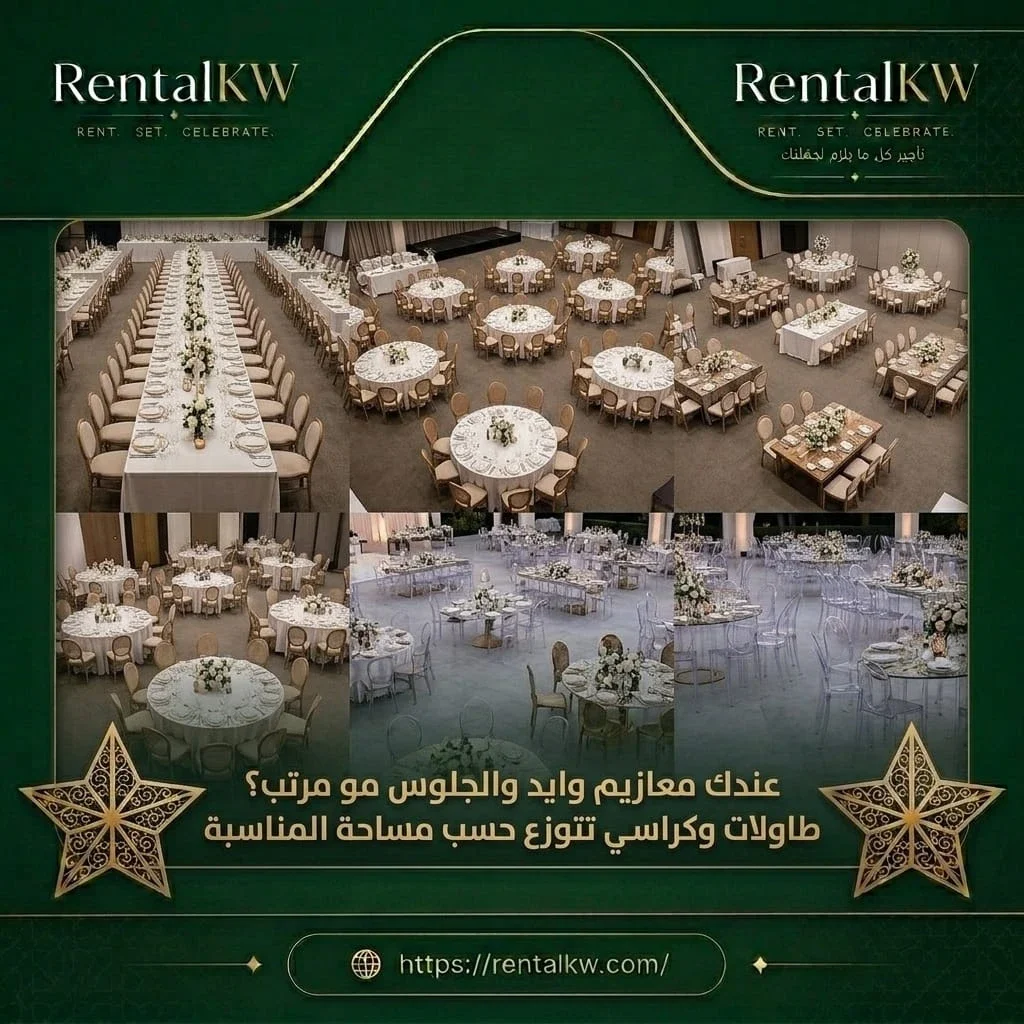
With seating setup for 200 guests, organization becomes even more important because every small layout mistake is repeated on a larger scale. A slight difference in row spacing or one additional chair around every table can develop into a significant problem when repeated across dozens of groups.
At this event size, dividing seating into clearly identifiable sections or groups is useful. The division may be based on table numbers, areas of the venue, or invitation categories depending on the event organization. The main benefit is that guests do not need to search through two hundred seats to find their places.
The layout should also be connected to venue entrances. If all early-numbered tables are positioned near one entrance while the rest of the audience uses the same route, unnecessary congestion can develop. Organizing arrival directions can make the entry of a large number of guests feel much calmer even when many arrive within a similar period.
Coordination with the hospitality team also becomes more important. Knowing the number of guests in each section helps distribute service responsibilities rather than leaving some areas under heavier pressure than others.
Last-minute adjustments should be managed from a single control point. Moving twenty people between tables without updating the main plan can leave the reception team working with information that no longer matches the actual arrangement inside the venue.
When preparing seating for two hundred guests, it is important to:
• Divide seats into clearly identified sections or tables so guests can reach their assigned location quickly instead of searching through a large number of seating groups
• Connect the seating map with venue entrances and circulation routes so guest arrivals can be distributed more effectively without concentrating most people at one point
• Use one updated version of the seating plan for reception and setup teams so late changes do not result in two different lists being used at the same event
• Review spacing repeatedly throughout the venue because a small error repeated across twenty rows can consume a significant amount of space or narrow an important walkway
• Coordinate seating sections with the hospitality plan so the service team understands the size of each zone and can distribute work according to guest density
• Conduct a final count by section rather than counting only the entire venue because a correct overall total does not reveal ten extra chairs in one area and ten missing chairs in another
Booking Chairs and Tables in Large Quantities
Booking chairs and tables in large quantities requires confirming more information than simply the event date and the required number. Large orders should specify models, dimensions, colors, cushion types, table quantities by shape, the function of each furniture group, delivery time, and dismantling schedule so both the quotation and execution are clear to everyone involved.
It is better not to delay booking when the event requires a specific model in a high quantity. The availability of twenty chairs of a particular style does not necessarily mean that two hundred matching pieces will be available on the same date, especially during busy event periods. Early booking provides a better opportunity to confirm the required batch and organize transportation and installation.
Before paying a deposit or approving the order, the quantity list should be reviewed item by item. If the booking includes Napoleon chairs, round tables, and buffet tables, one overall furniture number is not enough. Every category should be clearly identified by quantity and specifications so execution does not depend on different interpretations of a verbal agreement.
Responsibility for installation should also be confirmed. Some quotations may include delivery only while the client needs another team for distribution and setup. At a large event, the difference between simple delivery and complete installation can represent several hours of work and a substantial labor requirement.
The modification policy is also worth reviewing because guest numbers may change before the event. Knowing the final date for quantity changes and whether increases depend on availability helps the client make realistic decisions.
Before booking furniture in large quantities, it is preferable to:
• Confirm the model color and specifications of every chair and table type in a written quotation so the order does not depend on a general description that could be interpreted differently at delivery
• Confirm that the entire required quantity is available on the event date rather than verifying only that a sample or small number is in stock because a large booking needs a consistent batch at the same time
• Clarify the difference between delivery and complete installation and identify who will distribute furniture according to the approved layout before the truck arrives at the venue
• Set delivery and dismantling times that fit the venue schedule and the work of decor and hospitality teams so furniture does not arrive at a time that prevents other suppliers from completing their tasks
• Agree in advance on how quantities can be adjusted if the guest list changes and understand any increase limitations related to available inventory rather than assuming any extra quantity can be supplied at the last minute
• Match the delivered furniture against the booking list when it arrives and then inspect the final distribution before the event begins so any shortage can be identified while there is still enough time to correct it
Conclusion
Successful table and chair rental for large events is not measured simply by whether the requested number of pieces reaches the venue. What matters is how well those pieces match, their condition, how efficiently they can be distributed, and whether they support the event layout without creating congestion or obstructing movement.
When renting chairs and tables in large quantities, dividing the order by functional areas is more effective than treating it as one number. Knowing which furniture belongs to reception, guest seating, buffet service, and operational areas makes loading, installation, and inspection more accurate.
Napoleon and Tiffany chairs require particular attention to consistency across the entire batch because differences in paint or cushions become clearly visible when dozens of pieces appear together in the same visual scene. The quality of the complete group is therefore more important than the appearance of one chair displayed in a catalog.
Round and rectangular tables each serve different purposes. Round tables support social seating groups, while rectangular tables provide flexibility for linear arrangements, but the correct choice depends on venue shape, seating format, and service requirements rather than appearance alone.
Buffet tables should support food service and guest movement before they support decor because a poorly planned food station can create congestion that affects an area far larger than the table itself.
When preparing seating for one hundred guests, guest-list accuracy, reserve seating, and visibility become important. With two hundred guests, clearer sectioning and stronger coordination between seating, entrances, and hospitality service are needed to keep the larger attendance manageable.
Ultimately, the best service for booking chairs and tables in large quantities treats furniture as part of the complete event operation. It begins with a clear count of models and quantities, continues with location planning, transportation, and installation, and finishes with an inspection of every area before guests arrive. This approach gives the client more than hundreds of furniture pieces. It provides a coordinated, practical, and fully prepared seating environment from the arrival of the first guest until the event ends.
Frequently Asked Questions
How do I calculate the number of chairs and tables for a large event?
Start with the number of guests and seating format, then add the requirements for reception, buffet service, operational tables, and a carefully planned reserve instead of relying on guest count alone.
Are Napoleon or Tiffany chairs better for large events?
Neither option is automatically better for every event. The choice depends on the available model, event theme, tables, comfort, and the condition of the complete batch. With large quantities, consistent color, condition, and specifications are especially important.
Are round tables better than rectangular tables?
Round tables are suitable for creating face-to-face seating groups, while rectangular tables can use certain long spaces efficiently and support linear arrangements. The best choice depends on the venue shape, type of event, and required service flow.
How many chairs should be placed around each table?
There is no single number suitable for every table. Capacity depends on the diameter or dimensions of the table, chair width, place settings, decor, and the space required to pull chairs backward and move comfortably.
Do I need reserve chairs when preparing for 100 or 200 guests?
A limited and carefully planned reserve is useful for handling a small attendance increase or replacing an unsuitable piece. However, it is generally better not to spread large numbers of unnecessary empty chairs throughout the main seating area.
How can congestion around buffet tables be reduced?
It begins with studying guest movement and buffet location. Depending on attendance and food service style, the buffet may be divided into multiple stations while providing separate working space for the hospitality team.
What affects bulk chair and table rental prices?
Pricing can be affected by furniture type and model, quantity, rental duration, event location, transportation, installation, dismantling, linens, cushions, decorative accessories, and any additional setup services.
When should chairs and tables for a large event be booked?
It is preferable to book after confirming the date, venue, estimated attendance, and seating format with enough time before the event, especially when a specific model is required in large quantities because the availability of a few pieces does not guarantee that the entire matching batch will be available on the event date.