
One-Day Table and Chair Rental for Events

In this article
- One-Day Chair and Table Rental
- Daily Party Chair Rental in Kuwait
- One-Day Event Table Rental
- One-Day Napoleon Chair Rental
- Daily Round Table Rental
- One-Day Buffet Table Rental
- One-Day Party Seating Setup
- Event-Day Chair Delivery and Arrangement
- Daily Chair and Table Rental Prices
- One-Day Event Furniture Booking
When an event lasts for only one day, successful furniture setup does not depend simply on chairs and tables arriving at the venue. It depends on having the right pieces in the right place at the right time. One-day table and chair rental for events actually begins with understanding the event layout, guest count, seating style, buffet areas, and reception zones before determining quantities. After that comes delivery, sorting, arrangement, walkway inspection, and finally collection after the event. This is why an organized daily rental service is different from ordering a group of chairs and tables separately. Advance planning reduces last-minute layout changes and ensures the venue is ready when guests begin arriving instead of turning the final hours before the occasion into an attempt to decide where every piece should go.
One-Day Chair and Table Rental
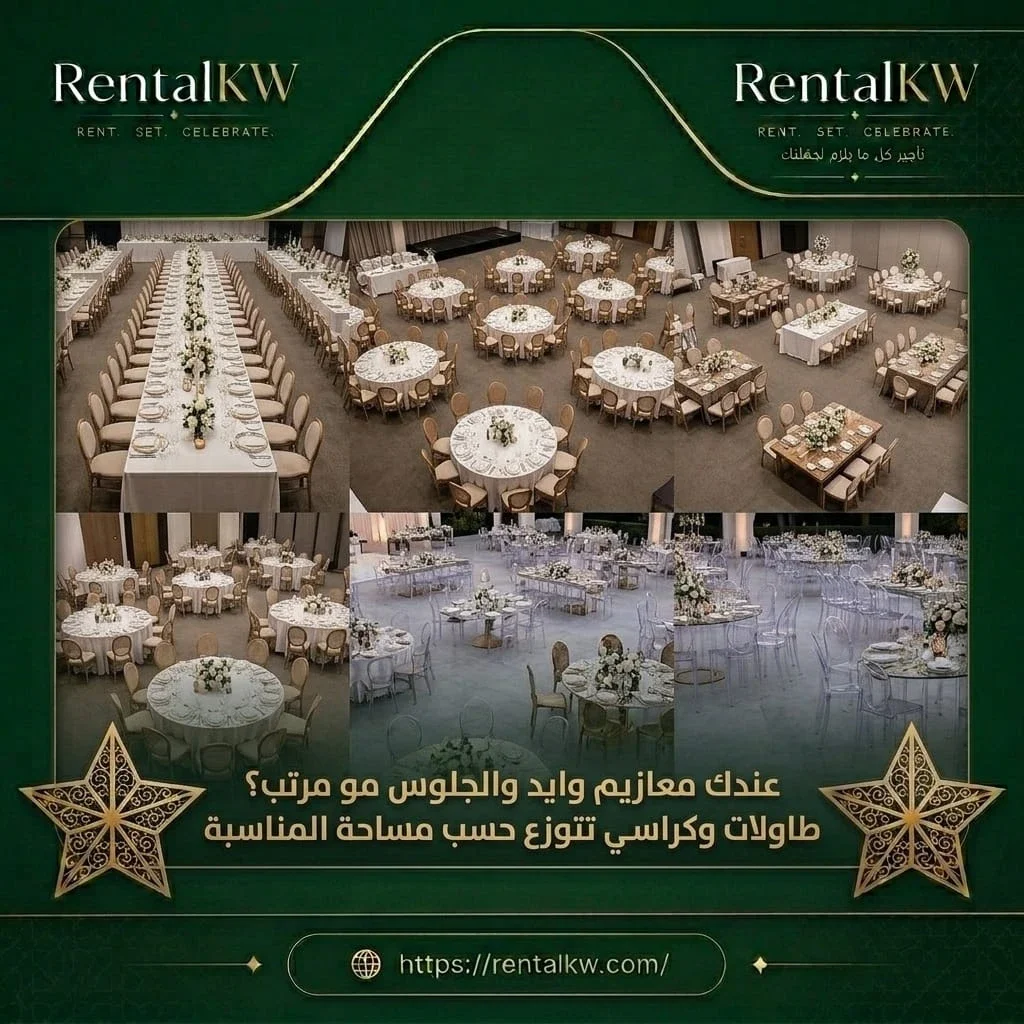
One-day chair and table rental requires treating the furniture as part of the overall event plan rather than simply as a list of quantities. A customer may have exactly the correct number of chairs and tables and still end up with an impractical arrangement if the purpose of each area has not been established before delivery.
The process begins by dividing the venue into clearly defined uses. There may be a main seating area as well as tables for hospitality, buffet service, reception, or other supporting purposes. Once these areas are identified, the appropriate furniture can be selected for each one rather than choosing a single model and trying to use it everywhere.
Guest count alone does not determine the required number of tables. Seating style, actual table dimensions, chair type, and the space required for movement all affect the arrangement. For this reason, it is better not to apply a fixed rule for the number of people around every table without considering the actual rental model and the venue layout.
For a daily booking, readiness time is also important. The goal is not simply for the delivery vehicle to arrive at a suitable time. There must be enough time to unload the furniture, sort the pieces, move them to their designated areas, arrange them, and review the finished setup before guests arrive.
When arranging one-day chair and table rental, it is better to:
• Prepare a separate list for every event area showing the required type and quantity of tables and chairs so the total quantity does not arrive correctly while the distribution between individual areas remains unsuitable
• Choose the furniture models before finalizing the seating plan because the actual dimensions of each chair and table directly affect how many pieces can be arranged while maintaining practical use of the available space
• Determine the number of guests expected to be present at the same time when the event has continuous arrivals and departures so the setup reflects actual use rather than relying only on the total invitation count
• Agree on the time by which the furniture arrangement must be completely finished rather than only specifying the delivery time because unloading, internal transportation, distribution, and inspection all require time within the event schedule
• Identify pieces intended for reception, hospitality, or buffet service separately so tables do not need to be removed from the main seating area on the event day to cover a shortage elsewhere
• Review the booking scope before confirmation to understand whether delivery, arrangement, collection, and any additional services are included so quotations can be compared according to the actual service rather than the number of pieces alone
Daily Party Chair Rental in Kuwait
Choosing daily party chair rental in Kuwait requires considering the function of the chair within the event rather than its appearance alone. A chair suitable for a formal wedding may not be the same choice for a simple family gathering or an occasion where guests frequently arrive and leave. The comparison should therefore begin with the type of event and how the seating will be used before moving to appearance.
It is also important to know the actual model that will be provided. Reference photographs help when selecting a style but the condition of the pieces and consistency of the batch delivered to the event are particularly important when chairs form a visible part of the overall setting. Differences in shape, shade, or details between groups positioned beside one another can become noticeable in photographs.
The seating arrangement should also be considered before the chairs arrive. Will they be placed around tables, arranged in rows, or divided between several seating zones? Each use creates a different relationship between the chairs and surrounding space. When elderly guests are expected or people will remain seated for extended periods, practical comfort also becomes an important factor alongside appearance.
A common mistake in daily rentals is ordering the quantity first and deciding on the distribution after delivery. This consumes valuable setup time and can result in chairs being moved between different areas more than once.
When choosing daily party chair rental in Kuwait, it is better to:
• Determine the seating style before selecting the chair because seats used around tables require a different layout from chairs arranged in rows or independent reception areas
• Ask which actual model will be delivered rather than relying on a general photograph when several types are available because differences in details can affect the final appearance of the setup
• Pay attention to consistency among chairs that will appear together within the same area so rows and tables look organized both in person and in photographs rather than showing unintended differences between pieces
• Consider the nature of the guests and expected seating duration because a successful choice balances appearance with practical use instead of treating the chair only as a decorative element
• Allocate the number of chairs required for each area in advance and prepare a distribution plan so the setup team can begin with a known arrangement instead of spending event-day preparation time experimenting and moving furniture repeatedly
• Review the finished appearance of a group of chairs rather than inspecting each chair only as an individual piece because some visual details become important only when the design is repeated in rows or around several tables
One-Day Event Table Rental
One-day event table rental requires choosing each table according to the function it will perform during the event. Not every table is intended for guest seating and a table suitable for a buffet may not be the same choice for reception or hospitality service. Defining the function first makes quantity calculations and distribution more accurate.
In the seating area, the shape and actual dimensions of the table should be considered together with the chairs. A table does not occupy only the area covered by its surface. There are chairs around it, space needed for guests to sit and move, and walkways between seating groups. A venue may therefore appear capable of holding many tables while empty and then feel crowded as soon as chairs are added.
For events containing several functional areas, quantities should be separated. One list can be prepared for guest tables, another for buffet tables, and another for service tables when needed. This prevents a table allocated for one purpose from being moved to another area and creating a shortage during setup.
It is also useful to know what will be placed on each table. Floral arrangements, hospitality items, serving pieces, or tableware can affect the usable surface area so the table size should not be selected independently of its intended setup.
When choosing one-day event tables, it is better to:
• Define the purpose of each group of tables before calculating quantities because guest seating, buffet, reception, and service tables perform different functions and should not be combined into one undetailed total
• Build the guest table layout together with the surrounding chairs because the required area includes the complete seating arrangement rather than the table surface alone
• Confirm the actual dimensions of the rental model before determining how many tables will fit inside the venue because general terms such as round or rectangular table are not sufficient for accurate space planning
• Review the items that will be placed on the tables before confirming the selection so enough usable surface remains and the tabletop does not become overcrowded with hospitality items and decorations
• Number or divide tables according to event zones when the venue is large or contains several sections so each group can be directed immediately to its correct location during unloading and setup
• Review walkways after tables and chairs have been arranged together because a layout that appears spacious before seating is added can change completely once the full setup is in place
One-Day Napoleon Chair Rental
When choosing one-day Napoleon chair rental, appearance is an important part of the decision because this type of chair is often used when the seating itself forms a visible part of the event design. However, a successful choice depends on more than appearance. The required quantity should also work with the tables, venue dimensions, and guest arrangement.
At events with multiple tables, chair consistency becomes visually important. Differences between individual pieces or noticeable variation in their condition may become easy to see because the repeated chair design makes any different piece stand out. It is therefore preferable for the group assigned to the same area to be as consistent as possible.
The intended use should also be established before confirming the quantity. Napoleon chairs may be used for all guests or only for a specific section such as main tables or a particular reception area. Deciding this early prevents random distribution and avoids discovering that there are not enough chairs to complete the intended visual arrangement.
The chair should also be considered in relation to the table being used. Table height, dimensions, and the space required to position chairs around it all affect the practical result.
When choosing one-day Napoleon chair rental, it is better to:
• Identify the areas where Napoleon chairs will be used from the beginning if they are not intended for the entire event so the quantity remains visually consistent within each zone rather than being scattered across the venue
• Review the condition of the group that will appear together because repeating the same design around tables makes noticeable differences between individual pieces more visible in the setting and photographs
• Determine the number of chairs after understanding the number and arrangement of tables rather than calculating each element independently because the final seating depends on the relationship between chairs, tables, and surrounding space
• Test a complete arrangement around one table during setup to confirm that the distribution works properly before repeating the same pattern throughout the venue
• Preserve walkways after chairs are placed in their actual use position because a chair pulled back from the table requires more room than one positioned tightly against it
• Clearly confirm the model and required quantity during booking so the event-day decision is not based on whichever pieces happen to be available instead of the group selected for the design
Daily Round Table Rental

Daily round table rental can create clearly defined and connected seating groups within an event but selecting this type of table requires understanding the total area occupied by the complete seating arrangement. The mistake is to measure only the table diameter and then place as many tables as possible inside the venue without accounting for chairs and movement space.
The actual table dimensions and the number of chairs that can be arranged appropriately around the model should be confirmed first. A fixed number should not automatically be applied to every round table because table sizes differ and so do chair dimensions and tabletop arrangements.
The distance between tables is equally important. Guests need to reach their seats and hospitality staff may need to move through the area when table service is provided. Walkways are therefore part of the table layout rather than leftover space after all tables have been positioned.
Flowers or centerpieces placed on the table can also affect practical use. A large arrangement may look attractive but can limit visibility or occupy surface space needed by guests.
When choosing daily round table rental, it is better to:
• Use the actual table dimensions and chair model when calculating seating instead of applying the same number of chairs to every round table regardless of its size
• Distribute tables through a layout that includes both main and secondary walkways so guest and service movement is planned before furniture arrives rather than after setup is complete
• Test the available space while chairs are positioned for actual use rather than fully pushed under the table because real movement requires more room around each seating group
• Coordinate centerpiece size with the table surface and hospitality setup so the design remains attractive without affecting visibility or practical space in front of guests
• Consider the shape of the venue itself because a long or irregular room may require a different arrangement from an open hall even when the number of tables is identical
• Establish each seating group within the plan before the event day when numbered tables or assigned seating are required so furniture setup does not become a complete redesign at the venue
One-Day Buffet Table Rental
Planning one-day buffet table rental is different from arranging guest tables because the objective is to create a service area that guests can approach comfortably while allowing the hospitality team to replenish it without disrupting the event.
Location is the first decision. Placing the buffet in an area simply because it looks empty does not mean it is the best position. Guest approach direction, waiting space, the route back to the seating area, and staff access should all be considered.
The number of buffet tables also cannot be determined from guest count alone. Serving style, number of food and beverage sections, required equipment, and service method all influence the necessary space. Furniture planning should therefore be coordinated with the party responsible for the buffet whenever special equipment or arrangements are involved.
A common mistake is placing the buffet along a main walkway and later discovering that guests gathering in front of it block entry and exit. Better planning treats the area in front of the tables as part of the buffet zone itself.
When preparing one-day buffet tables, it is better to:
• Select the buffet location according to guest movement before deciding the number of tables so a gathering point is not created at the entrance or directly across a main event walkway
• Understand the requirements of the hospitality or catering provider before finalizing the arrangement because service style, equipment, and required sections define the work area more accurately than guest count alone
• Leave enough room in front of the tables for selection and waiting instead of positioning chairs or decorative elements directly against the buffet area
• Separate staff service movement from guest circulation whenever the venue allows it so tables can be replenished without continuous movement through the attendees
• Arrange the tables according to the actual sequence of use when the buffet contains several sections rather than choosing a visually attractive arrangement that makes guest movement confusing
• Review the buffet position after the rest of the furniture has been installed because tables and chairs may change walkways that appeared spacious in the initial plan
One-Day Party Seating Setup
One-day party seating setup means more than placing chairs before guests arrive. The objective is to transform the booked quantity into clear and practical seating areas that support the event program while allowing movement and keeping important zones visible and accessible.
The process begins by understanding what will happen during the event. If there is a stage, photography area, or main presentation point, seating direction should take that feature into account. If the occasion is based primarily on table seating and social interaction, the focus shifts toward distributing groups and circulation routes.
It is also useful to identify any seats that require specific locations according to the event arrangement such as seating near the entrance, family areas, or any other division determined by the organizer. Planning these details in advance reduces the need to move chairs after setup.
A practical approach is to arrange one section first and review the spacing and direction before completing the entire venue. Discovering a mistake after dozens of chairs have been positioned creates unnecessary rework that could have been avoided with an early check.
When preparing one-day party seating, it is better to:
• Direct the seating according to the main event activity so guests do not need to change places or move chairs later to see an important part of the celebration
• Identify areas requiring a specific seating arrangement before work begins so the setup team knows where every group of chairs should go from the first placement
• Arrange one sample row or complete table and evaluate the spacing before repeating it throughout the venue because testing one unit can reveal planning problems early
• Keep entrances and exits clearly accessible and prevent gradual increases in chair numbers from expanding into circulation routes originally reserved for movement
• Review the setting from guest seating positions after part of the arrangement is complete to confirm that important areas remain visible and are not blocked by other event elements
• Keep any agreed reserve chairs in an area that does not interfere with the event rather than distributing them unnecessarily within the main seating and increasing density without a practical reason
Event-Day Chair Delivery and Arrangement
Event-day chair delivery and arrangement requires more precise timing than simply choosing the hour when the delivery vehicle should arrive. There is a significant difference between the chairs reaching the venue and all seating areas being fully ready for guests. Unloading, sorting, moving pieces inside the venue, arrangement, and final review are separate stages that must be included in the schedule.
Accessibility also affects timing. A venue where furniture can be unloaded beside the event area is different from one where pieces must be transported through corridors, elevators, or long internal routes. Accurate access information helps establish a realistic delivery time.
The layout should preferably be ready before the furniture arrives. When the team needs to ask the event organizer where every table and chair should go during unloading, the work becomes slower and the likelihood of repeated rearrangement increases.
Once the setup is complete, the quantities, condition, and individual areas should be reviewed. This is particularly useful before the venue becomes occupied by other event preparations.
When organizing event-day chair delivery and arrangement, it is better to:
• Establish the final readiness deadline first and then calculate the time required for unloading, internal movement, and arrangement to determine the correct delivery time instead of selecting an arrival hour unrelated to the event schedule
• Provide venue access information in advance when there are gates, elevators, or long corridors so furniture movement can be planned realistically before the delivery team arrives
• Prepare a clear layout showing where each type of chair and table should be positioned before delivery so distribution can begin immediately without waiting for decisions during the work
• Sort pieces according to their intended areas during unloading when the event uses multiple models so chairs do not need to be moved repeatedly across the venue before reaching their final positions
• Review quantities and arrangement after setup is complete and before the event begins so any issue can be addressed while time remains rather than after guests are already seated
• Coordinate furniture arrangement with decor, lighting, and other setup teams so equipment does not block other work areas or force teams to move furniture that has already been positioned
Daily Chair and Table Rental Prices

Daily chair and table rental prices depend on the actual booking details so it is not accurate to assign one figure to every event without knowing the types, quantities, location, and service scope. Chair model, table type, number of pieces, usage period, delivery, arrangement, and collection can all influence the quotation.
Comparing only the price per piece can also be misleading if one offer includes transportation and arrangement while another charges separately for those services. A fair comparison begins by standardizing the required service and then reviewing the total price for the same scope.
A booking that uses one chair model may also differ from an order requiring several chair styles and multiple types of tables because sorting and distribution become a larger part of the execution process.
A one-day rental should not automatically be assumed to have a fixed price or a predetermined percentage of a longer booking. Pricing policies and service scopes vary so the quotation should relate to the specific order.
When comparing daily chair and table rental prices, it is better to:
• Define furniture types and quantities before requesting the price so the quotation is based on known items rather than an approximate figure that may change completely after the models are selected
• Confirm whether delivery, arrangement, and collection are included when comparing quotations because the price per piece alone does not always represent the final cost of a daily service
• Separate additional equipment or services within the quotation so the customer can understand the basic furniture cost and any related services without mixing all items together
• Mention the event location and accessibility conditions when requesting a quotation because transportation and unloading requirements can form part of executing the booking
• Compare furniture condition, agreed models, and execution scope alongside the final price so the choice is not based on a small price difference while ignoring differences in service
• Request a current quotation for the specific booking rather than relying on old or unverified figures because actual cost depends on the date, quantities, availability, and service scope
One-Day Event Furniture Booking
One-day event furniture booking works best when the customer's request changes from a general statement such as needing chairs and tables into a clear list connected to the event layout. The earlier the types, quantities, areas of use, and timing are established, the smoother the event-day execution becomes.
It is important to confirm the date, venue, and required readiness time rather than only the event starting time. The expected collection time after the event should also be established so the complete daily rental cycle is clear from beginning to end.
The actual furniture models should preferably be agreed upon instead of relying only on general names when appearance is an important part of the event design. If covers or other items associated with tables or chairs are required, they should also be clearly included in the booking scope.
Late changes in quantity should be handled according to availability and the ability to modify delivery and setup plans. Informing the rental provider as soon as the change is known is therefore better than waiting until the event day.
When booking one-day event furniture, it is better to:
• Send a final list whenever possible showing furniture types, quantities, and the intended area for each group so the booking becomes a clear execution plan rather than a simple total number of pieces
• Confirm the event date, venue, required readiness time, and expected collection time because these details define the complete daily service cycle
• Finalize the agreed furniture models when appearance forms an important part of the event decor so both parties understand which pieces are actually required for execution
• Report quantity changes as soon as they are confirmed so availability, seating layout, and transportation can be reviewed instead of attempting to absorb increases or reductions at the last moment
• Review the final order details before the event day to make sure buffet, reception, or other special-purpose tables have not been forgotten because these items may not be included within the guest seating count
• Keep clear details of the agreed service scope and delivery, arrangement, and collection times so the execution steps are known in advance and do not depend on verbal coordination during the event
Conclusion
The success of one-day table and chair rental for events is not measured by the number of pieces delivered to the venue but by how effectively they are transformed into practical and organized seating before guests arrive. Choosing the right chair and table types, defining the purpose of every area, planning walkways, and controlling delivery and setup timing are all parts of the same daily rental service.
An organized event begins with a furniture list connected to the layout rather than separate quantities. Napoleon chairs require visual consistency within the area where they are used. Round tables need to be calculated together with the chairs surrounding them while buffet tables require planning based on guest and service movement.
When comparing rental offers, it is better to consider furniture types, quantities, condition, and the scope of delivery, arrangement, and collection alongside the price. This approach turns a one-day booking into a complete process that begins with selecting suitable furniture and ends with its collection after the event rather than simply transporting chairs and tables to the venue.
Frequently Asked Questions
Can chairs and tables be rented for only a few hours?
The actual use can last only a few hours but rental duration, delivery, and collection details are determined according to the agreement because furniture preparation begins before guests arrive and ends after the event is finished.
Should I choose the chair type before confirming the final quantity?
It is preferable to identify the expected model early because chair dimensions and the way it will be used affect the seating layout while the final quantity may later be updated according to availability and the agreed schedule.
Are round tables suitable for every venue?
Not necessarily. Venue shape, table dimensions, chair quantity, and required walkways determine whether they are suitable. Another arrangement may use the available space more efficiently in some locations.
Can Napoleon chairs be rented for only one event area?
Yes. They can be allocated to a specific area when this suits the event design. The quantity and intended location should be established in advance so the group remains visually consistent.
Are buffet tables included in the guest table count?
It is better to calculate them separately because their purpose, space requirements, and arrangement differ from guest tables and the event may require several types of service tables.
Does the rental price include table and chair arrangement?
The service scope varies according to the quotation so the agreed items should be checked to determine whether delivery, arrangement, and collection are included or whether some are charged separately.
What should I do if the guest count changes before the event?
Inform the rental provider as soon as the change is confirmed so the quantity, availability, and seating plan can be reviewed instead of waiting until the event day and trying to modify the layout during setup.
What information is needed to book event furniture for one day?
The main details include the event date and location, guest count, required chair and table types, seating arrangement, additional areas such as the buffet, required readiness time, and expected collection time after the furniture is no longer needed.